Peter HK
-
Posts
619 -
Joined
-
Last visited
-
Days Won
29
Content Type
Profiles
Forums
Events
Everything posted by Peter HK
-

First time builder - Core Sound 17 Mark 3
Peter HK replied to Samantha Ritchie's topic in B & B Yachts Forum
Hi Samantha Congratulations on the new project. I'll add my 2c worth. There is absolutely no doubt epoxy coating flat sheets of ply on a table is much faster and easier and I have done this many times. There are some problems. If you do 3 coats and leave the panels for some time they become inflexible and can crack when trying to fit to the boat. You do have to wash/sand/correctly prepare the pieces for taping/gluing when you need them. You only get a mechanical bond rather than a chemical one which is not quite as strong- I prepare any edges for taping carefully. I have chosen a middle path of precoating- usually 2 coats- and trying to do it not long before fitting if possible and hot coat if possible. I've never had a well prepared epoxy/glass joint fail but I do remember one 25 years ago when I didn't prepare the surfaces well on a modification and when doing a further modification some years later was surprised by how easily the tape lifted off. In summary- careful preparation of the precoated panels will be fine- mechanical bonds are how epoxy primarily sticks to the wood after all. Cheers Peter HK -
Hi Nick When I built my CS 17 in 2006-9 here in Brisbane I had problems finding the right tube size and alloy/temper (6061 T6). The plans gave several options- solid wood, birdsmouth wood and mixed aluminium tubes with wooden topmast. I ended up ordering tube from a company in Seattle (Online metals from memory). They could only airfreight 8 ft lengths so I made tripartite masts with 2 aluminium lower pieces and a solid wood topmast. Quite expensive as I recall but worked well. I remember a subsequent discussion on this forum where Paul Riccelli (a professional designer/builder now deceased) suggested the better option would be a 2 piece mast- the bottom section, about 12 ft, in aluminium and a birdsmouth wooden top. If I were doing it again I'd do it that way, although maybe solid not birdsmouth top as when I calculated the weight saving it was in the order of 100-150 gms and not worth the extra bother of birdsmouth construction (to me anyway). I wonder about the fibreglass tube under the foredeck that the mainmast slides into- is this also for 60mm tube? In which case a new larger diameter mast might involve a fairly significant modification. The mizzen wouldn't be too difficult. BTW waterproof masts are difficult to achieve and most of us drill a hole at the bottom of the mast to let the water out.? Cheers Peter HK
-
I think I misinterpreted your term lugged sail. You probably meant slides for a sail track. They work really well and make reefing and dropping easy. As I said I had track on my CS17. It’s a good option. But you also said a simple rig would be good and the standing lug certainly fits that definition. Cheers Peter HK
-
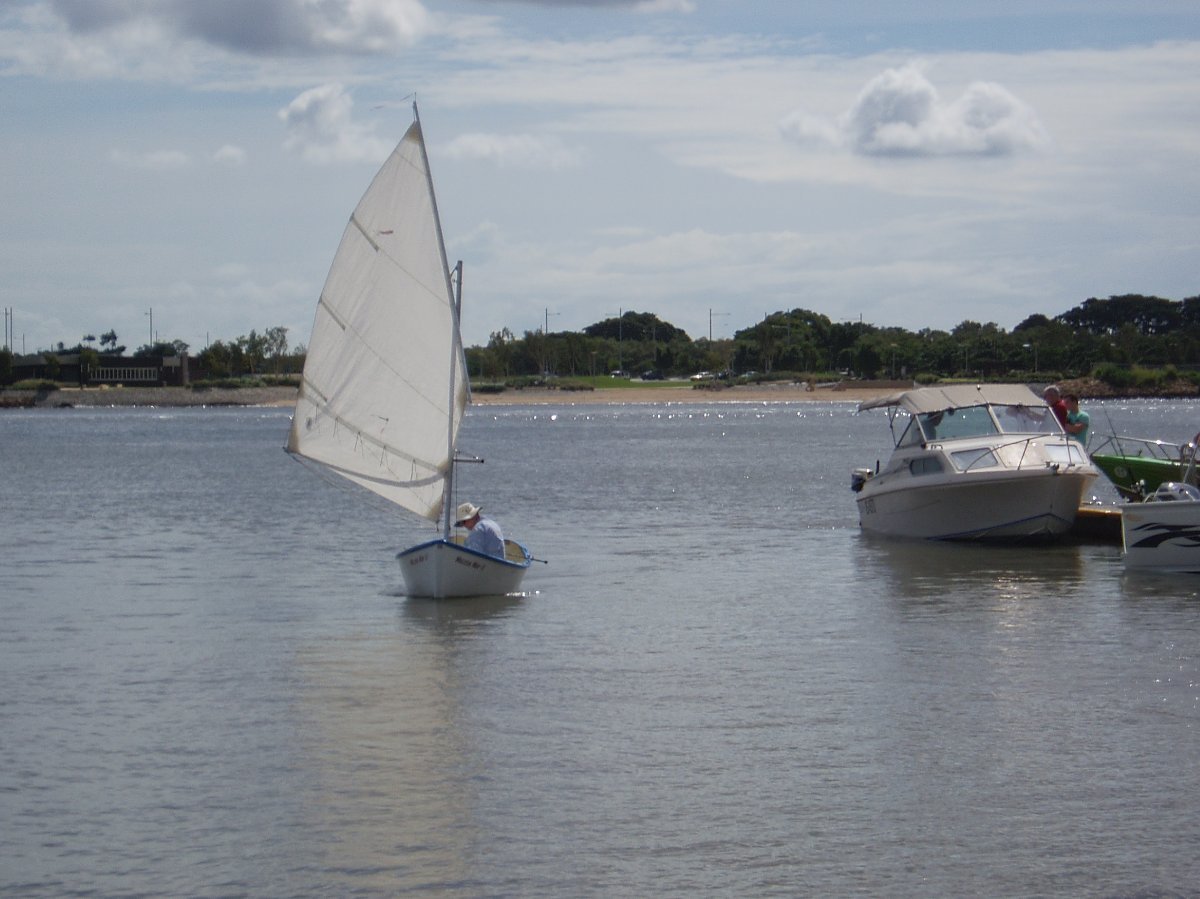
Not a spindrift but I have a modified Welsford Golden Bay dinghy with a standing lug and spritboom. It's a nice rig- easy to set up and the spars fit in the boat. I had sailtrack on my CS17 which works very well. Here are some photos of the standing lug


-
CS-20 Design questions: Centerboard and combining "marks" features
Peter HK replied to Andy B's topic in B & B Yachts Forum
I think the answer to this is yes. If you look at the Belhaven 19 on the B and B website you will find construction photos - looking through those you can see the centreboard case well offset and built into the bench upright. On the Belhaven the centreboard extends below the hull in the retracted position and is matched by a small bilge keel on the other side so it sits level- see the design notes on the website. Cheers Peter HK -
I’ve found paint lasts years and is simple to apply. Cheers Peter HK
-
Hi Frank I see everyone is being assigned newbie status- even those who have posted for years. Some glitch? Cheers Peter HK
-
To add a little more about scarfs from the chapter on scarfing in the Gougeon brother's book: "In many boatbuilding situations, we use a ratio of 8-to-1 to determine the size of the bevel, so that a 1" (25mm) thick board will have a bevel 8" (200mm) long. When high-density, highstrength wood is used in a critical area, a mast for example, 12-to-1 proportions may be required. For extra strength and safety, we increasingly recommend 12-to-1 scarfs for lumber." They routinely recommend 8 to 1 for ply. Cheers Peter HK
-
With scarfs the longer the better. Usual minimum recommendation is 8 to 1, though some advise 12 to 1. I’ve used 8 to 1 with no problems in the past. Cheers Peter HK
-
That's basically what I've done too. Cheers Peter HK
-
No doubt baggy sails wouldn't have helped. Why were they baggy? Not enough luff tension/outhaul tension? I skimmed through the video and saw at one point the clew not pulled very tight and the rolled up reefs tied around the end of the spritboom- I usually ease the snotter until the reefed clew is right to the end of the boom and then pull the snotter on hard in heavy conditions. Heaps of luff and outhaul tension resulting in a flat sail is essential. Maybe you need more purchases? Having said that there comes a point when drive from the reduced sail area can't overcome drag from non reduced windage. My 2c worth Cheers Peter HK
-
I did the same thing 10 years ago to a non nesting dinghy. Made a huge difference re capsize and looked like a new one after paint. Cheers Peter HK


-
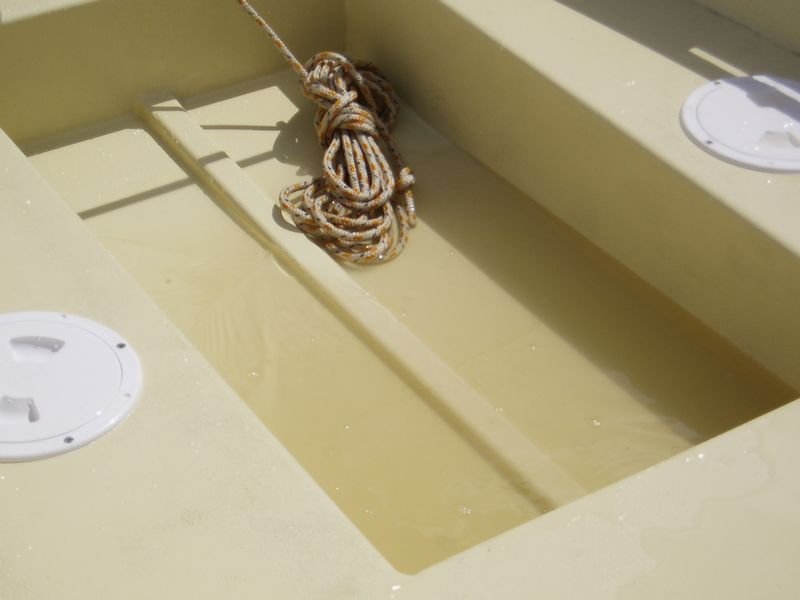
I like the ideas here and those removable seats. When I was contemplating a Two Paw build with a removable seat I was thinking about gluing/glassing foam under the seat as added buoyancy. I think you could do that with your removable aft seats to increase buoyancy even further- you might be able to put enough foam to achieve half the flotation of a built in chamber in the aft hull. They'll be bulkier to store but still very light. Maybe the last piece of the puzzle to achieve full self rescue? Cheers Peter HK
-
Request for Advice, Coastal Camp Cruising
Peter HK replied to Don Silsbe's topic in B & B Yachts Forum
Actually you don't need to detach the cross boat line to remove the rudder/tiller assembly if, as in the diagram you attach the shockcord with a snap hook of some sort. Just unhook the shockcord and pull the line out of the saddle/eyestrap on the tiller. Having said that I knot one end of the line to a simple eye screw with a snaphook onto another eyescrew on the other side. Takes 5 seconds to undo. Cheers Peter HK -
Request for Advice, Coastal Camp Cruising
Peter HK replied to Don Silsbe's topic in B & B Yachts Forum
Re the tiller tamer, I've used this method for decades and it works really well. Depending on your setup aft there is sometimes an advantage in not having the cross boat line perpendicular/directly athwartships. I attached mine to the boat inwales more towards the stern than the tiller eye to allow easier access to the motor and maximize use of the cockpit seat without removing the line (which I have on a snap hook). The shockcord allows for any minor variation in the geometry of the line. I leave the rudder on for towing and the tamer keeps it stable. Cheers Peter HK -
Spindrift 12 #1275 - out haul line anchor to boom
Peter HK replied to J. Cote's topic in B & B Yachts Forum
I've found drilling halfway from each side works with any misalignment hidden in the middle of wood where no one can see it? Cheers Peter HK -
The selvedge is there to stop the tape unravelling so cutting it off might end up being a problem. I find a tungsten scraper while the epoxy is still a little green removes it quite well. A quilting cutting wheel also does a good job. You roll the cutter along the edge of the tape just far enough in from the edge to remove the selvedge. You have to time it well, while the epoxy is wet enough to let the edge go but sticky enough to hold the rest of the tape down. Cheers Peter HK
-
Core Sound 20 Mk3 #23 - Williamsburg, VA
Peter HK replied to Todd Stein's topic in B & B Yachts Forum
That's how I've done my tiller tamers for years. I use small diameter non stretch line attached under each inwale with a snap hook so I can remove it if I want to. It then loops through an eye bolt under the tiller and is controlled by shockcord attached to another snap hook. The tension is adjustable with the shockcord in a V cleat. The beauty of this system is that you can always override it as its just friction holding the tiller but you can set the resistance to match the conditions. I first saw this in a book about cruising around England in the 1930's. They didn't have shockcord but used surgical rubber. Cheers Peter HK -
I'll make a couple of comments. Re the sprits. In theory each sail has a good and bad tack depending on whether the sprit is affecting sail shape or not, so it is usual to rig the sprits on alternate sides so one tack isn't all bad and the other all good. In truth there's not much difference. My brother used to race his Bolger Gypsy (which has a sprit rig) against another Gypsy identical except the sprit was rigged to the other side. The boats sailed similarly on each tack- he couldn't tell any difference. When reefing the sail ties should be around the sail only, not the sprit. I suspect this was the major issue with pointing. When tacking you want the mizzen in tight to drive the boat head to wind, then ease it a little on the new tack to allow the boat to fall off on the new tack (leaving it tight can act like a weather cock- which is how you heave to on a cat ketch) . Likewise pulling the main in tight (or even to windward as you discovered) after passing head to wind can help the bow fall off. Cheers Peter HK
-
Request for Advice, Coastal Camp Cruising
Peter HK replied to Don Silsbe's topic in B & B Yachts Forum
That is a lot of windage. I’m not surprised they may have had anchor issues. The risk of dragging is much higher and you need a bigger anchor and more chain which is heavier and more awkward to handle. I think keeping a low profile has advantages. Cheers Peter HK -
Request for Advice, Coastal Camp Cruising
Peter HK replied to Don Silsbe's topic in B & B Yachts Forum
Hi Guys You all must anticipate anchoring in very protected areas or at times with very light breezes to contemplate such a large tent with so much windage. My ideas for sleeping on my CS17 were based on a much simpler and lower windage option. My plan was a battened cover over a line from mainmast base to the mizzen snotter attachment, wide enough to drain the raindrops over the side with a bivouac tent underneath. I have the same lift up floor boards as Graham. My experience with yachts/multis with a lot of windage is that they are terrible at anchor in a lot of breeze. I've never tested it so my 2c worth. Cheers Peter HK -
Hi Nick Yes the leeboard just hooked over the gunwale and was held down by a piece of shockcord clipped onto a hook. Here are a few more pics Cheers Peter HK


-
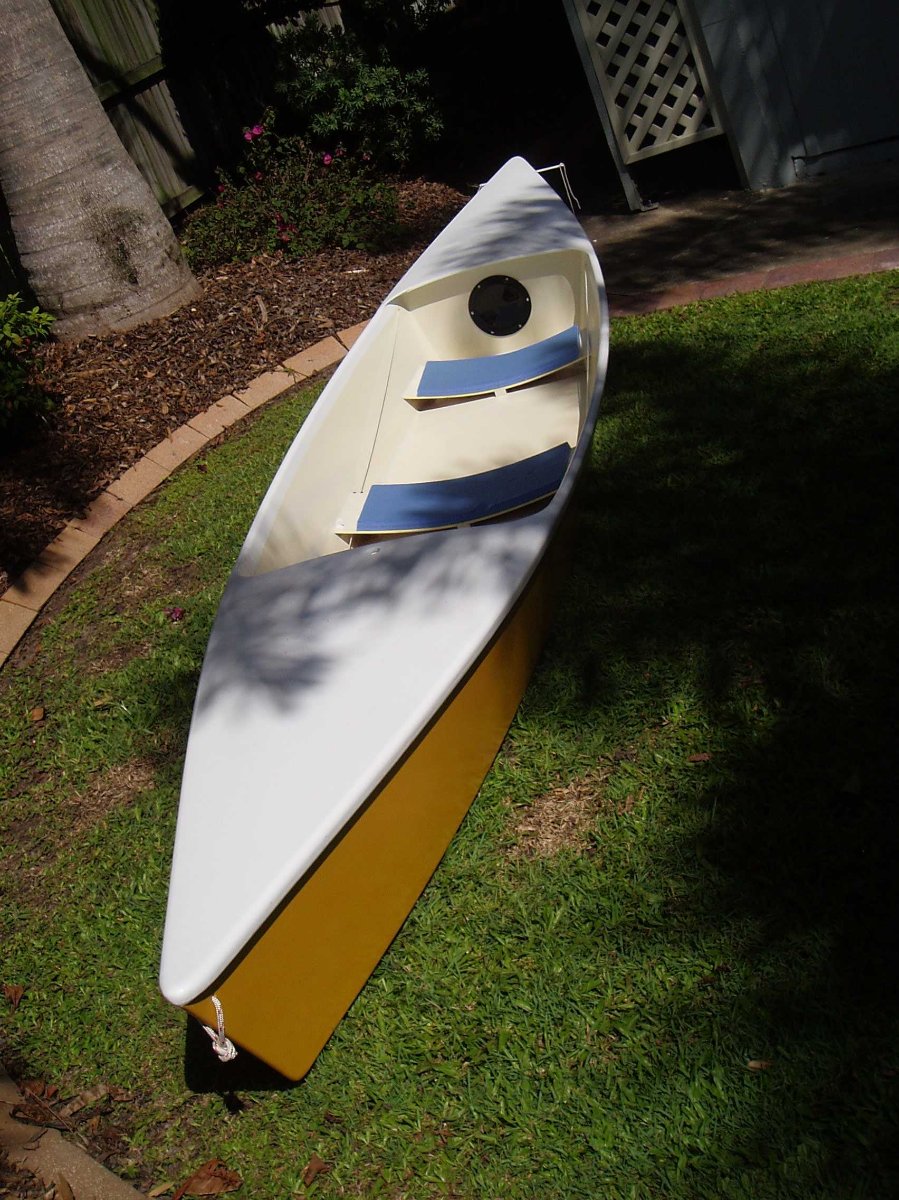
About 20 years ago I had some left over bits of ply and epoxy and glass and built a simple canoe. I enclosed the ends for buoyancy and being a sailor added the option of a mast base for a small rig. I'd never looked at canoe/kayak sailing ideas so just made it up. I wondered about how to balance centre of effort/ centre of lateral resistance and having a daggerboard in the middle of the canoe and it seemed like it wouldn't work. In the end, after discussion with my brother (the engineer) who suggested the long lever arm of a rudder at the end of a long canoe would overcome any lee helm issues, I placed the mast step forward and made a lee board that I could flip side to side at about the midpoint. The rudder was small. The rig was a simple small polytarp triangular sail with a 4mm sheet. I was amazed that I could (in milder conditions) actually tack it easily and make reasonable way to windward. Didn't notice any lee helm. Off the breeze was surprisingly fast for the minimal sail area. I never tried it in a heavy breeze. I've found a few old photos. Cheers Peter HK


-
Well said- bedding compounds work well As far as the keel itself I consider it sacrificial- if it rotted it's isolated from the hull by epoxy and glass and easily replaceable. I'd call it a wormshoe of a type. I used an aluminium extrusion on the keel strip which was very inexpensive (mainly to spread the load from the rollers). I didn't extend up the stem so no one sees it. If you want classy then pay for bronze. Cheers Peter HK
-
Try this link https://messing-about.com/forums/topic/11334-roller-trough-for-a-cs203-trailer/?tab=comments#comment-105992