Peter HK
-
Posts
619 -
Joined
-
Last visited
-
Days Won
29
Content Type
Profiles
Forums
Events
Everything posted by Peter HK
-
In time I doubt the kit would save 20%...probably less and certainly a lot less if you plan to have a mirror finish boat. Cheers Peter HK
-
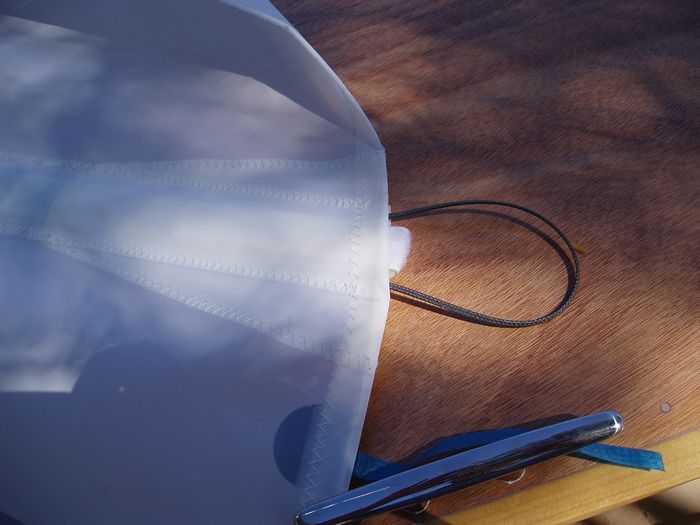
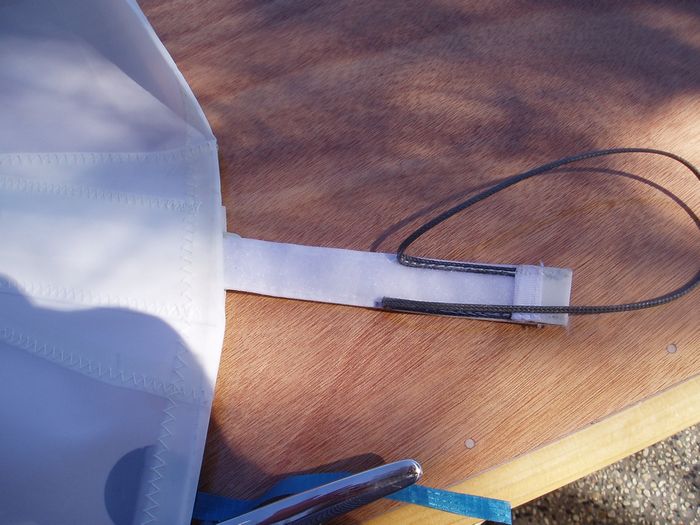
I've had Velcro batten pocket attachments on a few boats and they work well. The loop is there to make them easy to remove. You need a batten poker to tension them...essentially a stick with a handle so you can put one end of the stick in a small pocket on the Velcro strap so you can poke it over the back of the batten and in firmly, adjacent to the Velcro sewn on the inside of the pocket. Cheers Peter HK


-

Starting CS17 hull # 370 next week....workshop questions
Peter HK replied to LennieG's topic in B & B Yachts Forum
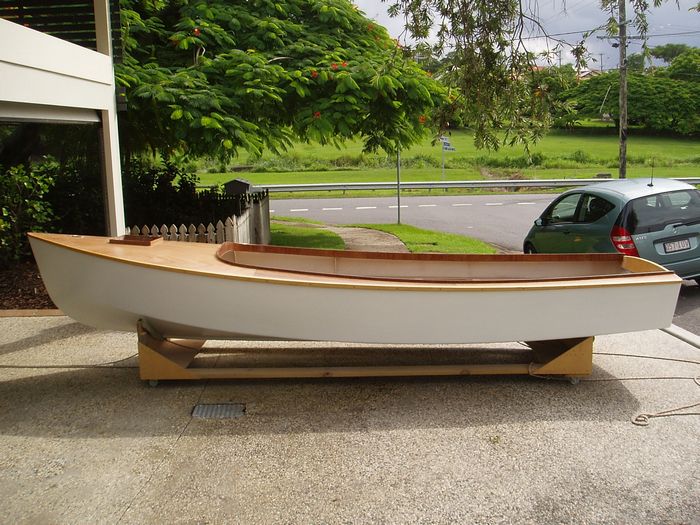
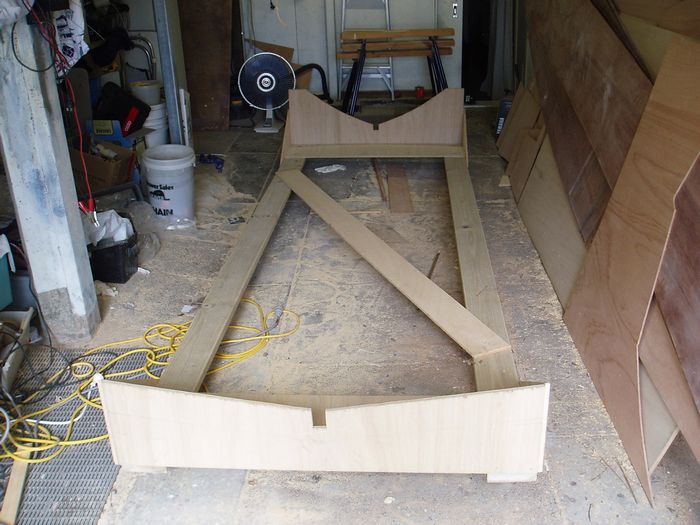
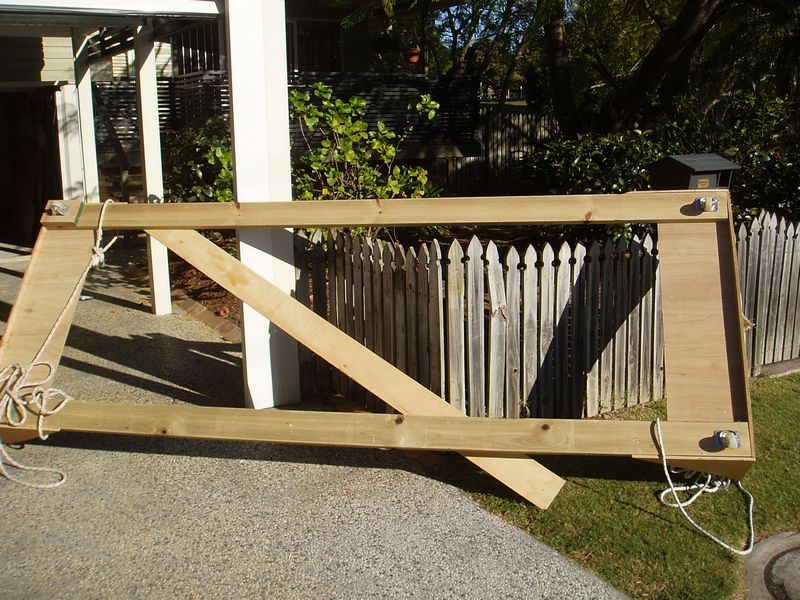
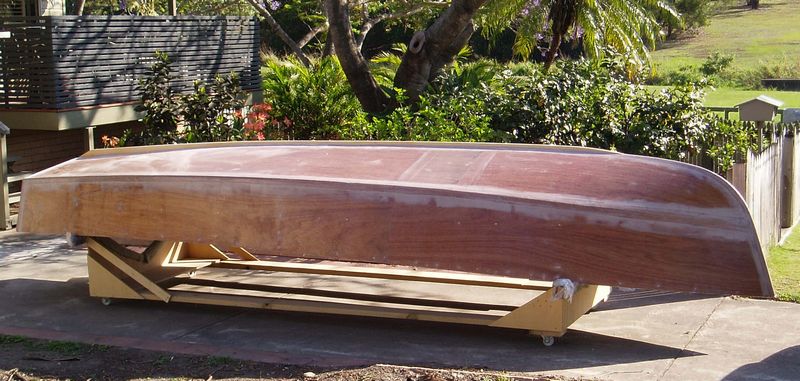
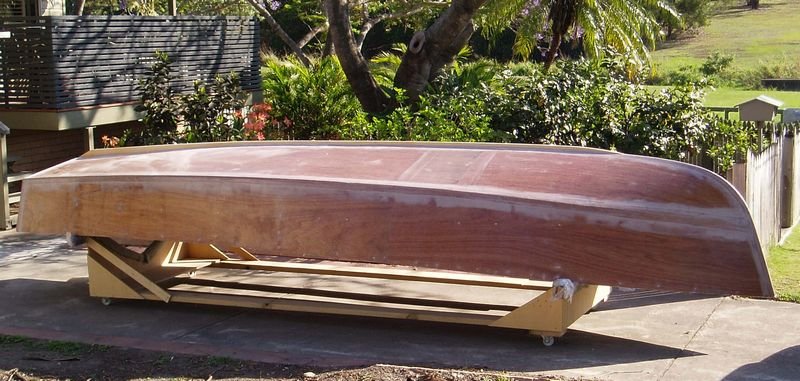
I made a movable cradle as my garage was very cramped as you can see in the photos. The supports were shaped to fit under the hull at the bulkheads. I found it made working on the boat much easier to have it well supported and at a good height. You may not think you want to move it in a large garage but the ability to move it outside for painting or sanding was nice (until my festool sander and vacuum came along!). A well fitted cradle is worth the effort IMHO. Cheers Peter HK Ps I unfolded the butterfly on the cradle...it's a bit flimsy at the start to move around much.


-
Well Ray, speaking from very far south (Brisbane, Australia) where the climate is subtropical, about the same as Florida, I now have an air-conditioned workshop Luxury! Cheers Peter HK
-
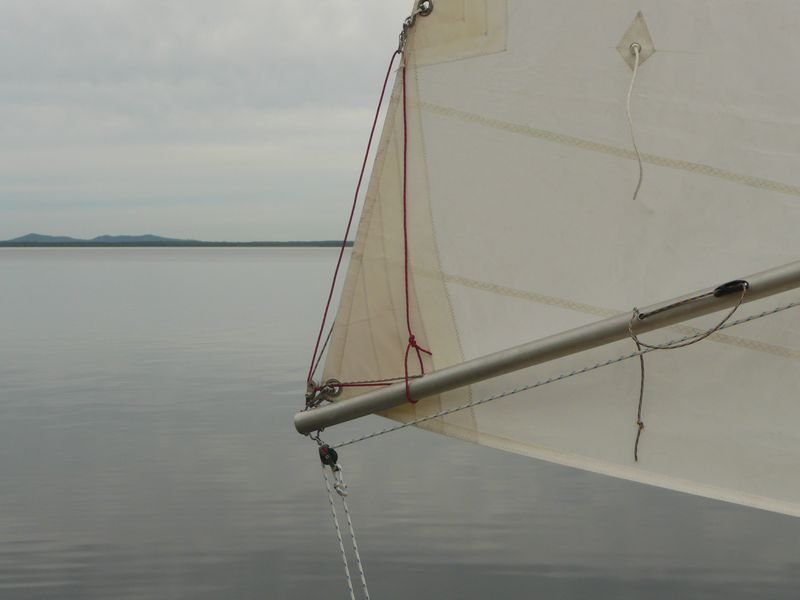
No, It runs under the boom and the sail is to the side. See here Cheers Peter HK
-
Hi Jon I see you found my old capsize test. From memory I didn't think the height of the board was a problem. I used to sail 14 ft skiffs with a similar distance to the board and righting them was not a problem. I've scaled the old photo and at worst the board is 2 ft 4 inches above the waterline in capsize which is about my arm's length so should be reachable. No side tank buoyancy means recovery is very difficult due to the amount of water in the boat on righting. I think the balance is about right on a coresound 17. Cheers Peter HK
-
I'm sorry I didn't make things clear. The bushes are only to fill a gap when the diameters mean there is a loose fit. With the al tubes the fit is tight and reaming is necessary to get them to slide together. I used epoxy as a lubricant while sliding them together and as the glue to hold them together with no bushes. There is no problem with metal to metal contact when it's the same metal. I fitted a track so my masts are fixed in length. If you want the masts to disassemble then make it a loose fit. Cheers Peter HK
-
With that wall thickness you'll probably have to ream the lower out a little to get it to fit. Here's a photo of Charlie Jones custom reamer for this task. untitled.bmp Cheers Peter HK
-
I always find my CS 17 to have a light helm and usually easing the mizzen would fix this. By way of lateral thinking, was the rudder all the way down or did the rudder downhaul stretch? That can increase force on the tiller a lot even if the rudder has slipped aft only a little. Cheers Peter HK
-
Seeking to crew on CS17 & CS20 -Australia
Peter HK replied to Nacrajon's topic in B & B Yachts Forum
Hi Jon If you give me a bit of warning I could probably arrange a test sail on my CS17. The catch is I'm in Brisbane. I used to sail/ race beach cats in the 70s and was even a "National Champion" one year but as it was a small class that was about 98% Queensland based, that doesn't mean much. There wasn't much opposition. If you want a trapeze you'll probably have to beef up the mizzen mast/step/thwart to take it as the masts aren't really designed for it (bendy and tapered to depower in the gusts) . Depends on the weight of your son. Cheers Peter HK -
I built mine off the boat and fitted it in when the seats were in and the thwart could be dry fitted to hold it in place. I made my case a bit deeper and cut a hole in the bottom wide enough for the case to poke through, then marked a pencil line so I could cut the excess off accurately. When glassing the case in I duct taped a few wooden spacers cut to the right size to the inside of the lower edge of the case to keep the lower ply edges straight while the epoxy set. Cheers Peter HK

-
Here is where the sailmaker put them on my sails. They seem pretty useful where they are. The ones on the leech are the hardest to keep flowing. The single wind indicator on the main mast also works well even off the breeze. Cheers Peter HK

-
Hi Alex I made 3 part masts...2 aluminium sections and a wooden topmast. I ordered the aluminium from Online Metals http://www.onlinemetals.com/ in Seattle as I couldn't get the sizes/alloy/temper specified in the plans here. They could only send 8 ft maximum lengths and shipping was about the same cost as the tubes. Also, I couldn't get the 2mm wall thickness for the lower section and went up to 3mm (whatever that was in inches). Cheers Peter HK
-
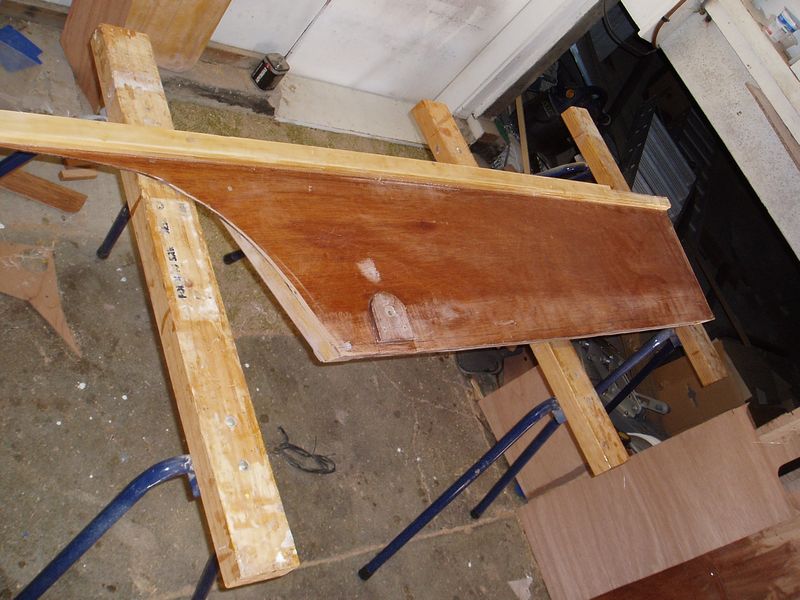
I leave it on and rely on the uphaul. A split pin retains the pintle. On larger trailer boats in the past I've drilled a hole through an appropriately thick part of the rudder box and rudder when in the up position and put a stainless bolt through to hold the rudder up. Remember to remove before launching Cheers Peter HK
-
Hi The P22 isn't designed to plane like a powerboat. It will have a fair amount of rocker and be happiest up to hull speed, any more and the bow rises and lots of power is needed to push it faster. If you want to go at 15 knots an OB 20 would be better. The P22 is only designed for a small auxiliary outboard, say 5HP. Unfortunately you can't have the best of both worlds...sailboats don't power fast and power boats don't sail fast. The Mac 26 is a case in point. I imagine the OB20 could have a removable pilot house (perhaps just a bimini?) My 2 c worth Peter HK
-
Done Peter HK
-
I agree these figures don't sound right...best to check with the designer. Peter HK
-
I used this stuff for isolation. http://www.cassellmarine.com.au/p/337808/duralac---anti-corrosive-joining-compound.html 316 stainless is better but 304 can be OK...it does corrode/stain a bit more especially in warmer climates. Cheers Peter HK
-
They are called snap hooks here- come in a few shapes and sizes. Inflation seems to have doubled the price since I last bought a batch but they are still cheap. https://www.whitworths.com.au/main_itemdetail.asp?item=43851&search123=snap+hook&intAbsolutePage=2 The mizzen is the same except there's no need to disconnect from the mast so it's shackled to the mast fitting, has a snap hook to attach to the boom and simply cleats off on the front of the mizzen mast. Cheers Peter HK
-
This is how I rig the main snotter- down the mast to a turning block, through a homemade deck organiser, through another fairlead and inside the hiking seat to the cleat within reach of the skipper. Cheers Peter HK


-
I think that's right, if you want the boat to perform in all reasonable conditions. Obviously you can load a boat up a bit more than the designed displacement in the right conditions but 6 adults regularly would be better served with a boat with a larger displacement. Peter HK
-
Pull cart/working cradle for core sound 20
Peter HK replied to Tom the rower's topic in B & B Yachts Forum
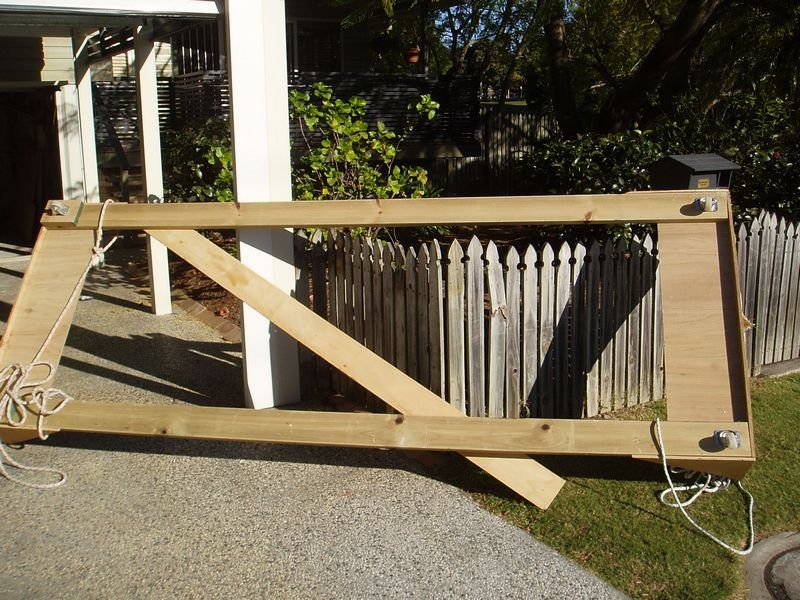
Here are some photos of the cradle I built for my CS17. Also on castors, steerable at one end. The diagonal piece could be unscrewed at one end and rotated onto the timber on one side to allow for crawling under the boat. When I flipped the boat I just screwed some padded horizontal beams to the top of the frames and end for ended the boat which kept it level and at a good height. Cheers Peter HK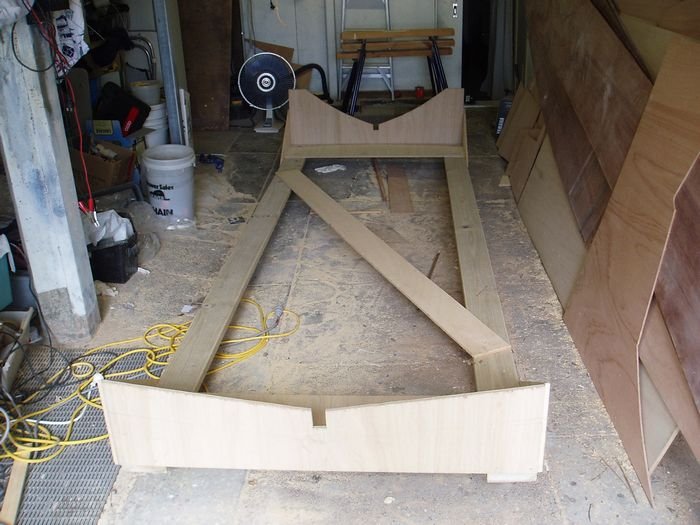
-
No. I epoxied mine together and the screws holding the track on go through both tubes at the overlap. Peter HK
-
No. It's a tight fit. I did make collars for the wooden topmast in my 3 piece mast. Peter HK
-
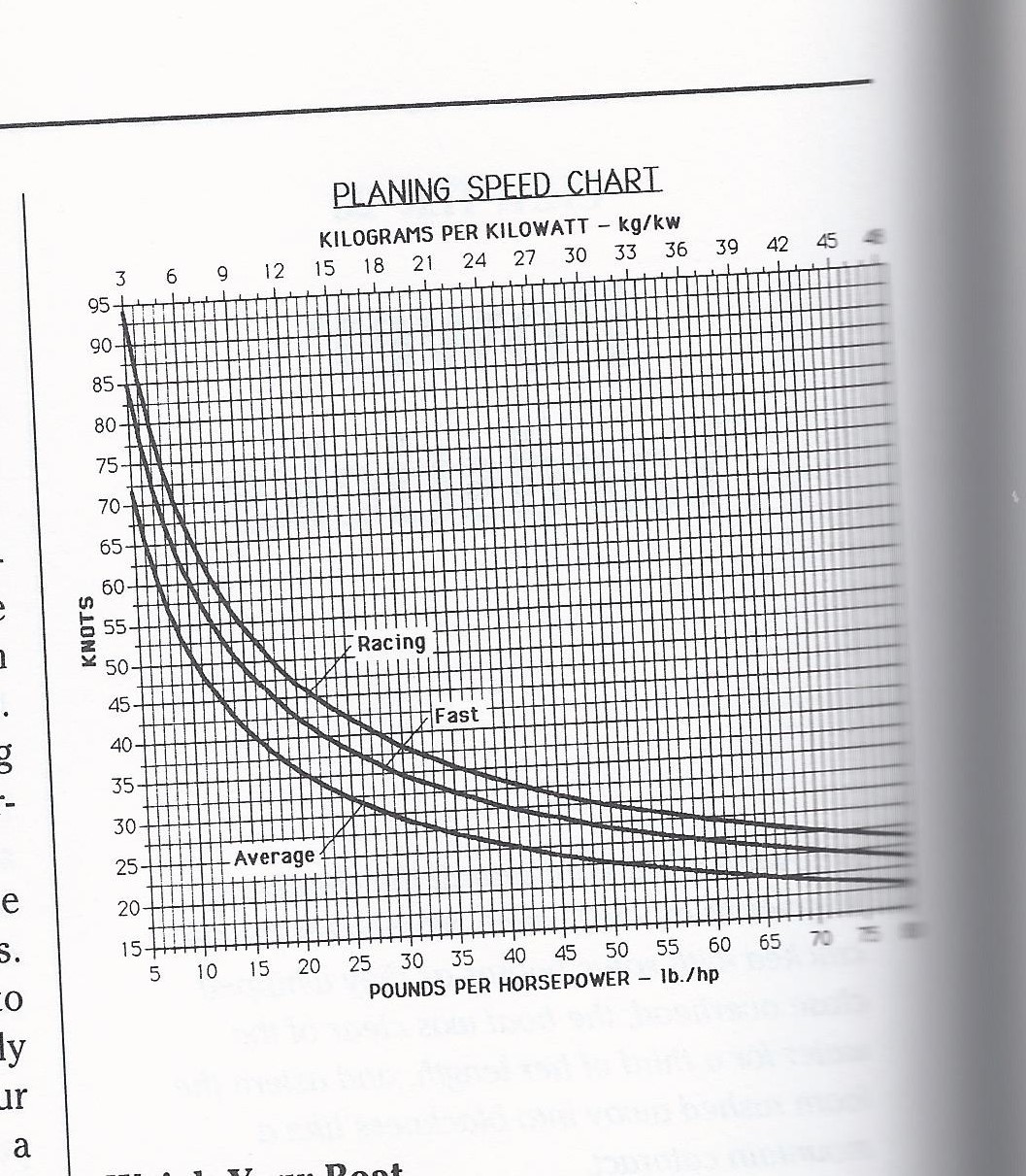
Firstly, let me say that I don't think the Marissa is really designed for 6 adults...according the the B and B website the weight of the boat is 520 kg and displacement at the DWL is 764kg leaving a payload of 244 kg. 6 adults with a little gear is likely 500 kg or more. Having said that, looking at the graph below taken from Dave Gerr's "the Nature of Boats" you can see that 25 knots in speed requires a pounds to horsepower ratio of 40. Assume 1000kg for boat + 6 adults, converting to pounds is 2200 lbs. HP required then is 2200/40 which equals 55 HP. As you say you don't want the outboard to struggle so you'll need about 75 HP running at 70% throttle. Of course the bigger motor weighs more and would need to be factored in, requiring even more power. Peter HK