Peter HK
-
Posts
619 -
Joined
-
Last visited
-
Days Won
29
Content Type
Profiles
Forums
Events
Everything posted by Peter HK
-
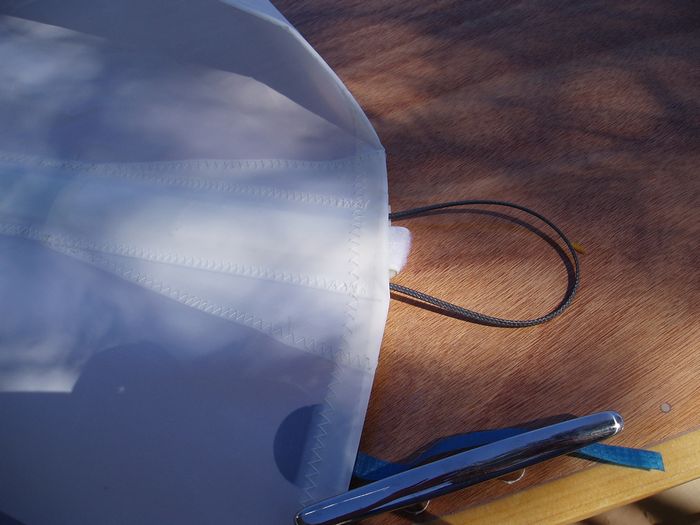
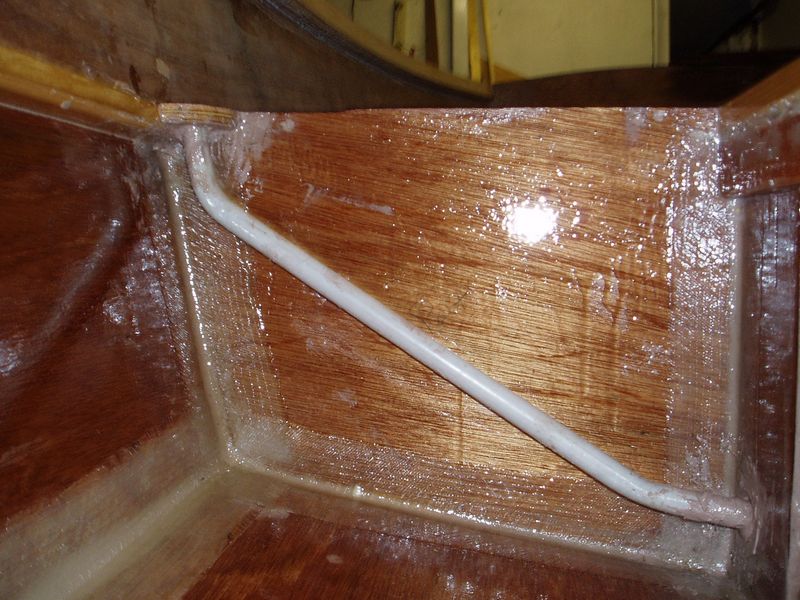
I took a few photos when I was at the boat this afternoon. Here is the floorboard down [attachment=1] Notice the cut outs to fit around the centreboard pin cheeks and the centreboard downhaul block. [attachment=2][attachment=3] Here's a photo of the cleats on the case and seats. [attachment=4] Cheers Peter HK
-
Hi Wes It's always interesting to try to get a very light, stiff and strong panel. For a cockpit table on a larger boat a few years ago I used 3mm ply glued onto both sides of 25mm styrofoam (with wood trim around the edge) so it looked like a thick wooden table but weighed very little. For my floorboards/bunk supports (CS17) I thought 9mm ply wood be stiff/strong enough (maybe with a few cleats underneath) but didn't have a piece big enough left over. As I was keen to launch and had a sheet of 12mm (half inch) ply, I used that thinking I might do something better in the future. As it is they are lighter that I thought they'd be and nice and solid underfoot so I think I'll leave them as is. They did need a wood block under one corner to sit nicely on the floor as there's a bit of twist at that part of the hull. Cheers Peter HK
-
I agree and I think it's a case of what suits the individual. If I had a job where I finished a bit early and lived next to an inland lake where the breezes were generally light I'd certainly have battenless, sleeve-luffed sails wrapped around the mast. It's so quick to rig and so one could quite often fit in a couple of hours of sailing at the end of the day. My brother built a Bolger Gypsy which was like that- unroll the sail and plonk in the mast, attach the spritboom with a couple of lines and go sailing- 5 mins rigging/unrigging. I however have a job with on-call and rosters, so have to arrange time off and have few spontaneous sailing opportunities. The weather may not be perfect on the day. If I go for the whole day the conditions may change (and often do on the bay where I sail most often) and ease of reefing on the water becomes more critical. So I choose to have tracks and 2 reefs in each sail and reefing lines arranged so that I can reef from the cockpit and put up with the extra time to rig and unrig (about 30 mins single handed and not rushing, from stopping the car at the ramp to sailing off into the distance) I think you have to decide what will work best for you. Cheers Peter HK
-
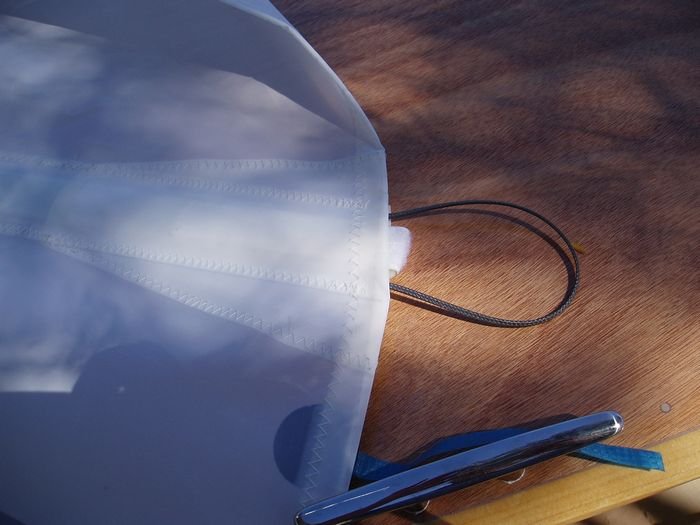
There are quick release velcro batten pocket arrangements also, so you can have quick fit/release battens if you want to roll the sails around the masts.

-
Also If you are making 2 piece masts and don't want a step then you can easily do so- just finish the base of the tapered wooden topmast to the same diameter as the aluminium base and trim off a few mm for the 9 inch section buried in the aluminium. It will look like a bought one :grin: Cheers Peter HK
-
Hi Dave Glad to hear we will have another Coresound here in Brisbane...I have a CS17. Not sure what you are concerned about. If you want to regularly breakdown the masts to store in the boat then getting the sail track join to mate perfectly might be difficult. If you are concerned about the step between the sections; I made track spacers for the slight variation in diameter and the slides don't notice it. If you are concerned about connecting shorter pieces of sail track on a longer mast that you don't want to take apart then it's not too difficult. I carefully packed the track so that it was of the same level and clamped it then drilled the holes for the screws and added a little thickened epoxy behind it as belt and braces. The tracks have worked perfectly with no hesitation at the join. I think PAR (a regular contributer here and a professional boatbuilder) suggested that at the join it is advisable to drill and screw so that the screw/fastener is half in each part of the track to keep the join in alignment. Cheers Peter HK
-
One other option that is nice to have is the ability to roll the boat up the beach out of reach of the waves- I use inflatable fenders, the bigger the better. Cheers Peter HK
-
-
Please correct me if I am wrong, but I understood that it was for water lubrication, rather than cooling, in the new shaft seals (so that you don't need the old fashioned stuffing box which had to leak a little). Cheers Peter HK
-
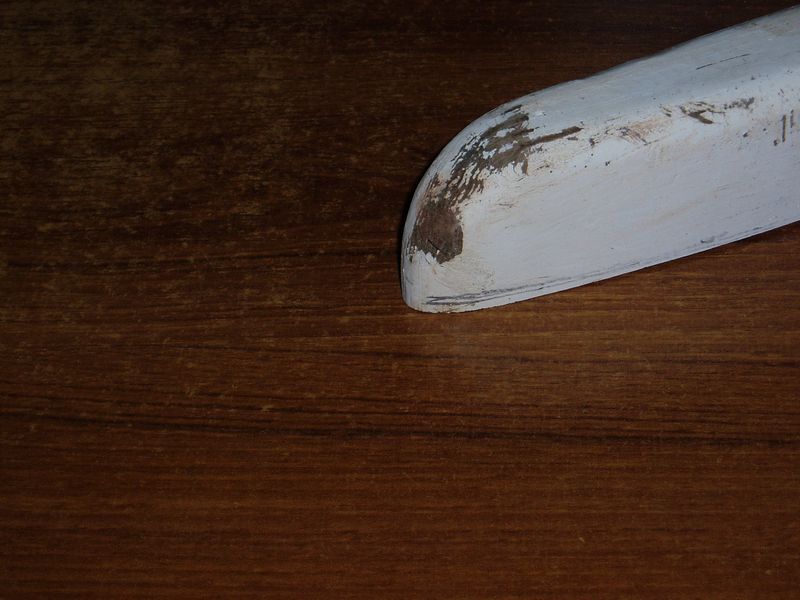
I recently rejuvenated a dinghy I built in 2001/2. The daggerboard was just a little long to fit nicely between the thwarts when trailering so I shortened the board at the same time by cutting an inch and a half off the tip. Here it is


-
I think it would be quite achievable if you don't paint it until later. Some years ago I built this simple canoe

-
I've used this before http://www.yachtpaint.com/australia//product_guide/special_products/AU_intergrip.asp?ComponentID=18851&SourcePageID=13346#1 Works well, finer than sand and as they are round particles they tend not to scratch like sand. Cheers Peter HK
-
Having only built a CS17 and not both designs I would have to say that the difference between the 2 designs is simply, as you say, more time and patience. There don't seem to be any different techniques or special challenges in the Belhaven. However, if you've never worked with epoxy/ glass before then there is a learning curve. I was glad the CS 17 was not the first boat I had built as I could confidently move from step to step with little wasted time. My advice would be to build a very small, simple dinghy that you could use as a tender in the future- it won't matter that it might not be so neatly built- and then you'll have the skills to build a Belhaven quickly and neatly and you'll have a tender for shore trips. I see that as a win/win situation. Cheers Peter HK
-
I'd be worried that motoring in anything other than calm conditions wouldn't be possible as, with any roll, the prop would ventilate as it's so far from the midline. Cheers Peter HK
-
John said PAR said I used PVC on the seat drains and have bent it to quite sharp curves on other projects.


-
I have the same sander and vac- excellent products. It's like using a vacuum cleaner...it's much cleaner after you've been sanding than when you started. I still hate sanding though :sad: Cheers Peter HK
-
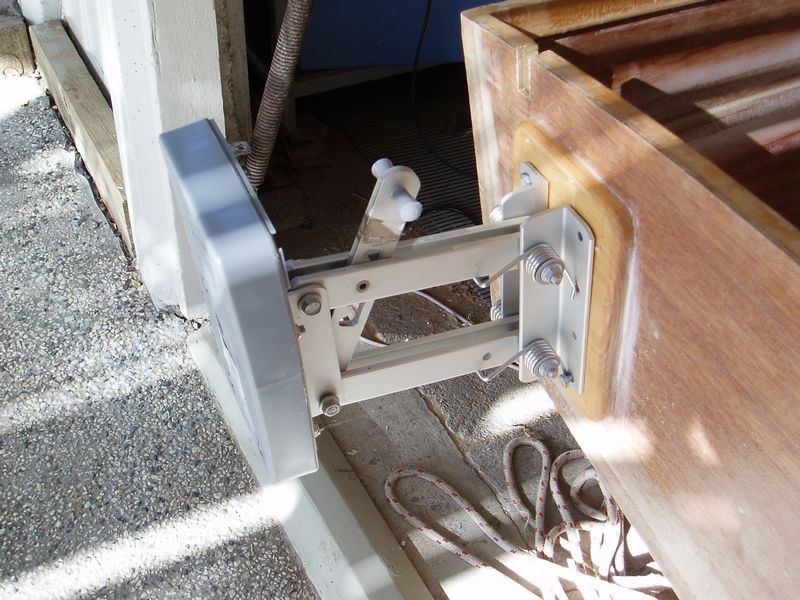
Hi Wojtek I have an adjustable bracket and positioned it so the second lowest of the 4 adjustable heights was set at the outboard manufacturer's recommended height ie this allows me to lower a further 4 inches or so if necessary. This very low setting helps prevent ventilation in waves, on turns, when heeled, or with crew on the bow but it still happens occasionally. Other advantages of the bracket are that the motor is off the transom and doesn't catch the mizzen sheet, and motoring in very shallow water is possible with the bracket in a higher position- I can set it so the prop is just below the transom but not below the keel depth so if the boat can float then motoring is possible. Some disadvantages are cost, weight (of bracket and also by moving the motor further aft there is more weight in the end) and possibly aesthetics for some. I'll attach a couple of photos Cheers Peter HK


-
John said Steve said Of course Graham's origin is here, where I live, in Brisbane, Australia. So all B&B designs clearly have a southern hemisphere orientation- you guys have been driving on the left without even realising it Cheers Peter HK
-
Hi Randy, I agree with PAR that in extreme conditions anything can happen. The CS17 with, as you say very full bow sections, makes it unlikely. Added to that the cat ketch rig with its low centre of effort, which reduces the leverage of the sail plan in delivering a downward force at the bow, makes it very unlikely. Hi Scott, I'd imagine it would be possible to let the mainsheet out a long way forward of the beam and, with reverse flow in the main, get the apparent breeze on the beam. I haven't tested this but did once sail a sloop rigged 14 ft catamaran to windward, backwards, in response to a challenge- a bit like easing the main forward a lot. Tacking angle was about 150 degrees. By letting the main go forward of the beam you can keep the tendency to jibe well controlled until the breeze is on the quarter and main would be better not wing and wing anyway. Cheers Peter HK
-
Hi Randy I'll tell you of my experience with racing dinghies long ago. I used to sail 14 ft Dinghies (an Aussie class popular at the time). They had 200 sq ft of working sail with 2 crew on trapeze. The spinnaker size ....originally limited to 250sq ft... ended up with no limitation. Spinnakers of 750-1000sq ft became the norm- a great, if at times hair raising ride. Occasionally we drove the bow under and pitchpoled. This tells us however that sail area off the breeze can be much more than to windward- in this example more than 5 times (working area plus spinnaker =1,200 sq ft compared to 200 sq ft). I'd say that reefing off the breeze would not be necessary unless you have double reefed to windward. This assumes you want a fast wet ride. If conditions become anxiety-provoking then reef more. I've set up my CS17 with 2 reefs in each sail- I could run before a gale with 30 sq ft in the main only. There's no shame in slow and safe and there's plenty of great controllable fun with a lot of sail off the breeze. It would take a lot of breeze to make a CS17 uncontrollable running downwind. Cheers Peter HK
-
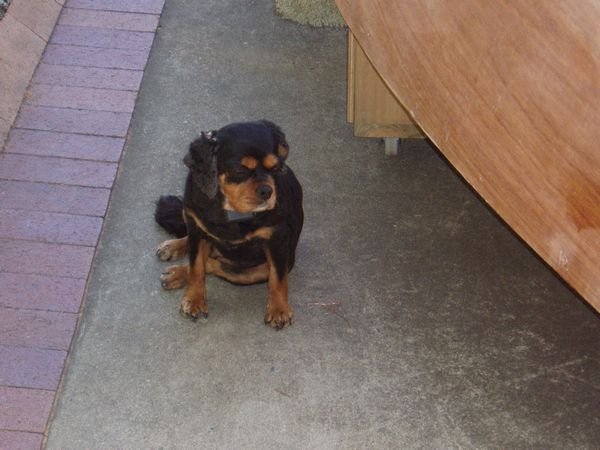
Always there helping me- although now at 12 she sleeps a bit more and doesn't get in the way quite so often.
-
Might be possible to build the hull from kit in that time. I kept a tally of the number of hours- 467 hours to build my CS17 (not a kit). It was my 5th build, mostly in 1 hour periods after work which is not the most efficient way but included everything. If you could pre or post build parts like the rig/rudder/centreboard ...which don't have the space requirements as the hull... then with the efficiency of the kit you might do the hull only in the time limit. Cheers Peter HK
-
I think this is the closest :puke_right: Cheers Peter HK
-
Hi Wojtek I bedded mine in with sikaflex 291 (an excellent product). It came with a gasket which I did not use. Silicones are, in general, not as good in this application. I'd use the same sealant on the centreboard pivot pin covers (mine don't leak). Cheers Peter HK
-
Not sure what you want to know. I certainly haven't sailed both and I suppose not many have. They have many similarities. I suppose the biggest difference is flat bottomed vs v bottom. Having sailed both types and despite all the arguments that a flat bottomed boat when heeled is like a v bottom I would strongly favour a v bottom hull shape. In waves the flattie pounds more and stops more. For an all round sailer the v hull is better. As the size /rigs/ cabin options are similar I'm not sure there many more significant points of difference...perhaps the variable ballast options in the Princess is one. I recently raced against an NIS 26 with an experienced skipper and the performance (in light airs) was less than inspiring. I was on my brother's Bolger Romp (a very slow 30 footer) and we were both in the last quarter of the fleet. Cheers Peter HK