Peter HK
-
Posts
619 -
Joined
-
Last visited
-
Days Won
29
Content Type
Profiles
Forums
Events
Everything posted by Peter HK
-
You "yellow boat" people are all the same :puke_right: Gold is the colour you really want

-
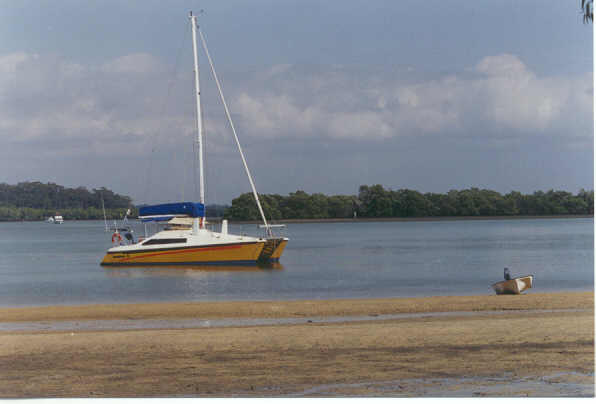
Hi Mark I looked up the photos of your cat on boatpoint to know which boat you were. We certainly were quite close for a while. I remember the Great Bay race- usually a pretty late finish- but it's some time since I last raced with QMYC. Must have been when I had the Farrier F31 in the early 90's. Launched from Raby Bay Cheers Peter
-
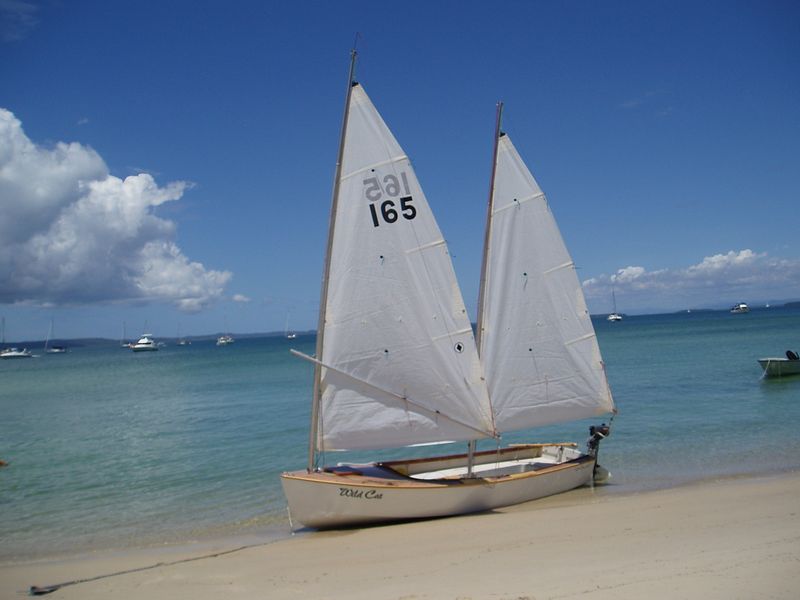
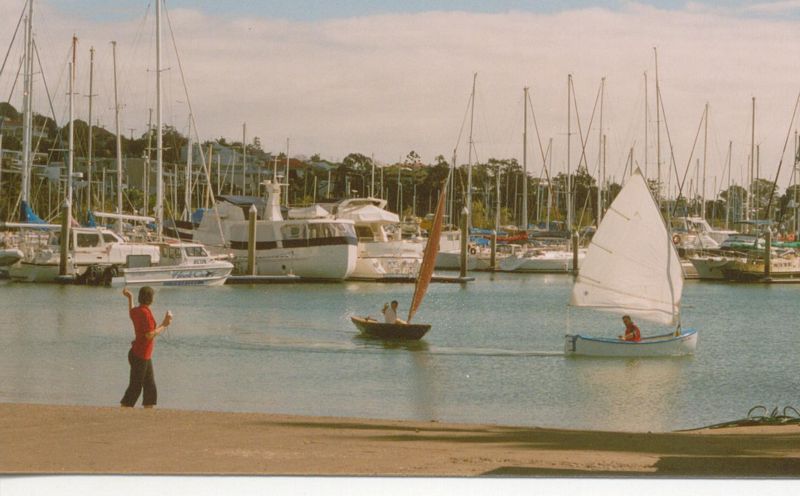
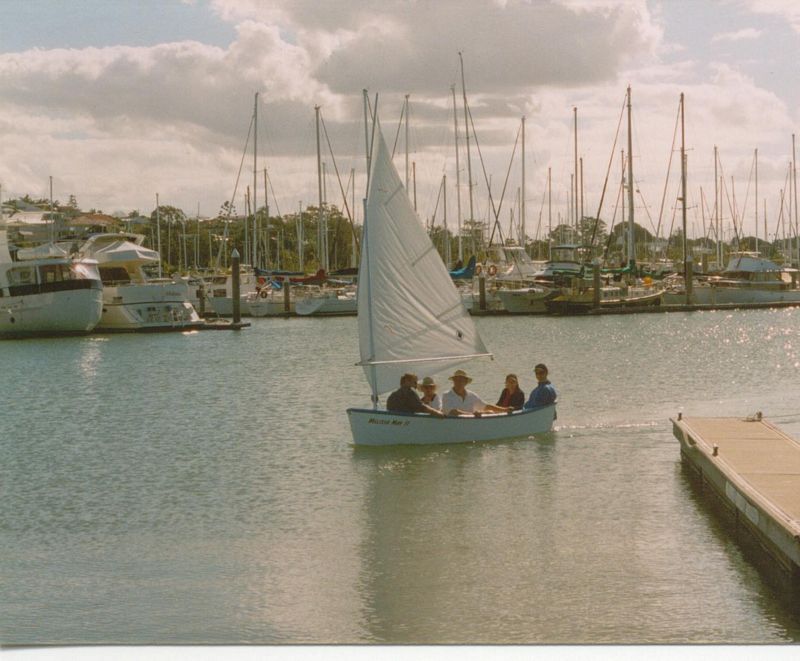
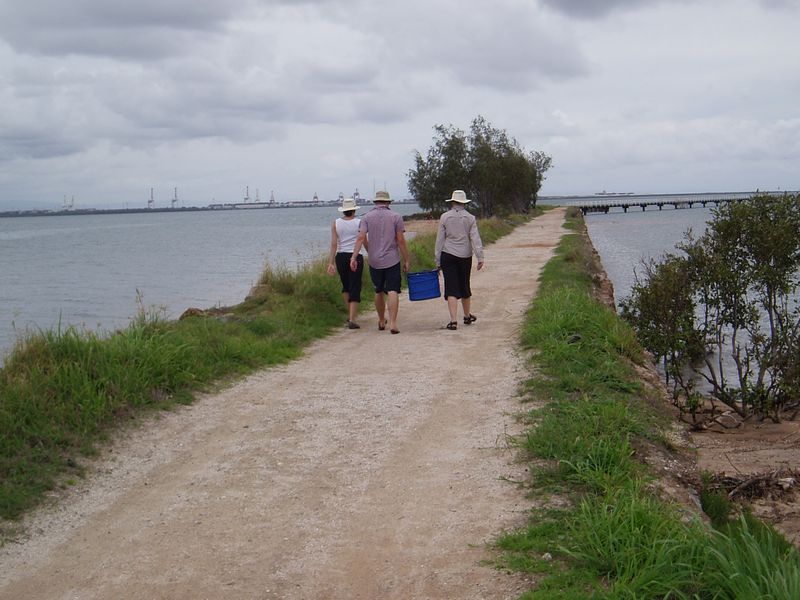
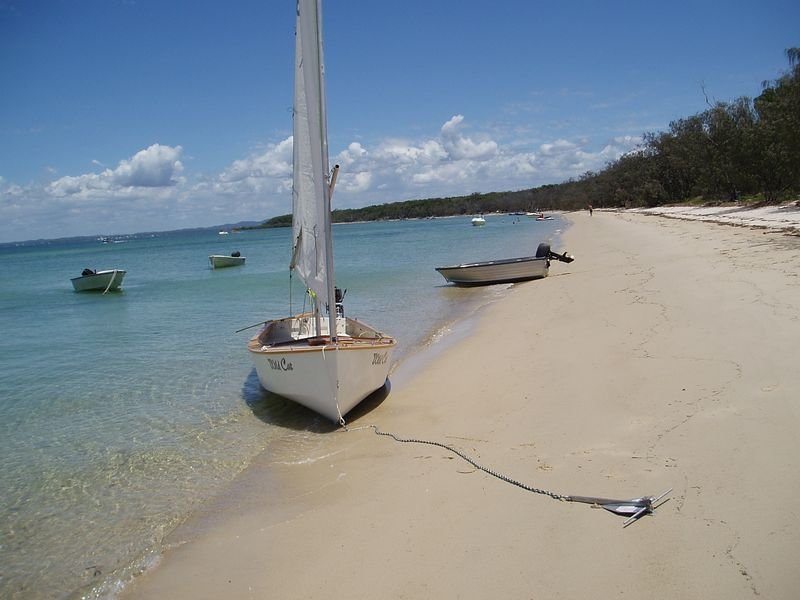
Hi Guys I know it's a frequent topic on the forum but there's no snow here in Australia. Went sailing to Horseshoe Bay on Peel Island in Moreton bay today- clear skies and 30 C. Had to singlehand as my crew cancelled at the last minute. Started at 8-10 knots in the morning on the way over (about 5 1/2 miles) and came up to about 15 knots after lunch on the beach. On the return I was a little overpowered in the gusts (139 sq ft in the roachy sails) but chose to luff a little rather than reef...one hour from leaving the beach to arriving at the ramp. Wind against tide meant it was like a washing machine at times on the way back- got drenched 2 or 3 times. As usual there were quite a few boats there.


-
Wojtek My understanding is that wood and carbon are difficult to use together- the carbon is so stiff that the more flexible wood component doesn't provide strength. If the carbon layer is not strong enough by itself and the masts flexes enough for the wood to provide strength, then the carbon will have failed/cracked. A solid core with a thick layer of carbon would be very heavy. Better to use more flexible fibreglass. Or go with the aluminium option as noted by Rune Cheers Peter HK
-
Bisque Cheers Peter HK
-
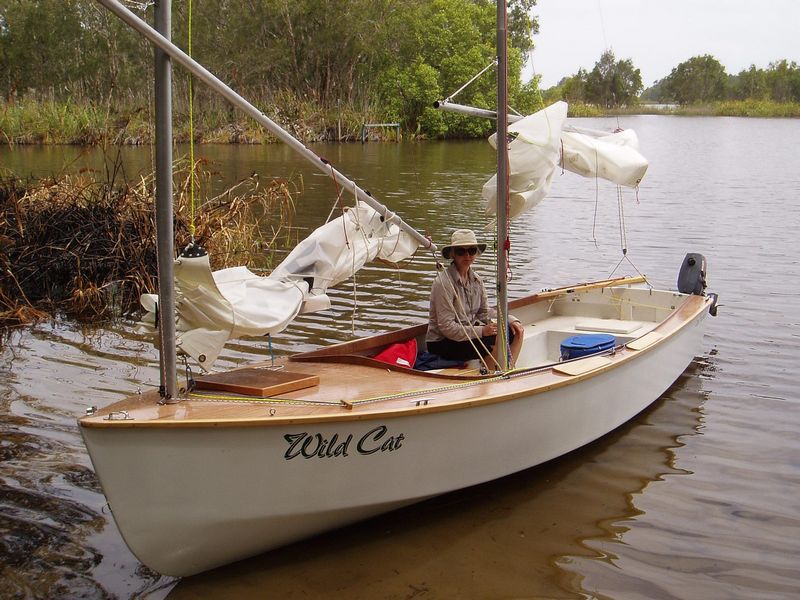
It free to slide along the traveller- in practice it wouldn't move more than 6 inches. I prefer sheets led so that I don't have to reach behind me but that's just a personal preference. There are some minor downsides- a couple of extra blocks in the system means it doesn't run as freely as the mainsheet and you have to feed it out in light airs, it takes half a minute longer to rig and the thwart gets a little busy with cleats at the base of the mizzen mast. All in all I'm happy with it. Cheers Peter HK
-
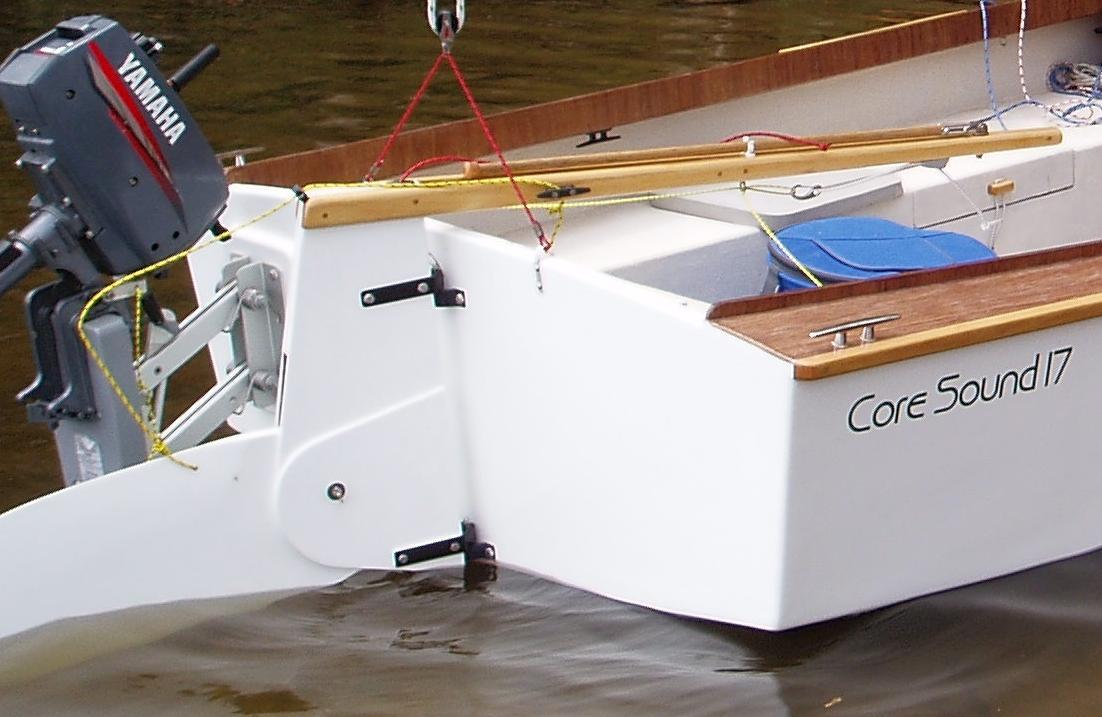
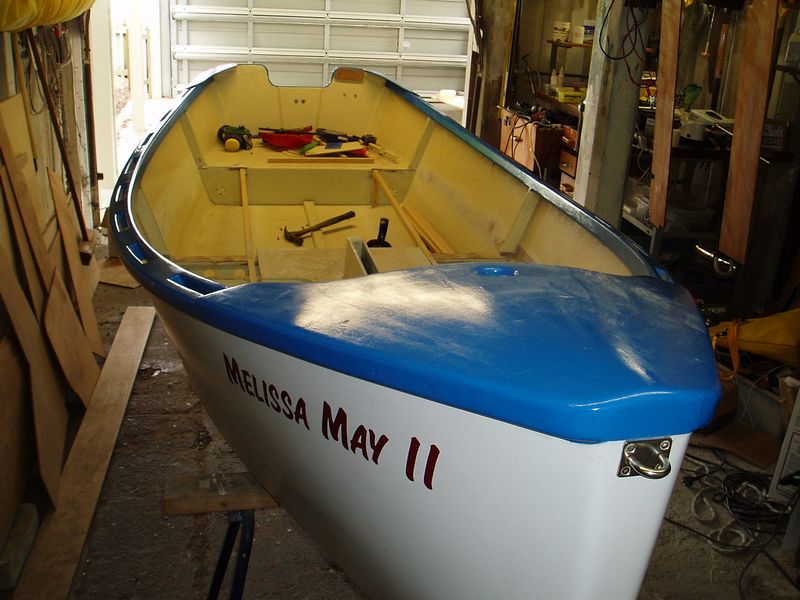
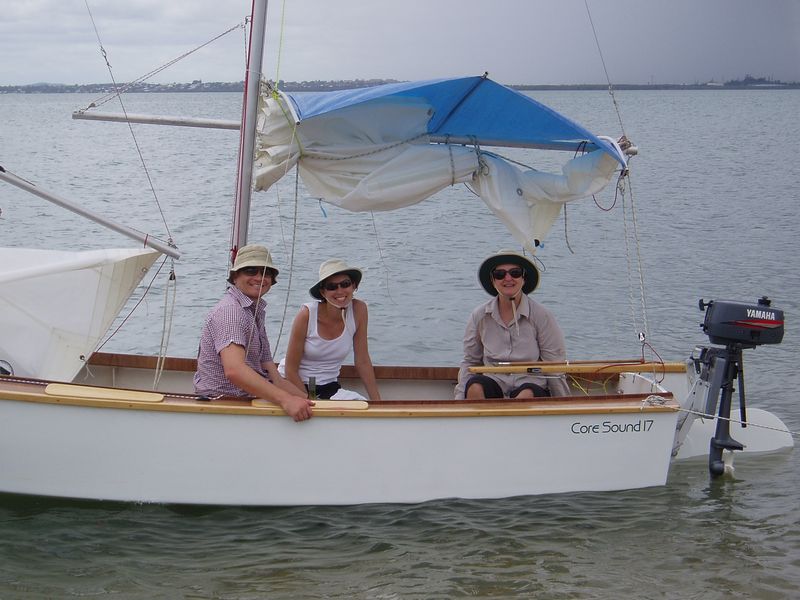
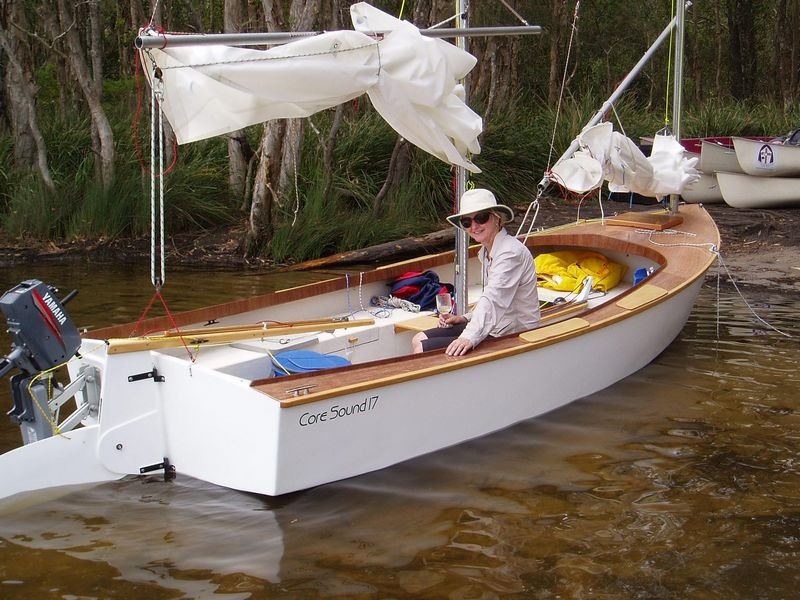
I ordered the name online from this site http://www.boatnames.com.au/index.html and they threw in the Core Sound decal for free. It came in a couple of days with detailed instructions. I presume there would be similar sites in the US.

-
Hi Wojtek As an aside your friend Peter came to visit and look at my CS 17 last weekend. It must be close to a record that an expat Australian living in Sweden, with a Polish friend who has built a B&B boat, came to Brisbane, Australia to check out a similar boat. We had a nice time discussing boats/sailing. Re the mast. My Cs17 plans show 3 inch (76 mm ) diameter for solid wooden masts. I think the only alternatives are: 1 As you suggest glass (not carbon) the wood to the 70mm diameter- probably strong enough- or 2 Change to aluminium base sections (recommended diameter 63.5mm) that will be able fit in your mast tube and use the top of the existing wooden masts in the aluminium bases. Hope this helps Peter HK
-
Speak for yourself Cheers Peter HK
-
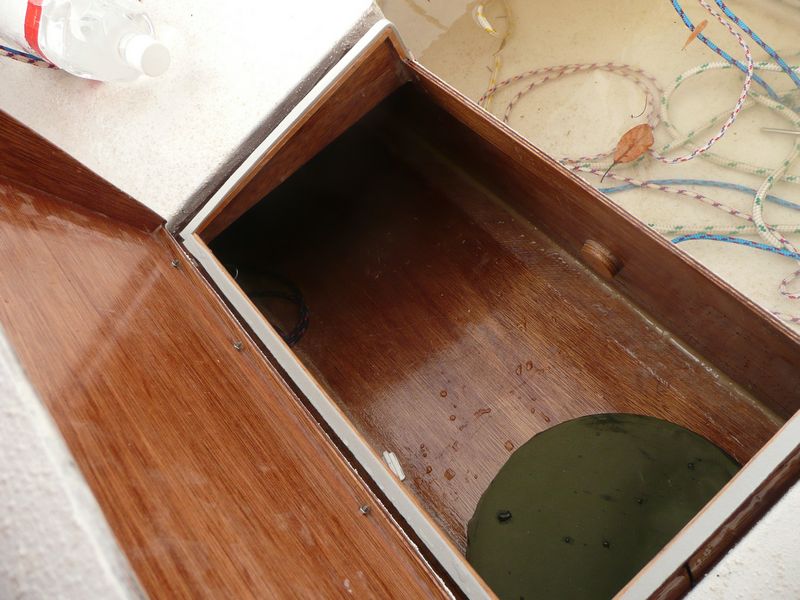
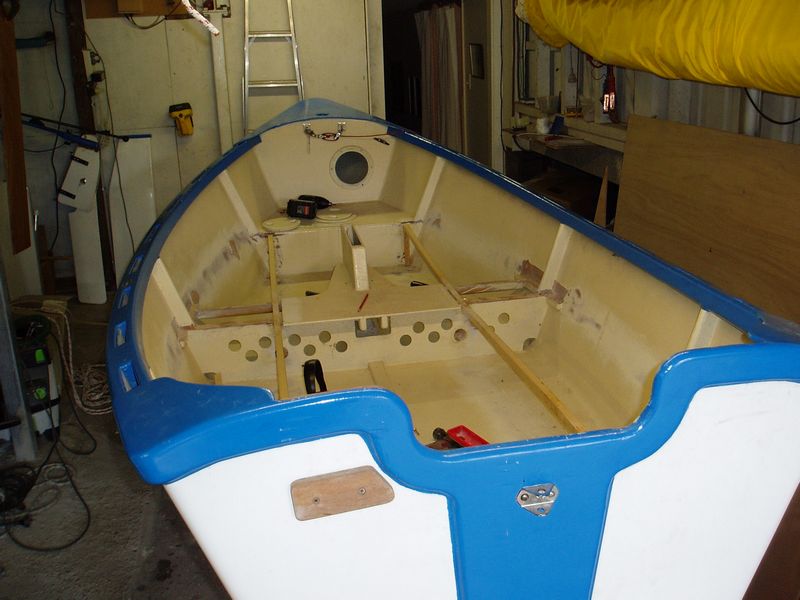
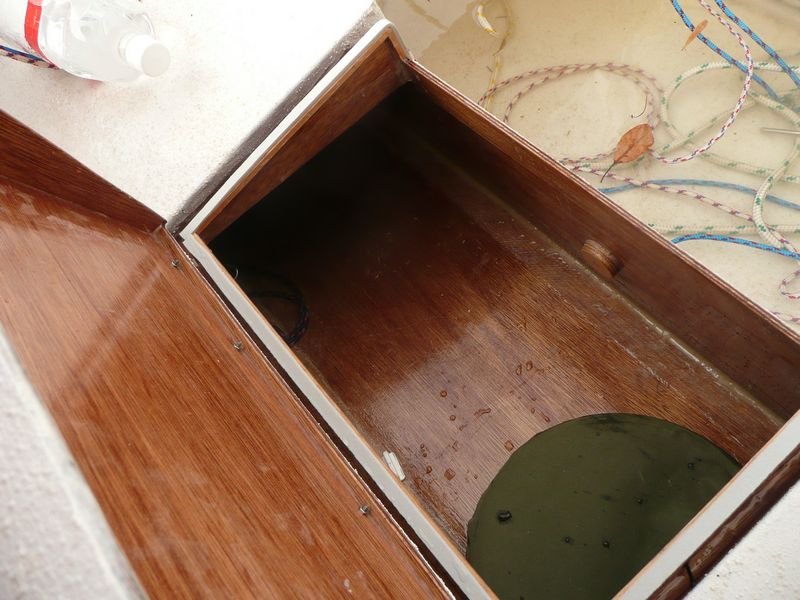
I'll add my 2c worth These pry out plates http://www.beckson.com/prydp.html with thicker O rings are really water tight- I've tested them in several boats over many years. The screw-in hatches generally are not, as the threads deform and jam making them difficult to tighten enough and impossible to remove if you do. As it says on the website if the tank is sealed and can develop positive pressure they could pop out. This means that you do need a breather hole in the compartment. I drilled a small hole from my forward seat tank to the aft one where I have the lifting seat hatch which wouldn't be airtight.

-
Hope this helps
-
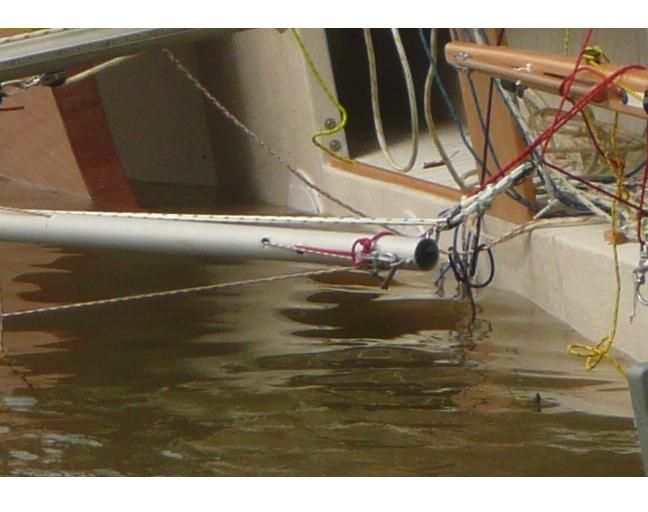
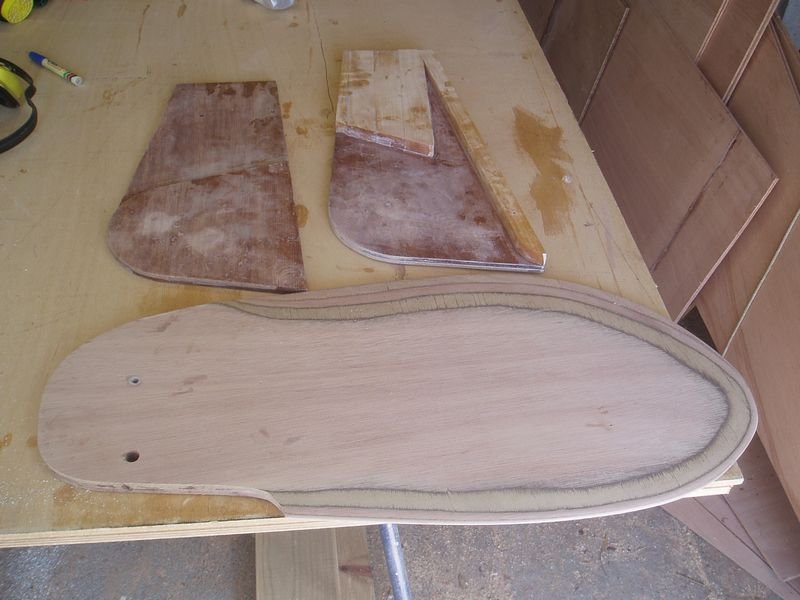
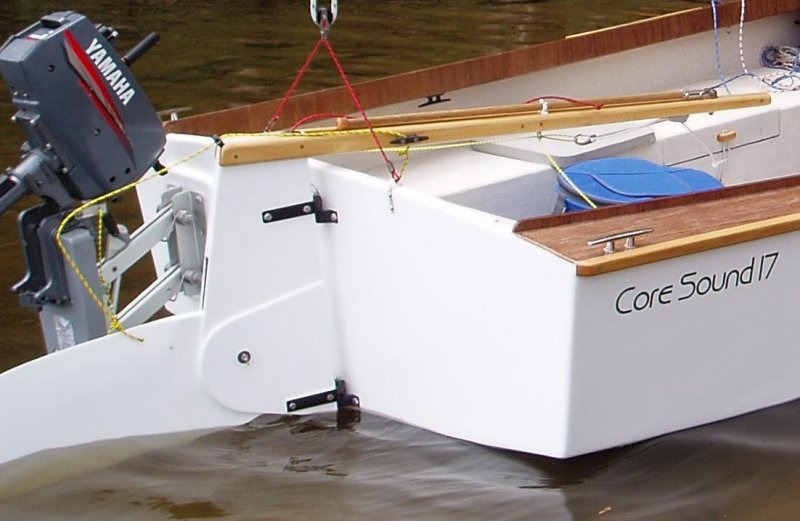
I agree with Tom that a groove in the edge of the rudder head is desirable so the downhaul line won't slip between between rudder and box. I routed mine. Regarding the uphaul, I'll include a photo of mine...it's the yellow line. It cleats to a simple horn cleat.
-
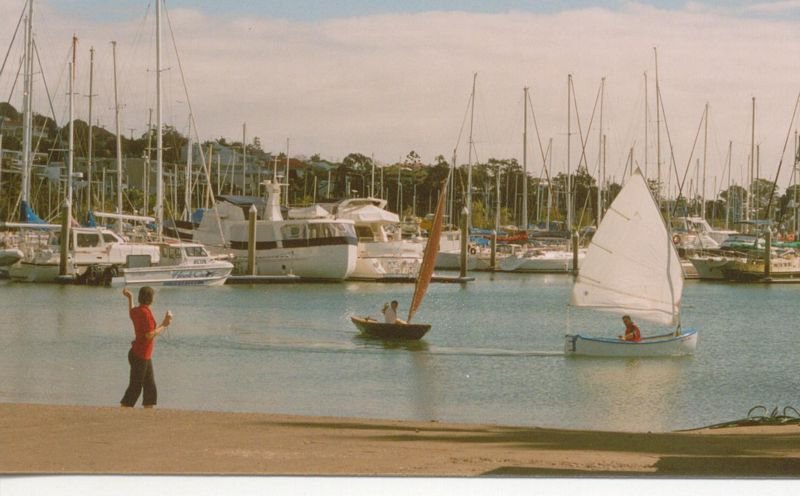
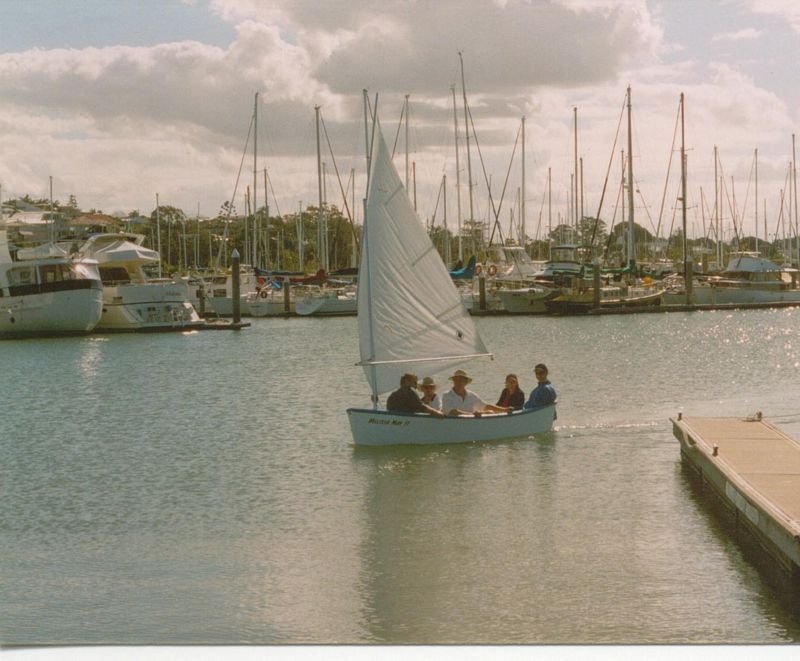
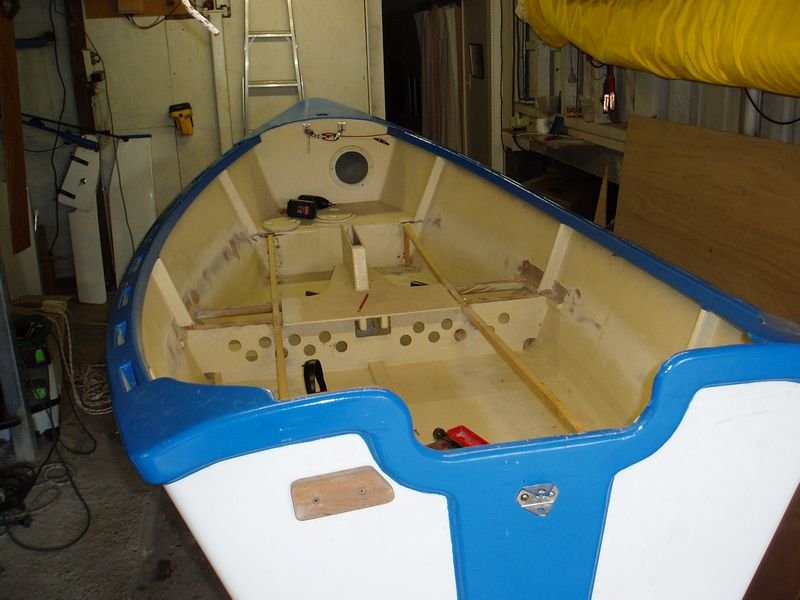
I'm not sure this counts on the B&B forum but at least it's in real time - about half an hour ago- and it's based on some design features of my CS17. I recently posted on a capsize test on the CS17 http://www.messing-about.com/forums/index.php?topic=7108.0 and was impressed by the effectiveness of the buoyancy chambers at minimising the water load in the boat after righting. Some years ago I built a Welsford Golden Bay dinghy which is a nice simple little sailing boat with buoyancy in the bow and stern but none along the sides. In a capsize it comes up with a huge volume of water making it extremely unstable and getting back into the boat impossible. I've been reluctant to let novices sail it.



-
Re aluminium, I had difficulty getting the right sizes and alloy/temper so had to get it delivered from some distance. Costs for delivery were quite good up to 8 ft lengths but longer pieces were much more expensive :shock: I made my masts from two 8 ft lengths and adjusted the wooden topmast length as necessary Doing it again, if I could get longer pieces of tube easily I'd probably use one 10-12 ft tube of aluminium and go straight to a wooden topmast (birdsmouth a good option). Re fibreglass, when I spoke to Graham in 2006 he said about half of the boats had been built without glass sheathing, but the glass covered ones coped with knocks much better. I used 200 gsm cloth (the approximate metric equivalent of 6 oz) as a balance between light and tough. As a rough guide coating with 6 oz would add 4kg (9lbs), 10 oz nearly 7kg (15 lbs) Cheers Peter HK
-
I'm sure that you won't have a problem. Whichever 6 degrees (F or C) you are talking about will mean the epoxy will likely be still quite green/soft tomorrow. If not a soldering iron will always work if you wait long enough. Shorting the wires with a 12 V battery also works...very quickly... but leaves a little burn mark so if you plan on bright finish is probably best avoided. Cheers Peter HK
-
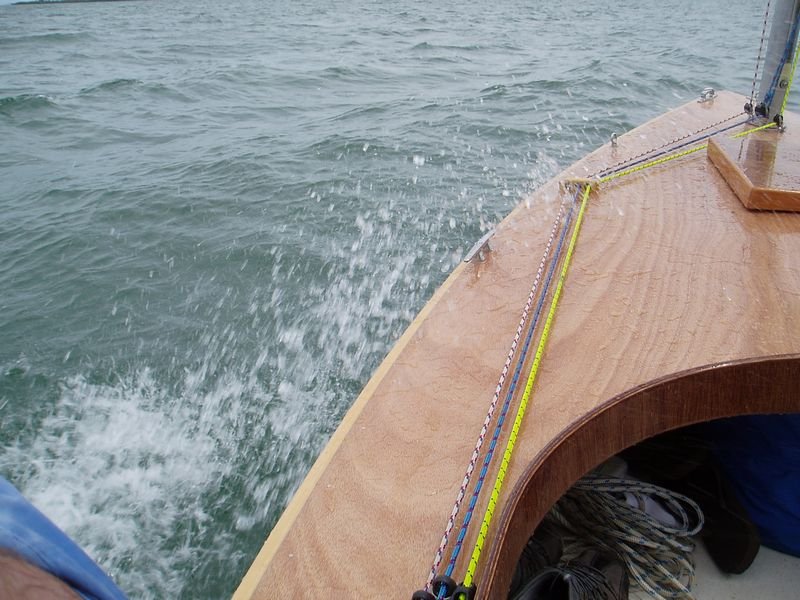
I gave David the helm for the trip home (he
-
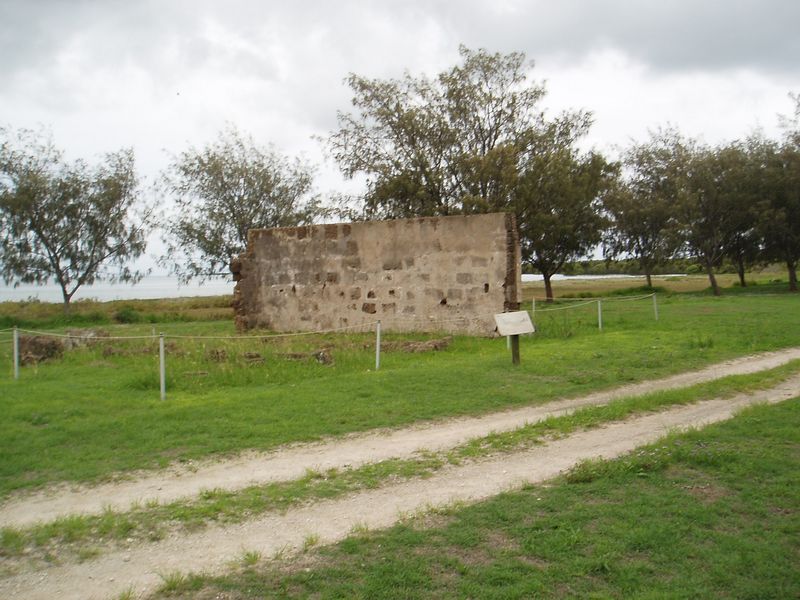
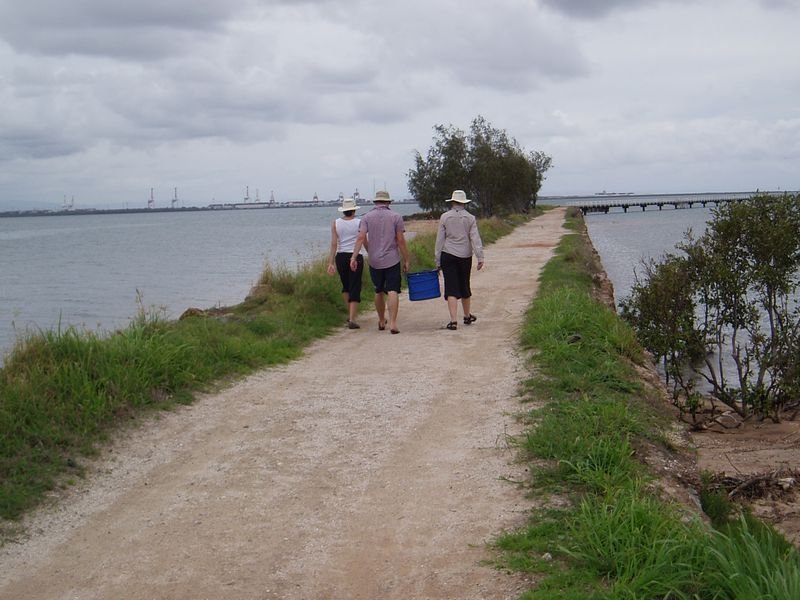
The Island then became a maximum security prison and the ruins are still there to visit although now it



-
I

-
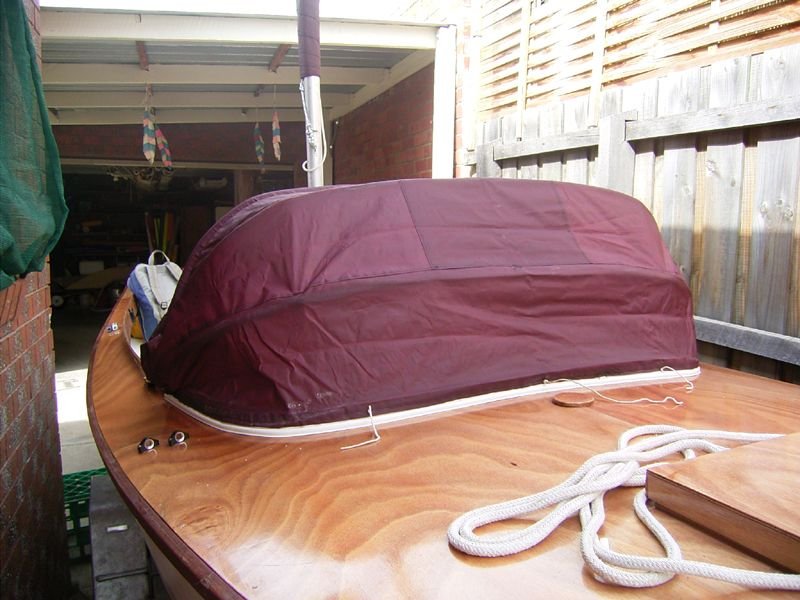
Try these photos

-
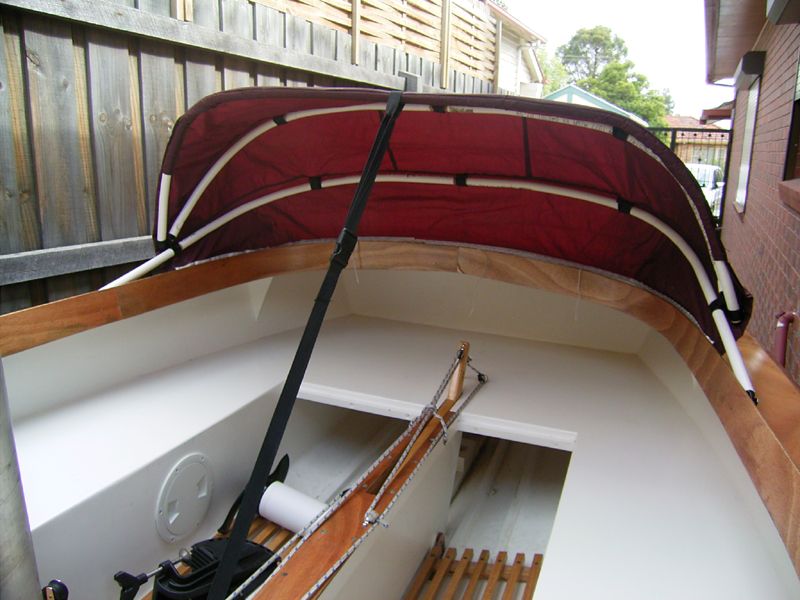
Hi Harry You might find this site helpful re a mini dodger http://www.batchelors.net/personal/boat/cs17/index.html Quite a nice job of it as shown on these photos [attachment=1] [attachment=2] I have doubts that spray rails will be generally effective- usually these thing work in a narrow range of speed and sometimes make it worse at other/higher speeds. May work if you have constant/reliable breezes. From my experience of Okanagan (all 3 days) on the calm days they wouldn't be necessary and on the windy days they wouldn't work. I must say when the change came through and the breeze was 30 knots the kite surfers didn't seem to mind the cold water :shock: As an Aussie I found the water "quite" cold. Cheers Peter HK
-
Now that's a mental image I didn't need :shock: Cheers Peter HK
-
The answer is clearly No. Most people simply pick the mast up and place in into the tube rather than use a tabernacle even on the larger Coresounds- I find it no problem on my CS17. If you search past discussions you will find a number of threads on the subject- the general consensus was that no tabernacle is needed on a CS17 and some thought it might be nice on a CS20 because the mast is a bit heavier. By extension it certainly wouldn't be necessary (or even desirable) on the smaller CS15. Cheers Peter HK
-
That generally applies to 4 strokes...it makes a mess when the oil leaks from the dipstick. Small 2 strokes with premix don't have that problem (although larger oil injected 2 strokes with a reservoir might) Cheers Peter HK
-
FWIW I understand most small 2 strokes can let water that is left in the exhaust passages in the leg back into the head if the leg ends up higher than the head. Apart from corrosion this can make them hard to start. It's generally advised to store them at least slightly leg down. If there's an integral fuel tank then closing the vent and outlet will prevent fuel leaks. With a remote tank disconnection is best. Cheers Peter HK
-
I had an old, bent, 50mm diameter aluminium mast (wrong alloy) from a previous build that I cut and used to make the struts for supporting the masts while trailering. As the masts on a CS17 are 2.5 inches (63.5mm) diameter the gap was significant- over half an inch. I wrapped 75mm (3inch) tape around the plastic covered tube until the thickness was about right and when cured slipped it off and cut it into a couple of neat rings - one for each strut. I drilled and screwed them to the tube. The foot was done with a plywood heel. They were quite neat in the end.