Peter HK
-
Posts
619 -
Joined
-
Last visited
-
Days Won
29
Content Type
Profiles
Forums
Events
Everything posted by Peter HK
-

Another Spindrift 12 goes 3D...Yippee
Peter HK replied to Greg Luckett's topic in B & B Yachts Forum
Hi Greg I feel for you. I hate that stage of boatbuilding. Somehow you can always find a bit that isn't perfect. Sometimes you just have to say enough. Cheers Peter HK -
Core Sound 15 -- The Decision and Some General Questions
Peter HK replied to a topic in B & B Yachts Forum
Ken I don't think having sail tracks prevents rolling the sail on the mast...probably need a cleat for the halyard on the mast and of course if you opt for battens that slows things a bit (with either track or sleeve). I really like sails that reef easily. Cheers Peter HK -
John Welsford http://www.jwboatdesigns.co.nz/plans/walkabout/index.htm I think Ray built one last year. Cheers Peter HK
-
Core Sound 15 -- The Decision and Some General Questions
Peter HK replied to a topic in B & B Yachts Forum
Hi Dennis You are right that epoxy is not totally waterproof and doesn't stop water penetrating into wood- it does slow the process dramatically however. These boats are intended to sit on a trailer between sailing days- in this situation the issue is letting any water out after sailing so that it doesn't sit there and cause rot. The mast drain and bailer are good at this. Even if you are storing outside under a tarp where some rain could enter the fact that they drain the water away will protect the hull. Cheers Peter HK -
Core Sound 15 -- The Decision and Some General Questions
Peter HK replied to a topic in B & B Yachts Forum
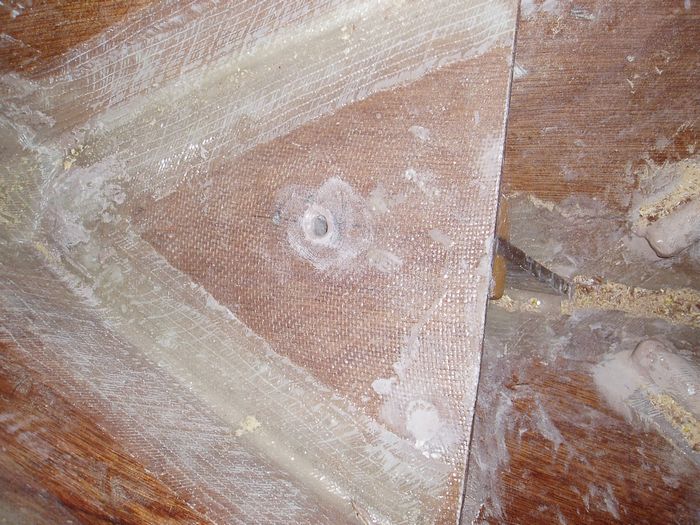
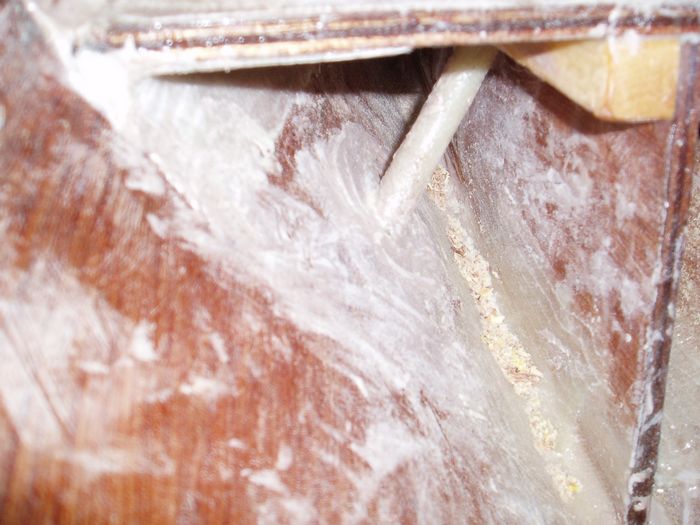
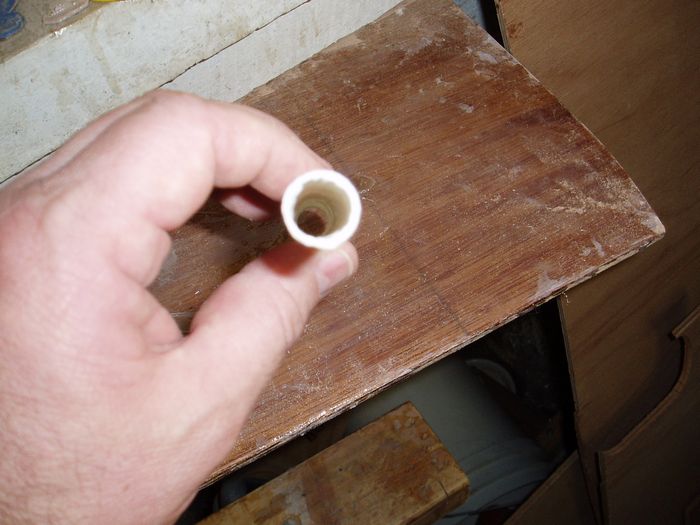
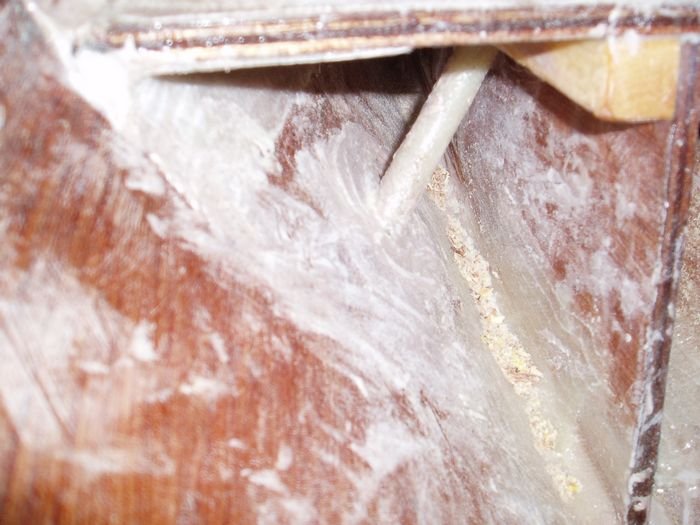
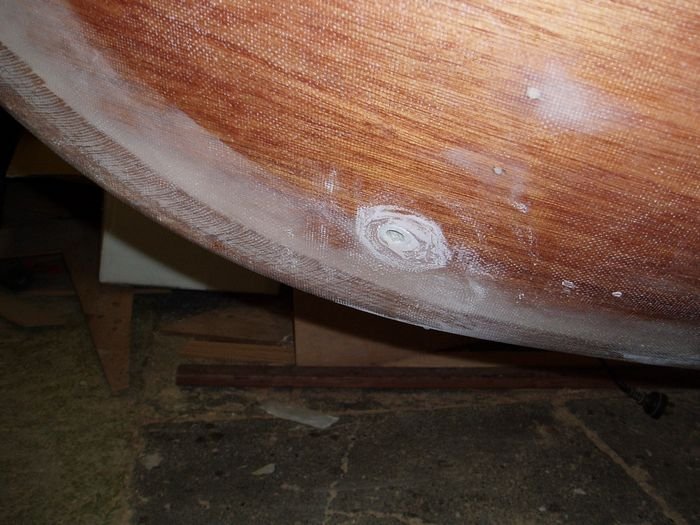
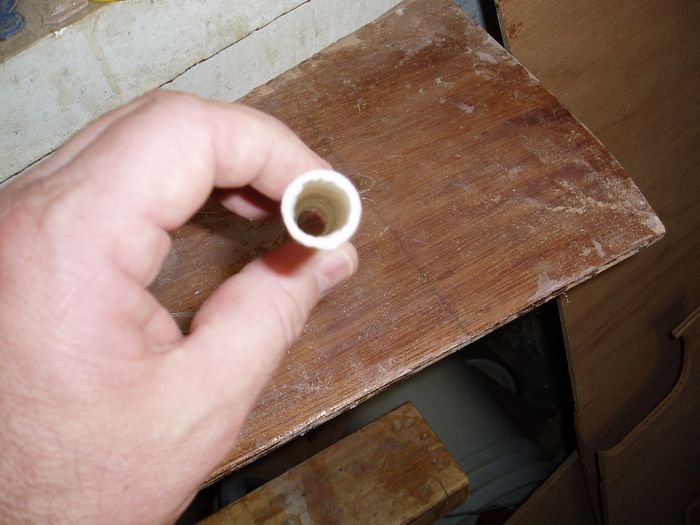
I see you have had a number of replies. What I did was make a fibreglass tube and drain it at an angle downwards and aft through the bottom of the mast step. See photos Peter HK

-
Trysail Cheers Peter HK
-
CS-15 CS-17 or CS-20 - Keeping the Rain Out
Peter HK replied to ZendoDeb's topic in B & B Yachts Forum

-
Hey Jeff I have no idea if the following suggestions will be helpful, or if you want to rely on them in this case as leaking battery acid is not something that is acceptable, but I understand that silicone sealants are pretty tolerant to acid and some will set underwater. Also I've heard good reports on this stuff http://www.whitworths.com.au/main_itemdetail.asp?item=64758&search123=epoxy&intAbsolutePage=2 with a friend telling me that when he was lifting out the diesel engine in his boat the lifting tackle failed and it fell a few feet and cracked the hull. This stuff completely fixed a major leak, setting underwater, allowing him to get the boat towed to a slip. Whether acid affects it or whether it bonds well to a plastic battery case I do not know. Good Luck By the way I'm still laughing ;D Peter HK
-
I'd never thought of the need to go off road Having said that the ability to move the build was to me very valuable as I had a crampped space in which to build it. I think the casters which allowed the front end to move sideways and thus with a bit of backward and forward motion to reposition it anywhere was easy and helpful. If you have a huge shop it probably doesn't matter too much, but the ability to move it into the open helped with setting the masts/alignment (and I expect with testing sail set which should be in a few weeks for me). Peter HK
-
I made mine mobile. Peter HK


-
He's probably never seen the technique of starting a campfire with the sparks from shorting leads from the 4WD battery either Peter HK
-
It did seem a little quiet Peter HK
-
Jeff said Joe said I'm with Joe on this one. While I'm still building my CS17 (sanding high build undercoat ) and thus can't comment directly on the sailing characteristics of the Coresound, I can comment on other designs that might be pertinent. I have a Bolger 30 ft folding schooner- see the avatar- and it's fast. Highest GPS documented speed is over 15 knots. We averaged 11 knots over 5 miles close reaching. It's wet. It has a flat bottom and so much rocker that the forefoot always slaps. The water is forced out sideways. You can see this in this link http://sports.webshots.com/album/548246269VtgyuF While in theory you might force the water sideways, at speed the breeze on the windward side will always catch it and throw it back at you. If you go very slowly then there isn't much spray and you can be drier. You have to remember the cardinal rule- in the equation of speed, comfort and cost you can only get 2 out of 3. You can be very dry and very fast but only in a more expensive/larger boat. I've done that and all in all I think smaller boats are more fun. My 2c Peter HK
-
Hi Ken She's a Bolger Romp- 30 ft Cat yawl. Built with the best Tasmanian timbers- King Billy and Huon Pine...which are said to be among the finest boatbuilding timbers in the world. Here's an article about her http://thecoastalpassage.com/papers/tcp22.pdf Peter HK
-
Hi Ken Sorry I can't boast of any recent trips of my own- as you can see my Cs17 is still a little way from launching.


-
Experience with store-bought hatches?
Peter HK replied to Jeff MacDonald's topic in B & B Yachts Forum
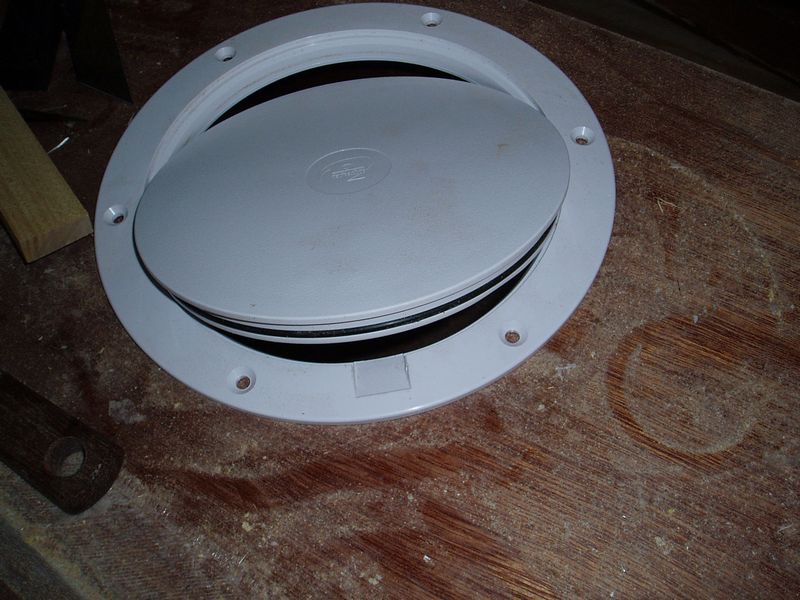
The only type of cheap plastic hatch/port that I've found to be really watertight is the round press-in type that requires a lever to remove. As they are a cylinder within a cylinder with an O ring seal that deforms appropriately and so forms a high pressure seal, they actually work. The screw-in ones don't put enough pressure on the seal to deform it - usually the plastic threads deform first and then they are impossible to remove, so no one puts them in that hard. Here's a photo of one. Peter HK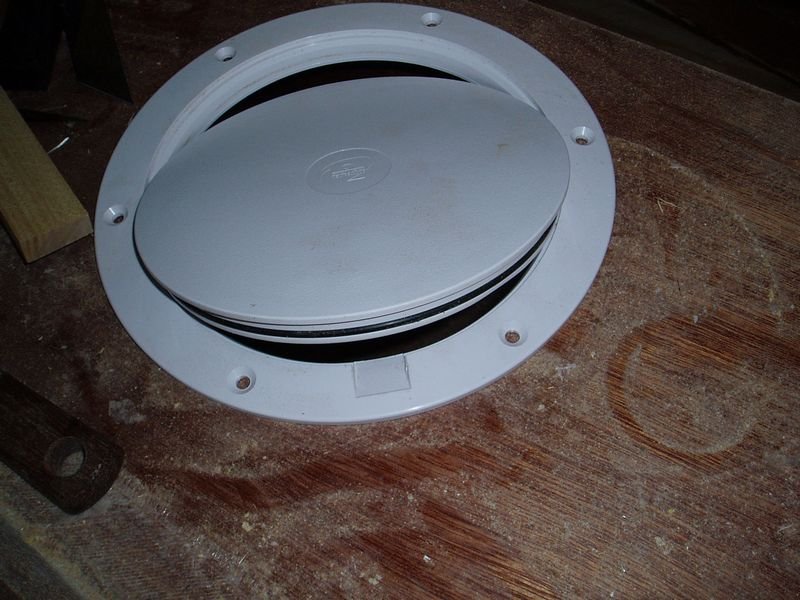
-
You may not have seen this footage from the 2001 Sydney- Hobart race. It was filmed from Nicorette - the largest boat in the fleet. I can only find it in German...still a fabulous and frightening video. http://www.sailinginnovation.tv/view_video.php?viewkey=f0af142b6d3bead98a92&flag=I I was chased by one offshore about 5 years ago but it dissipated before it reached us. I don't ever want to get closer. Peter HK
-
You could just find the axle position at the point of balance ie when the hitch has negligable downward force, measure the distance between axle and hitch, add 10% and move the axle to that position. This assumes you've set up the boat in its correct position on the trailer first. Peter HK
-
Just a couple of comments: I went from the Farrier to a 35 ft Bridgedeck cat and cruised for several months...I had gone to the trouble of replacing the stove oven with a flash new one...and I hardly ever used the oven. The grill was useful but almost all baking/roasting was done in the covered gas BBQ in the cockpit. We were sailing from Brisbane (about Florida climate) to the tropics so maybe in a colder climate an oven might get more use. Before I bought a second hand F31 I had planned to build one. I seem to remember the materials cost back in the mid 90's as being well in excess of A$50,000 (USD30-35,000)...might be quite a lot more than you think. Peter HK
-
Hey Paul In the words of Maxwell Smart- that's the second biggest outboard I've ever seen on a Coresound ;D Nice work... but I'll still use a (slightly smaller) outboard from time to time Peter HK
-
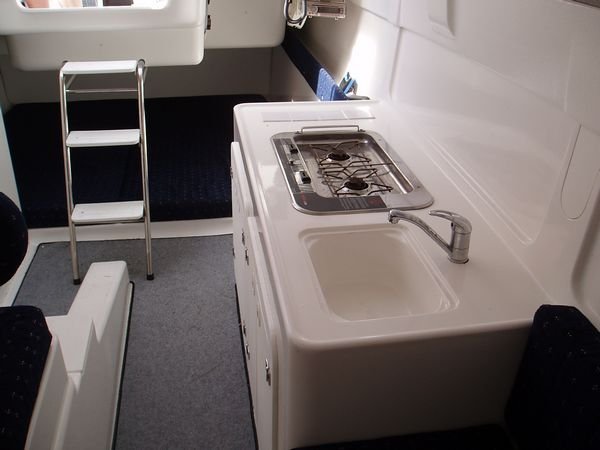
Hi Scott A little more information would be good. How many people?- I assume a couple. Really important? In what sense? Sailing ability? Accommodation? Seaworthiness? Motoring ability? Trailability? I've owned a Farrier F31 folding tri and a Mach 28 (an Australian, larger,better built copy of a Mac 26)- both pretty large trailables. Towing either was easier than I thought, but only a once or twice a year proposition. The Farrier was an incredibly seaworthy, brilliant sailing vessel. After a month cruising the Whitsundays I had a sore back ( was 39 at the time). The double bunk was too cramped (I'm 1.82 metres- 6 ft in the old terminology) the shower/head was too cramped. The Mach 28 was a pig to windward, motored quite well and at a good anchorage was an extremely comfortable boat- huge double, full standing headroom, good shower /head, excellent dinette. My back was fine but I soon lost interest in it because it sailed so poorly. I'd rate an excellent, large bunk highly. Most designs have too many. If it doesn't sail well it's disappointing, so that is important. A lot of cruising is done under motor- transom hung outboards generally are not as good as those in a well. A good shower/head makes it much more comfortable. An covered/enclosable cockpit makes a huge difference. I'll attach a few photo's of the Mach 28 interior.


-
Hi Martin I think a photo of the mast step failure, if possible, would really help the forum determine the underlying cause. I can understand the thwart failing - the lever arm of the mizzen mast is great and once the mast step failed it could easily split the thwart. Peter HK
-
Core Sound 15 -- The Decision and Some General Questions
Peter HK replied to a topic in B & B Yachts Forum
Looks quite spacious to me ;D Peter HK


-
Hi David On my plans the leading edge diameter of the rudder is 3/8 inch ie half the rudder width and then faired in. The centreboard trunk cap slot aft from forward is noted as 19 5/8 inches- ie 19 3/4 inch forward from the thwart. The plans say adjust to the boat. I'm in Brisbane- where is Cobargo? Peter HK
-
Dave said I was assuming you could still get 1/4 inch. Looks like the USA will be forced to adopt the metric system in the end Interestingly, I find 6mm ply from different suppliers varies quite a bit and seems to be getting thinner- the latest batch I had was 5.7 mm. Peter HK