Peter HK
-
Posts
619 -
Joined
-
Last visited
-
Days Won
29
Content Type
Profiles
Forums
Events
Everything posted by Peter HK
-
Summer here in the Southern Hemisphere :BIG: Cheers Peter HK
-
My vote for best power tool would be a cordless drill/screwdriver. I like my Panasonic 14.4 V as it's light and relatively small which means it's easier to use in cramped awkward places. Shame about the layer of epoxy that slowly accumulates on it :-( Cheers Peter HK
-
You'll have to wait for an expert to really answer your question but I'll make a few observations. I'm not sure what the specs are for a CS15 mast but my CS17 plans suggest 0.083" inch (just over 2mm) for the lower sections. I mm is a very thin walled section. 7075 is certainly of high tensile strength- I'm not sure if it would make up for the thin wall. You haven't told us if this is a larger diameter section than the plans for the CS15 suggest, which might make up the difference in strength compared to the thin walled section. Most importantly though it's the weight at the top of the mast which makes a difference. Putting a heavy top section would certainly negate any benefit. I doubt any weight saving at the low end of the mast would make up for cost (I understand it's quite expensive) or performance gain. If you want to pay money for high performance masts then there are companies providing tapered aluminum or carbon masts to order. My 2c Cheers Peter HK
-
I just put a little thickened epoxy in the joints between the ties one evening and the next morning removed the wires and filleted and glassed over the whole lot...no sanding required if the epoxy is still fresh enough.

-
I suppose the snotter tension means there's always some bend in the lower third. Your wooden masts seem to be a little less stiff than my aluminium one but I did use a thicker walled lower section than in the plans as I couldn't get the exact size as in the plans. I have year round sailing here- indeed the winter is best. I guess the break leads to some good planning for next year :idea: Cheers Peter HK
-
For pulling the bottom panels together a very good method is to use a light line, perhaps 3 mm, with a type of spanish windlass. Drill holes about 25mm on either side. Pass the line through and up and tie with a reef knot. Insert a stick or something similar (I usually use a small screwdriver) and twist the line to increase tension. This will pull things together nice and evenly as the line has gone underneath as well as on top. Tuck the end of the screwdriver under the tensioned line when you have pulled it together. For the bulkhead I agree with PeterP- fit a batten to the lower edge of the bulkhead and then screw through it to the bottom. Peter HK
-
If you're going to have a zip off section you can do it along the leech as I remember from sailboards many years ago. I seem to recall some zipped down the luff a few feet and then went to the clew effectively removing the leech batten area of the sail and leaving a scalloped leech. Might work for your purpose. Not sure how good the zip is for sail shape. Peter HK
-
Tom said I'll try but summers here in Brisbane start getting very wet soon with most of our rain (heavy tropical rain) for the year in about a 2 month period. There are often not many good sailing days in that time :-( Still the predictions are for an El Nino this year (drier/lighter winds) which is better for sailing but not so good for the farmers. Steve said Yes 27 degrees south here. Must be working. No one's asked me yet Cheers Peter HK
-
Unfortunately a bushfire had been through in the previous week, so the bush still had quite a smoky smell. Some areas were badly burnt.



-
Well it's nearly summer here in the Southern Hemisphere so it must be time to record some trips for those approaching the Northern winter. I recently spent a few days in Noosa and took the boat up the Noosa river to the Noosa everglades.


-
Jeff asked Here's a link http://www.beckson.com/prydp.html Cheers Peter HK
-
One example here http://www.batchelors.net/personal/boat/cs17/index.html Cheers Peter HK
-
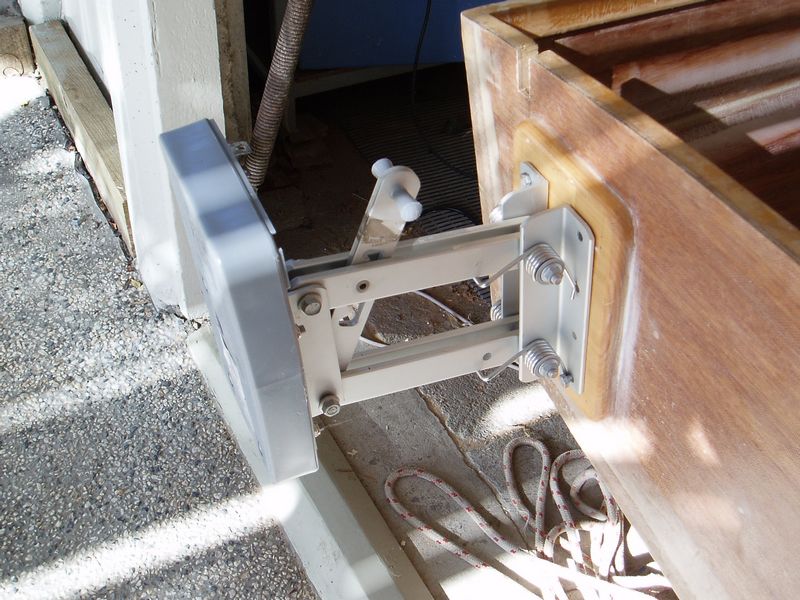
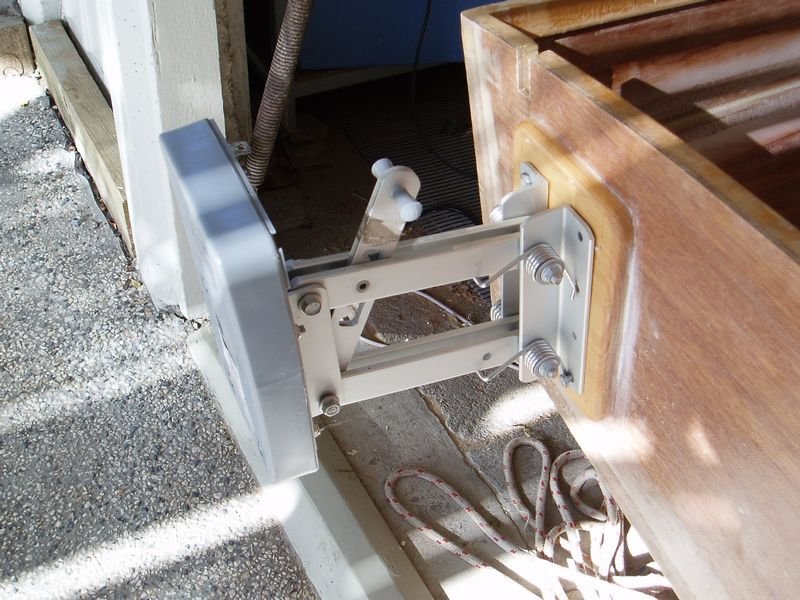
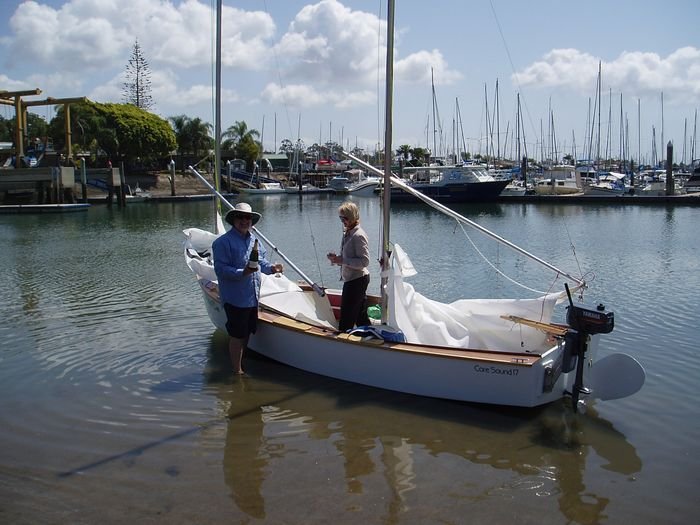
It's simply an adjustable motor mount...here are photos from construction and on launch day

-
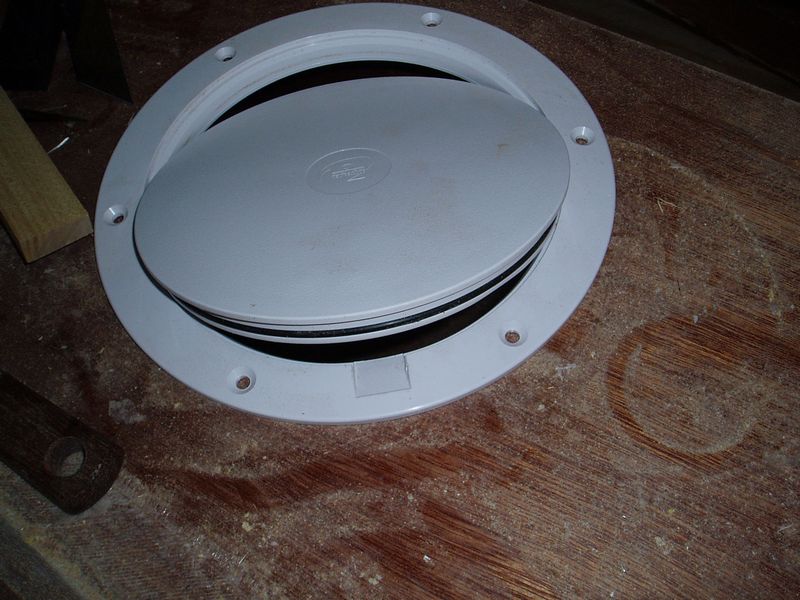
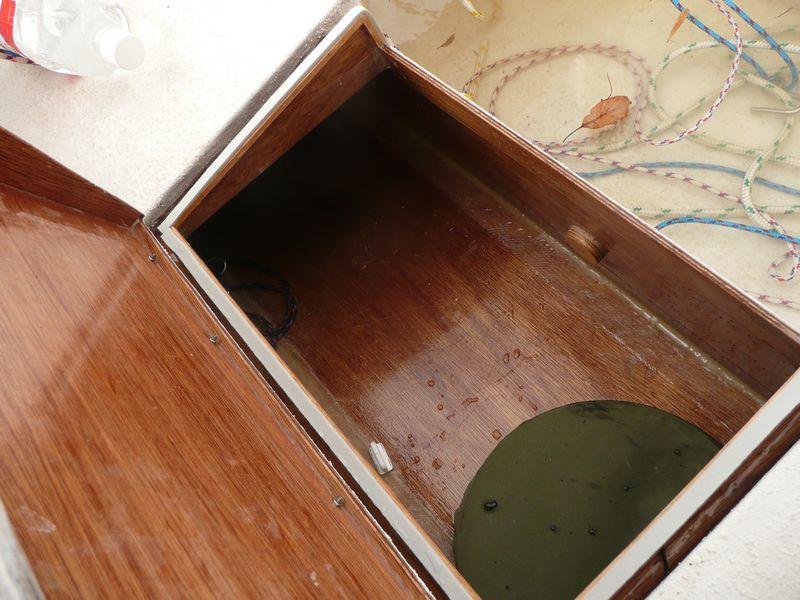
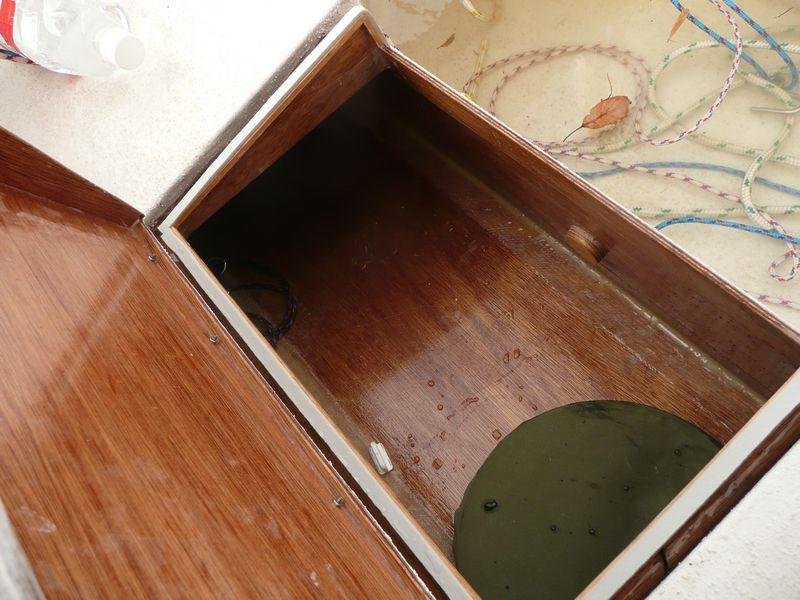
Another thing I should have mentioned is the hatches in the forward storage/buoyancy tank- see here:


-
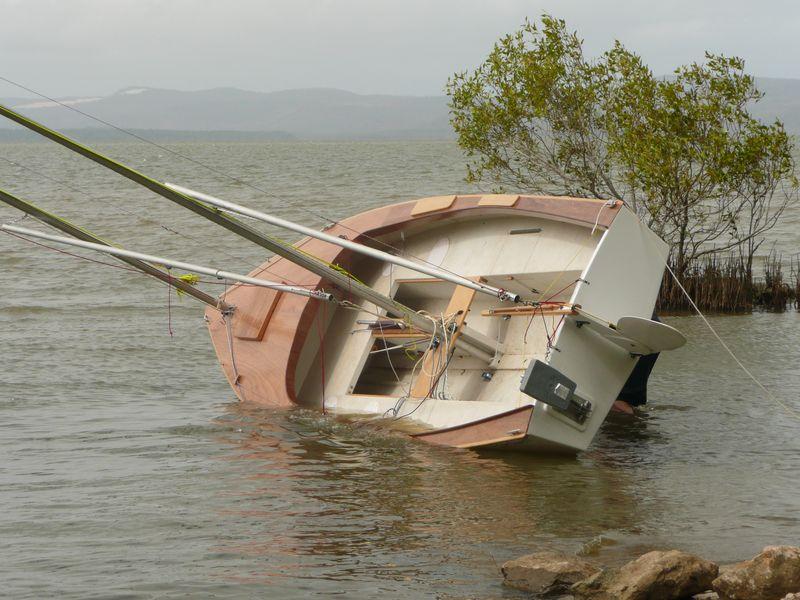
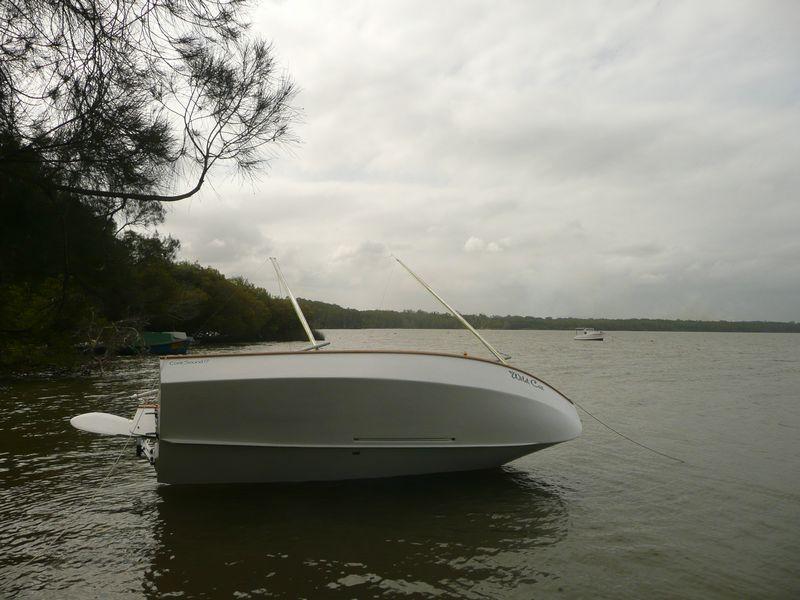
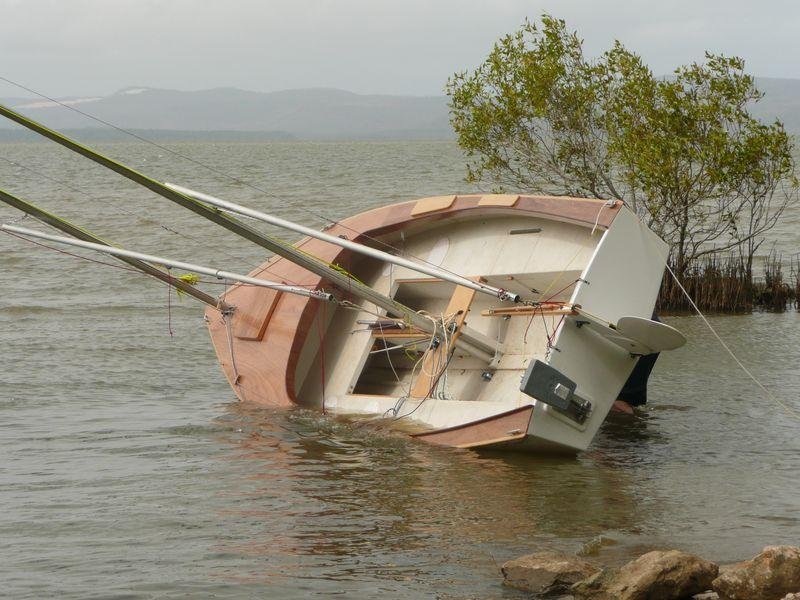
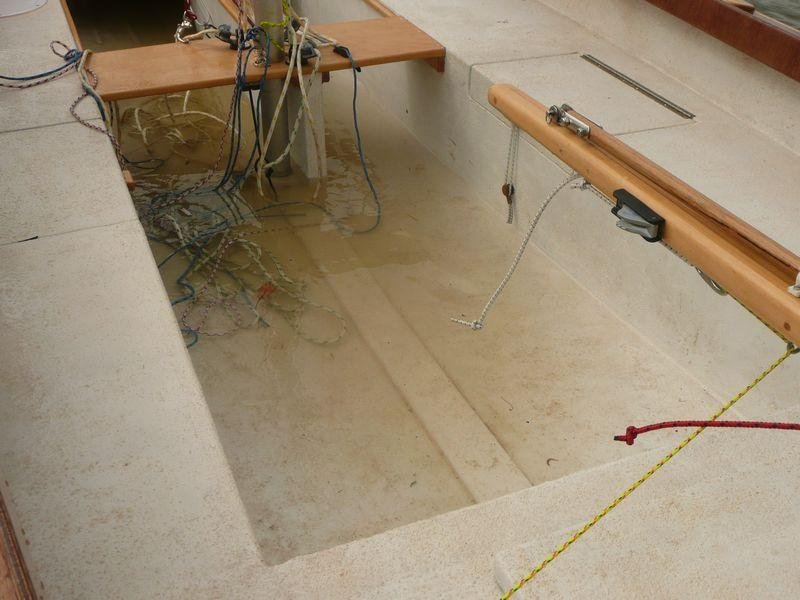
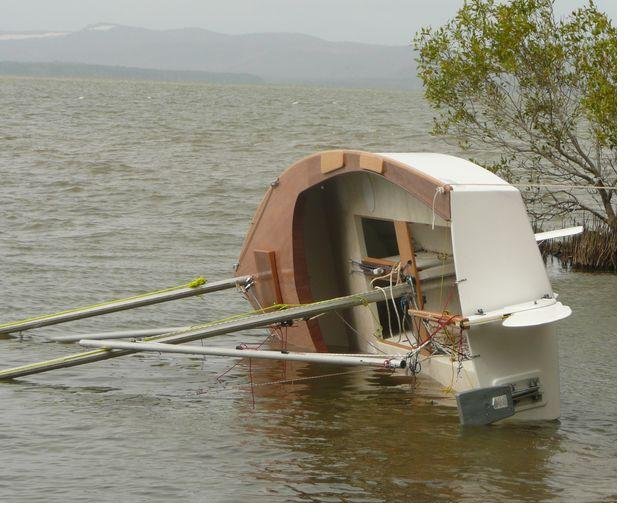
Bringing her up was easy once I'd put the centreboard down (this was in knee to waist deep water) Cheers Peter HK
-
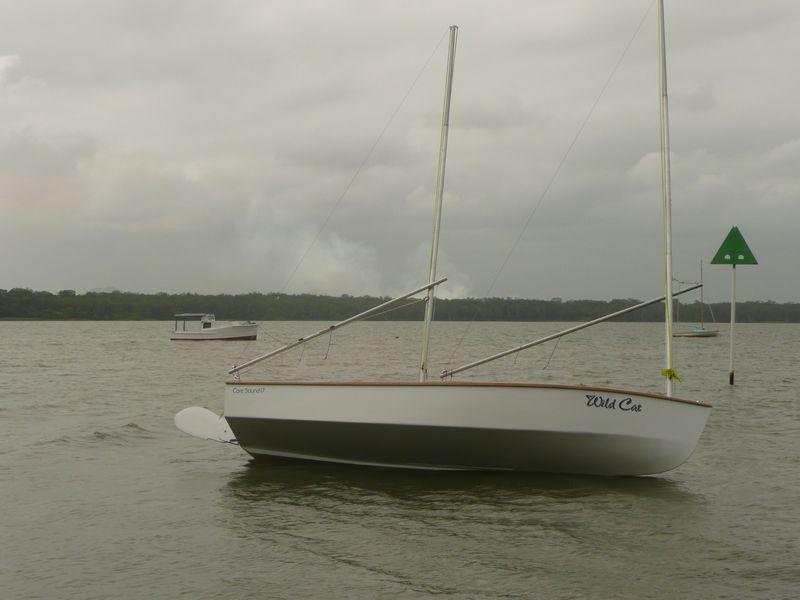
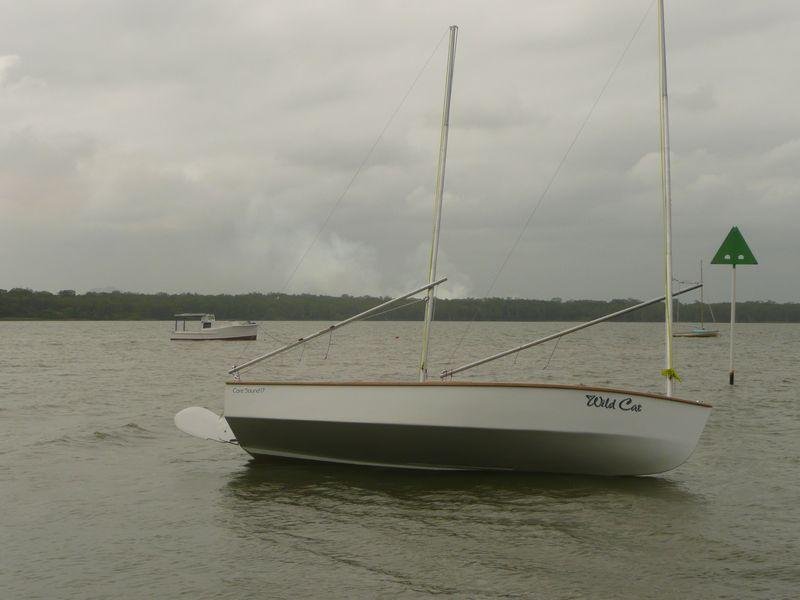
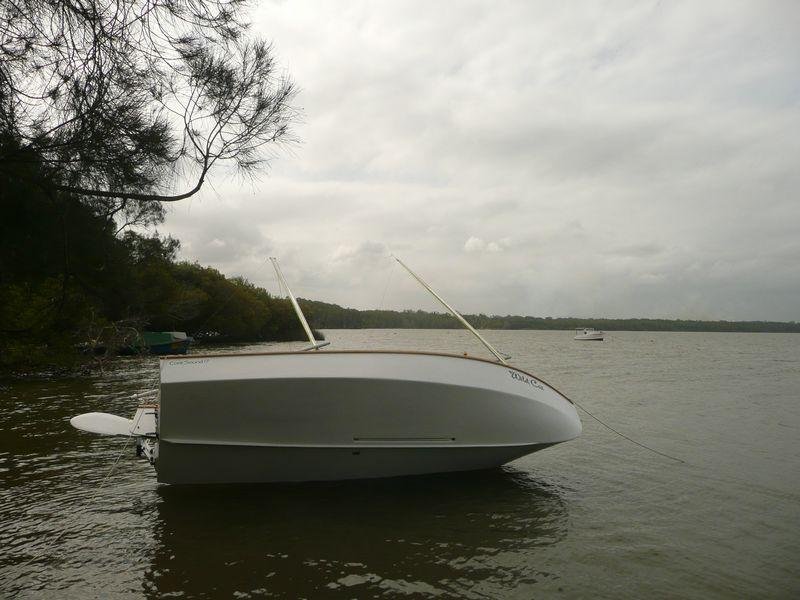
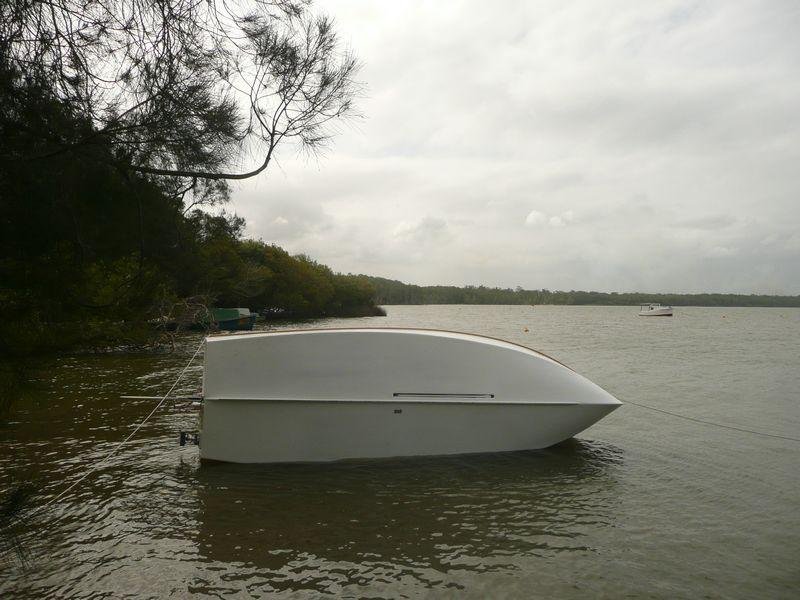
I recently did a capsize test on my CS17 and took a few photos which might be of interest. First I tried to capsize it with weight alone but didn't get very far

-
That bit is easy to fix. With respect to reefing- it may not be too expensive to have the luff sleeves cut off and sliders and reefs fitted by your sailmaker (or yourself if you're up to it) and fit tracks/halyards to the mast. I've made the main reefable from the cockpit- a line to the reef tack led aft, halyard led aft, and reefing line at the clew end led forward along the boom (mine are aluminium so the line goes internally to an turning block and then exits to a cleat on the boom about halfway along) I'll attach a few photos


-
And if you find you forgot to leave a raw area and have epoxied it- sand/grind it a bit and you're right. I've done destructive testing on pieces that were glued after precoating (and sanded) many times and the wood has always failed. Cheers Peter HK
-
Hi I quite like precoating as it's a lot easier to use a spreader and roller on flat surfaces on a table rather than doing it at the end when parts can be hard to reach. I wouldn't do it on whole sheets in general because it's wasting epoxy on the offcuts. One coat isn't enough if you want the epoxy to act as a barrier to moisture. 2 minimum and 3 is good, but watch out on any piece that will be bent a lot as the epoxy when fully cured would make it more prone to cracking (bitter experience). I'd cut out, then epoxy with more than one coat. Cheers Peter HK
-
Went sailing yesterday (for the second time) in about 8-10 knots with occasional puffs to 12. Nice and quick on a reach, pointed well to windward, felt nice and stable underfoot...so much so that my timid forward hand (my wife Annette) commented that it felt more like a yacht than a dinghy. I took a photo of the mizzen while on a tight reach-

-
And if while you are charging you have a loose terminal that can spark if it is jiggled then you can have an explosion from the mixture of hydrogen and oxygen. As there is lots of hydrogen in the top of the battery it tends to blow the top off. Battery acid can then easily leak out. Don't ask how I know this but I strongly endorse the advice to use a battery box :shock: Peter HK
-

Centerboard Trunk -HELP Needed from Those who've gone before
Peter HK replied to Maria CS20 104's topic in B & B Yachts Forum
I'm not sure it's any better structurally but two things I like about this method is: 1 No time wasted fitting/spiling the case to the hull- poke it through and a simple pencil line determines the angles and curves. 2 The case to hull join is much easier to see and make sure it is sound when filling any bubbles/gaps in the glue line and glassing over. It's just another way. Cheers Peter HK -
Centerboard Trunk -HELP Needed from Those who've gone before
Peter HK replied to Maria CS20 104's topic in B & B Yachts Forum
Just to let you know there are other ways...I cut the hole in the hull large enough to fit the case through. The case had been left a little long so that it protruded through the hole. I marked the protruding case with a pencil when dry fitting it then removed and cut off the extra. I then glassed it in (with the spacer to prevent the sides of the case from bowing). When I turned it over I routed with a round over piece and glassed it. Cheers Peter HK -
On my reefing system I don't have a cheek block on the boom, but simply tie a bowline around the boom. This has an advantage that the snotter doesn't need to be eased or tensioned afterward- the loop simply slides along the boom. My aluminium booms probably make this easier. As to the second reef I have a snap shackle attaching the reefing line to the reef clew point and can simply shift the line up to the next point. Here are a couple of photos from when I was installing it.


-
Thanks Paul