paul_stewart
-
Posts
277 -
Joined
-
Last visited
-
Days Won
8
Content Type
Profiles
Forums
Events
Everything posted by paul_stewart
-
=

-
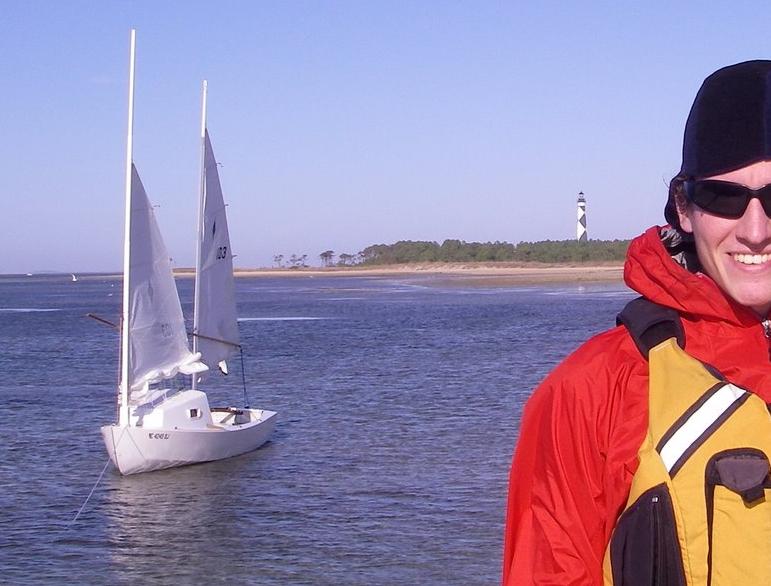
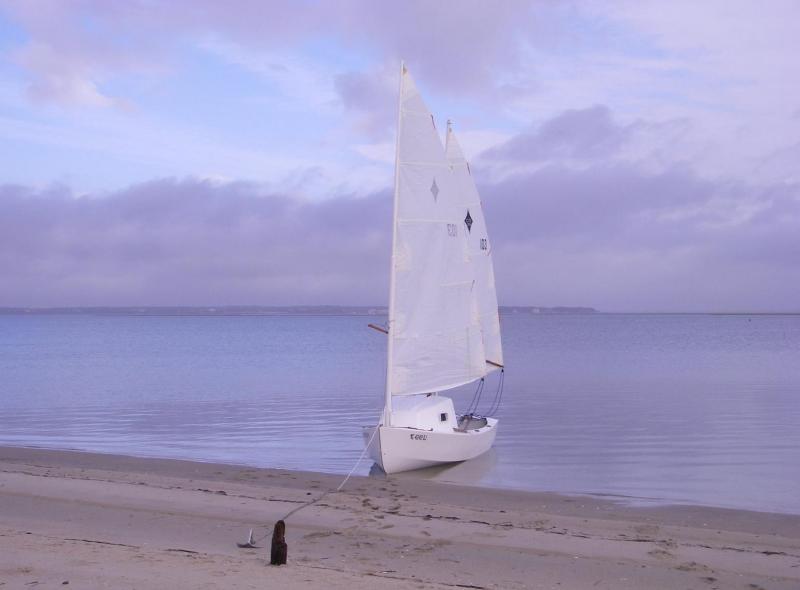
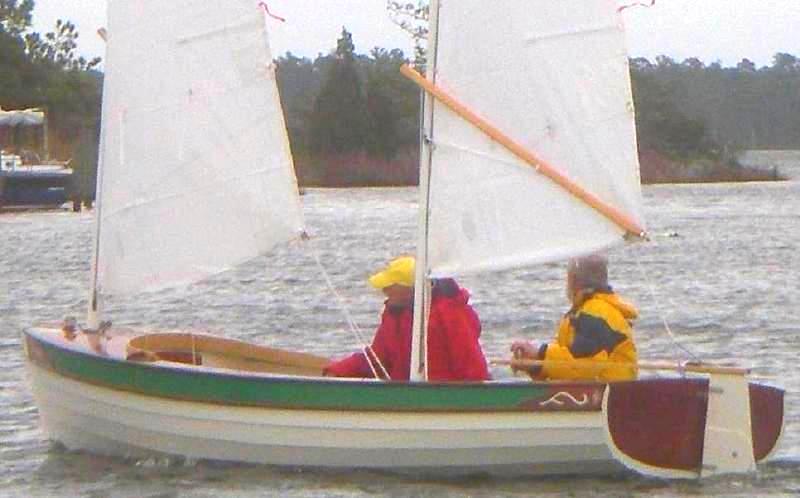
Photos of a Core Sound 20 sailing the southern part of Core Sound... Alan has posted a trip report and photos at http://sailnaway.blogspot.com/2009/01/lookout-sailing-trip.html


-
Larry, it is indeed a treat for your family/friends to be able to track your locations when you are sailing. We see the SPOT as a pure pleasure, icing on the cake; it is wonderful to see SPOT data coming in, but if it doesn't then we don't worry. Yes, Larry, hiding is an option! ;D Onboard you can turn the SPOT on or off. But usually you wouldn't want to do that except when at anchor. You also have the option of sending an occasional "ok" confirmation message to your family/friends, or sending an "I'm ok but need help please come pick me up" message to your family/friends. In the worst case, you can send an SOS/911 alert which goes to your family/friends and to the SPOT response center. The response center notifies the appropriate nearest rescue organization(s). Tom, my personal experience and perception of the general concensus about the current SPOT system (still kinda new) is that it is good but not perfect. I believe... (1) On the water (or driving down the highways), SPOT works very well attached to a boom or cabin roof on a sailboat because boats are usually in wide-open areas. Works great on kayak decks too. Boating/kayaking is one of its most successful applications. Onboard, SPOT does not work as well attached to your PFD --too bad about that. Attach it to a boom, or... glue it to the top of your hat ? (2) Inland, trees or mountains or other obstructions can have a negative impact on the ability of the SPOT to see its satelites. (Similar issues when wearing it on your PFD when sailing.) Hikers/backpackers report much more unreliability of SPOT than do boaters/kayakers. (3) You have the option of displaying the SPOT data in real time on a public display webpage. For example, http://share.findmespot.com/shared/faces/viewspots.jsp?glId=0ggfiiudDlSq9j1ZzAq9rT9xxqgdKzVja . You can download the data (*.kml, *.gpx, or *.cvs file format) for use as waypoints on your GPS or for viewing in "Google Earth". SPOT International maintains the data online for 30 days. (4) Family/friends need to have a good understanding of what they can realistically expect from you and the SPOT so that it does not cause anxiety; e.g., dead batteries in the SPOT does not mean you are in trouble. (5) A SPOT may or may not be cost-effective depending on extent of usage and your needs (e.g., expeditions, races, etc.) The SPOT unit is ~$150. The full-service tier subscription with the international SPOT response center is about $150/year. (6) Yes you can loan it to any friend for their trip. Designation of who receives the data and notifications is controlled via your online login at www.findmespot.com/en/. (7) You still need a VHF radio. SPOT does not replace navigational equipment (GPS, charts, compass). SPOT does not necessarily replace safety equipment you may need on some trips (e.g., Coast Guard approved PLB, EPIRB, VHF, ..., cellphone; the CG has posted whitepapers about the pros and cons of various devices.) Ken, Just call it Christmas generosity! ;D Extra generous given that the weather inland here in the Triangle area did turn out to be 'perfect' for Jordan Lake sailing. I'm really really really really sorry we missed sailing with you all on the lake yesterday. Weather at Cape Lookout this weekend was near-perfect, too, for Alan and Taylor. Here is a link to weather underground's 'wundermap' for that area... http://www.wunderground.com/wundermap/?lat=34.72546387&lon=-76.56835175&zoom=10&pin=Harkers%20Island%2c%20NC ... and a snapshot, below.... --Paul

-
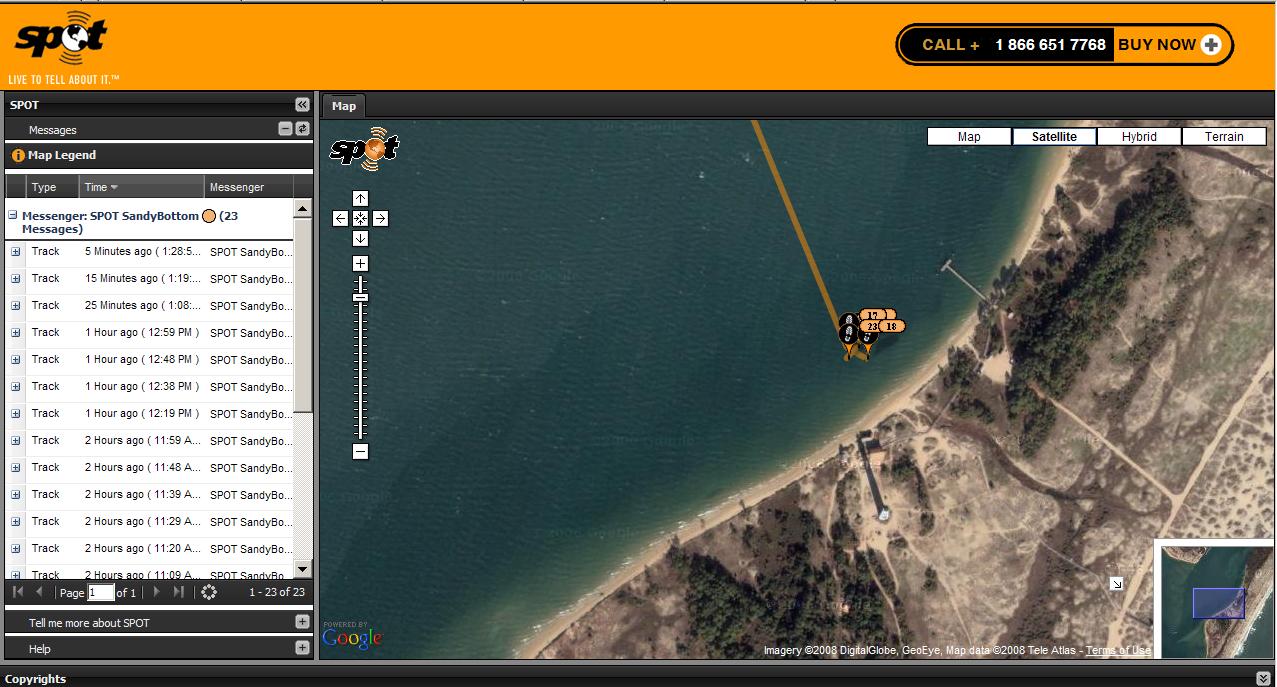
Alan and Taylor are currently sailing the "Dawn Patrol" near the Cape Lookout lighthouse. Locations by SPOT ... http://share.findmespot.com/shared/faces/viewspots.jsp?glId=0ggfiiudDlSq9j1ZzAq9rT9xxqgdKzVja --Paul

-
Some photos from a "Christmas Eve" afternoon on Jordan Lake today ... http://picasaweb.google.com/lh/sredir?uname=danceswithsandybottom&target=ALBUM&id=5283541126100479265&authkey=kHo55jhrhyM&feat=email (updated URL) Merry Christmas to All!

-
DeeR SanTa, ....

-
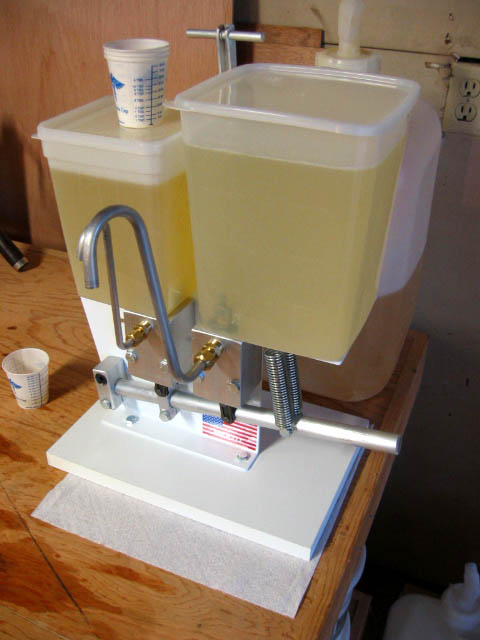
Craig, Does "1 pump" of resin weigh the same as "1 pump" of hardner? --Paul
-
Bob, You want to mix A and B very very well before adding anything else. Are you doing that? --Paul
-
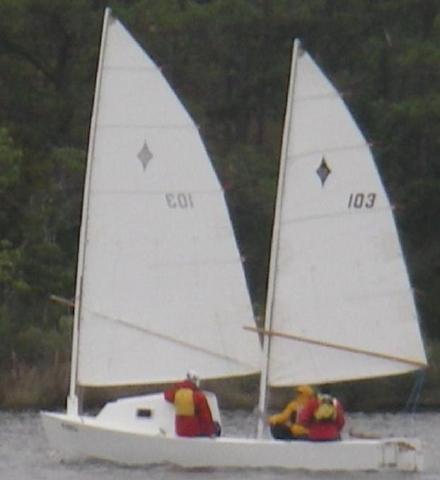
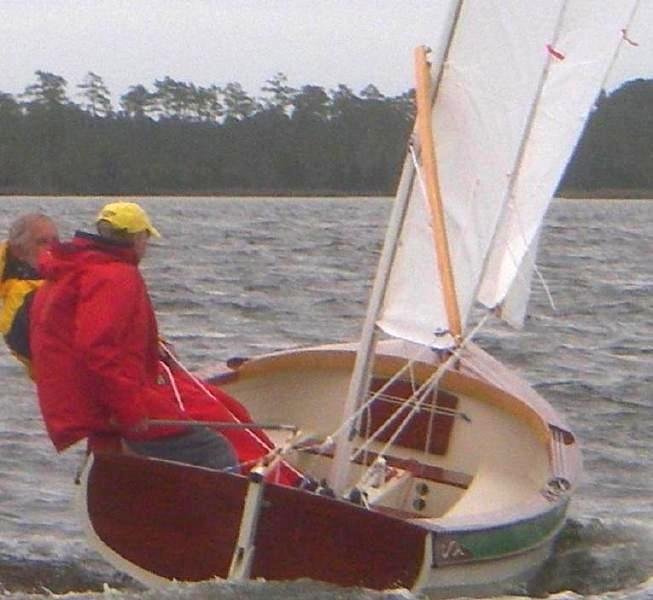
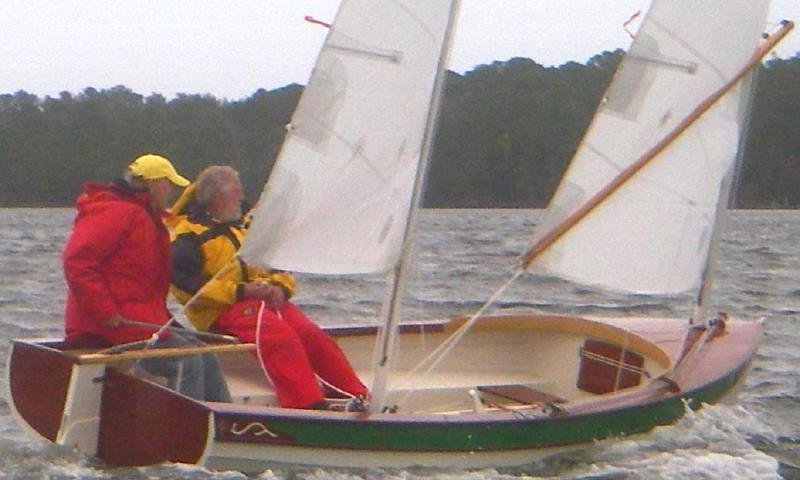
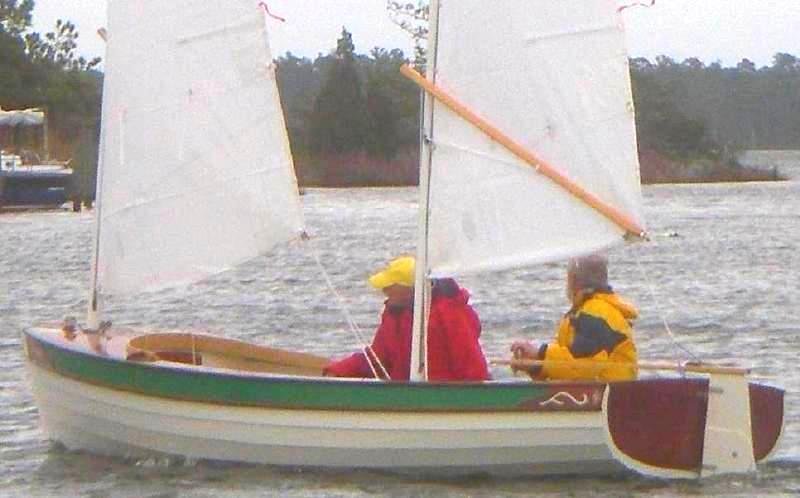
In action... but a little blurry. Close-up photos from Tom will be better.


-
Ray, So you're saying the bunks on your CS17 trailer are not taking a major part of the load. (I've seen the S.Skimmer trailered: same thing, keelson on 3 rollers, plus a longitudinal bunk on each side.) Hmmmmm.... I realize you're talking CS17, but likewise our CS20 trailer has 3 rollers supporting the keelson and I'm thinking its two carpet-covered bunks may be contributing too much support as there is a good bit of resistance sliding the boat if it is not floating --enough. Usually have to partially submerge the trailer wheels. Perhaps I need to fine-tune the bunks toward having the rollers taking more weight. What kind of surface/covering do you have on your bunks? Is there a best way to measure/adjust the weight distribution on rollers and bunks? --Paul
-
Ken and Jim, excellent reporting and great comments. Thank you for sharing the experience. You provided valuable insights and the details which, along with others' posted comments, are good to think about. Ray, your comment about running a fender up a mast(s) as an anti-turtle strategy: this summer we were planning to do an intentional capsize and recovery practice and it occurred to me that I might want to hoist a fender or two to avoid turtleing. I also thought about the possibility of using the stays'l halyard to run a fender down to the top of the mast after turtled if it turned out to be "too stable" when turtled. Excluding the mast-top floats on some recreational cats, do you happen to know of any instances of anyone actually hoisting fenders on masts? I would add a comment about leaky storage compartments. On our CS20 the storage tank in the aft bench (running across the transom) is temporarily filled with about 50 empty, clean, closed, 2-liter, soda bottles. This is temporary until I fix the leakiness of the gasket area in that hatch. We realized we wanted weighty gear to be stored in forward tanks and that we do not need to store anything bulky or heavy in this compartment. What do you do with leaky storage space that will remain empty? For a cheap temporary solution, using a lot of 2-liter soda bottles is an option. 50 bottles = 100 liters ~= 3.5 cubic feet. As Wes suggested, a custom fitted floatation bag would fill the space best. Either way provides floatation that can be reduced to accommodate additional gear if necessary.
-
Ken, Sounds exciting. Did the boat turtle with no delay? How long did it take to right the boat? Did you stand on the CB? How did you bail/pump the water out? Did you bail/pump the lockers? Any hypothermia? Did the motor contribute to turtleing? Give us the gory details and the play-by-play, please. --Paul
-

Joining the Club - Spindrift 12 plans ordered
paul_stewart replied to cdunc's topic in B & B Yachts Forum
Crag, well done going 3D. I'm glad Dawn and I had a chance to meet you at the B&B Messabout. Lookin forward to seeing your progress and pics. --Paul -
Ken, We're turning blue holding our breath waiting for you to tell us all about it ! The soggy motor was the only casualty? Hope so. So.... enough suspense already ....! (The parts I know only have to do with the weather: high temp near ~73, alternating blue sky and storms, occasional tornado warnings, winds 18 gusting to 30. )
-
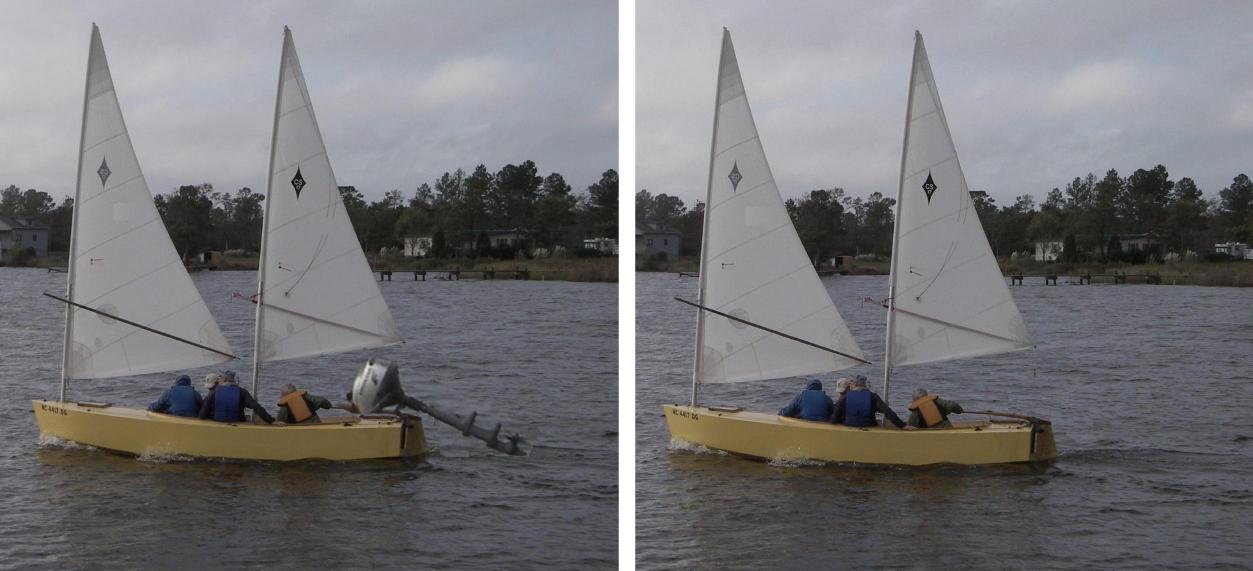
There is one other aspect of the motor debate that I'd like to mention... hanging a motor on the stern is a bit like painting a moustache on the Mona Lisa. Here you've got this elegant sailboat with flowing lines that say "speed" and then we're gonna hang a big hunk of metal on the stern? To install a motor, I would first have to experience some sort of attitude adjustment to get over this particular hangup. Or, switch to a boat design that has a motor well. Just look at the comparison photos below. I have no idea whose beautiful boat this is (and it really is lovely isn't it!) in these authentic snapshots. In the right-hand panel you can see that the crew is very happy and the dolphins are swimming alongside. But then in the left-hand panel you can see that they've put the motor on the stern, and WOW what a difference! The lines are tangled, the dolphins have been frightened away, and the crew looks a bit nervous. And that motor! It's so... so... visible!

-
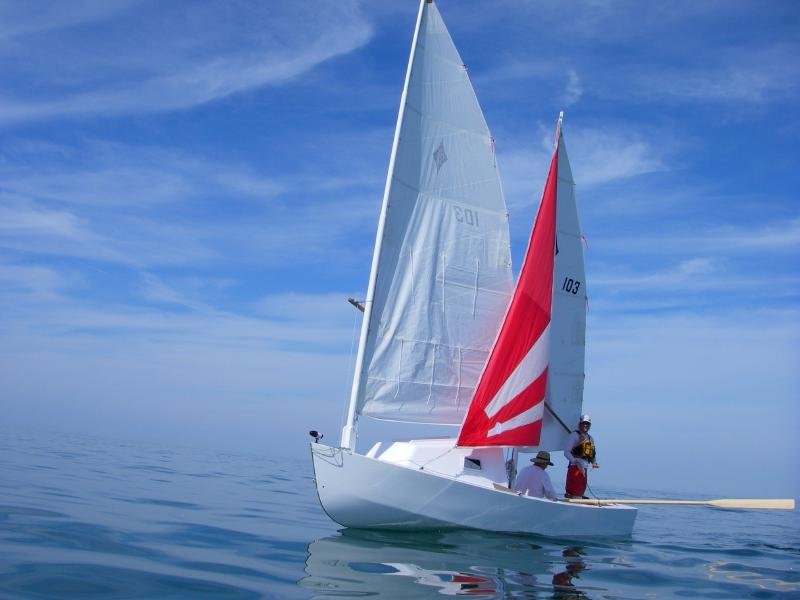
Ray, thank you for eloquently stating the case for sailing the CS20 without a motor. I hope certain pro-motor members of my family are reading this string of posts because I would prefer to "leave the motor at home" or leave it in the marine supply store. We have some beautiful 11' oars that work great. (Even with my novice rowing skills.) --Paul
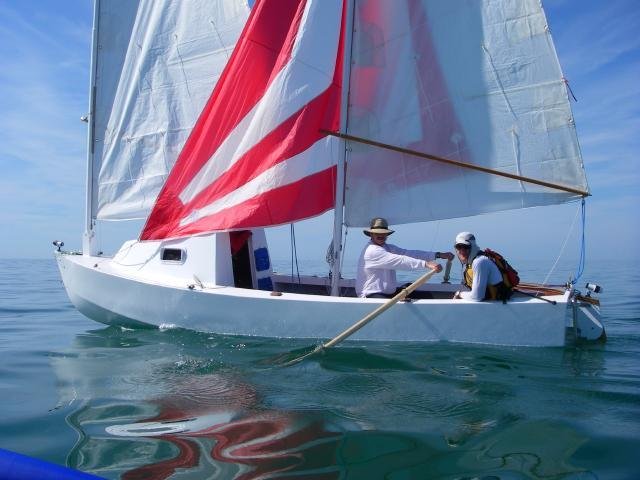
-
Wes was undoubtedly making an allusion to one version of Zeno's famous paradox: "A CS20 can never reach the boat ramp, but it does anyway." First, it must travel half the distance. Then, it must travel half the remaining distance, and so on. Since half the remaining distance is always some distance, the CS20 would have to travel an infinite number of ever-smaller distances to reach the boat ramp and the docks on each side of the ramp. That's why Wes needs a powerful motor --to power right on through Zeno's paradox to his pair of docks. That last 1/4" is really tough going! (Those of us without motors never quite get there at all. We just give up and jump off the boat right onto the dock.) Update: My apologies, Wes. Just looked at GPS display and realized an inch is a mile. ;D ;D ;D
-
Graham, Thanks for the comments. Always interested in hearing your insights. If you establish a "standard" (which I would interpret as being optimal in the designer's expert opinion), I would be very interested in knowing the specifications; particularly the mast length and luff length. I think this would be interesting to know even if the each spec were stated as a range. We are very happy with our mast and sail configuration, so my interest is a matter of general learning and knowledge about the CS20 --how does the designer of the CS20 see it. I would guess that other current CS20 sailors would also be interested in a posting of the "standard". Would the standard depend at all on track/sleave/laced, use of battens, or roachiness of the leech? --Paul Standard ? mizzen mast: __' __" mizzen sail: __' __" luff, __' __" foot, __' __" leech. main mast: __' __" main sail: __' __" luff, __' __" foot, __' __" leech.
-
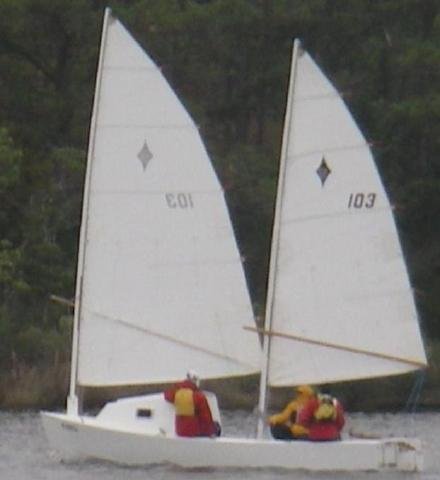
Mick, Does this help you any...? Our mizzen mast on #103 is 2.5" shorter than Terry's mizzen mast. 9.0" taller than Wes's mizzen mast. Wes, in the photo your mizzen sail looks like it could have been raised another 3-4 inches closer to the top of the mast. As ya'll noted, the position of the mizzen sail on the mizzen mast can vary (higher or lower), and then there is reefing......
-
Mick, Here is one quick example of a CS20 sail-plan view (slightly from astern). Is your mizzen mast roughly 20' long or a little longer (~ same length as hull)? Update.... mizzen mast: 20' 9.5" mizzen sail: 15' 10.5" luff, 7' 11.0" foot, 16' 3.0" leech. main mast: 20' 2.5" main sail: 17' 6.0" luff, 9' 0.0" foot, 18' 4.0" leech. (main mast pivots in tabernacle) Sails are hoisted to top of masts.
-
Pete, one caveat: my understanding is that for those of us with a tabernacled non-rotating main mast, some care is needed regarding the snotter and regarding how (and how far) that maneuver goes. --Paul
-
Here are 3 more good ones from Joe and Sally Anderson. (Resolution reduced from 1280x960 for upload). --Paul


-
Here are 3 great photos from Joe and Sally Anderson. (Resolution reduced from 1280x960 for upload). --Paul


-
Your comments above are correct. I am now an expert on how to hook up our stays'l on the "Dawn Patrol". I have accumulated hundreds dozens of seconds of practice deploying it. Judging by some of Alan's warnings, I think I am also fully capable of using the stays'l to accidentally knock the boat over in a wind shift. However, that's as far as my expertise goes. I'm still a rank newbie to the mysterious art of using and fine-tuning this wonderful sail. My expert sailing son, Alan, said today that the tack of the sail would almost always be pulled over toward the windward rail, but on some rare occasions might be set closer to the midline of the boat in a manner similar to the way that a spinnaker is sometimes used when racing upwind (in his experience on a Nacra 20 catamaran). ....... um, I think that's what he said. When bringing down the stays'l in higher winds we have on occasion stuffed it into the cabin. That reminds me of a definition I read somewhere of "spinnaker"... "Spinnaker: Large beautiful balloon shaped sail used in powerful downwind sailing, and when lowered stores neatly into the galley and main cabin and heads all at the same time." And while I'm at it, two of my other favorite nautical terms that I read somewhere... "Ahoy: The first in a series of four letter words commonly exchanged by skippers as their boats approach one another." "Mizzen: The shorter aft mast on a yawl or ketch. Any mast that is no longer there." Ha ha ha ha ha ha ha --Paul
-
Randy, how is it in May? Wind, weather, and bug wise, which month is optimal? --Paul