paul_stewart
-
Posts
277 -
Joined
-
Last visited
-
Days Won
8
Content Type
Profiles
Forums
Events
Everything posted by paul_stewart
-
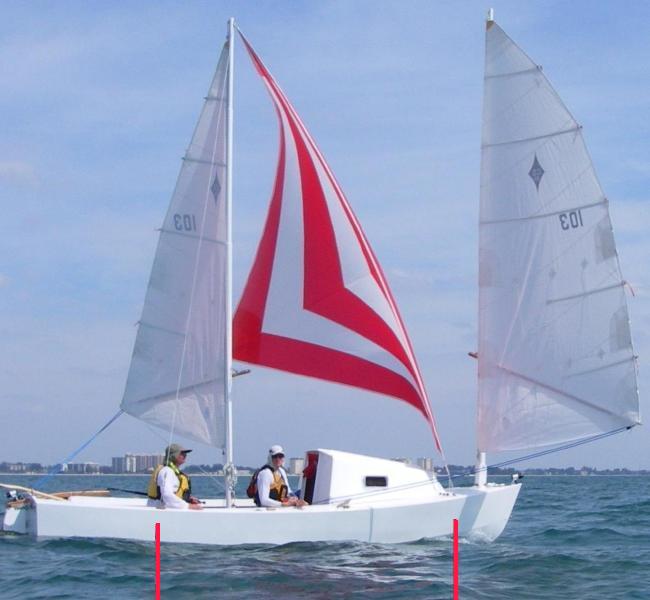
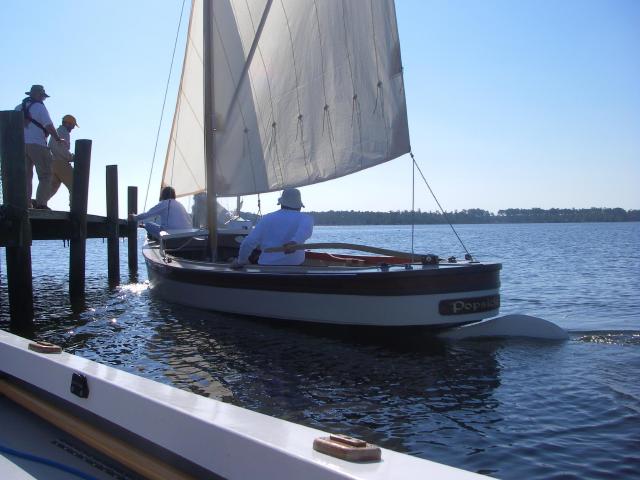
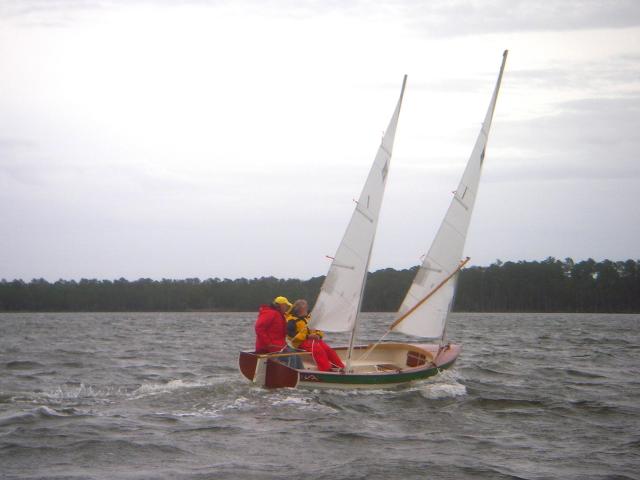
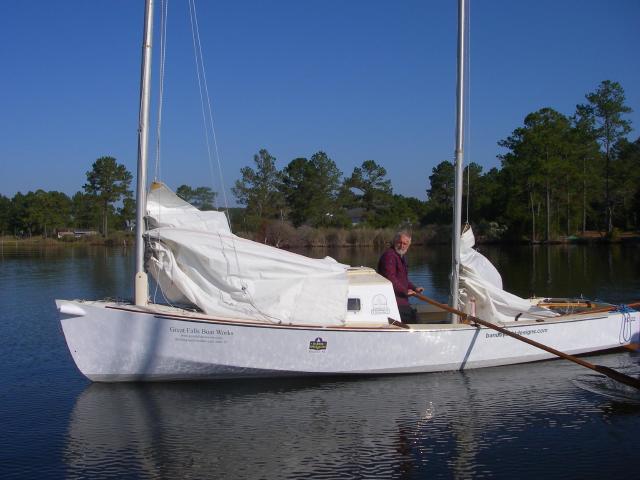
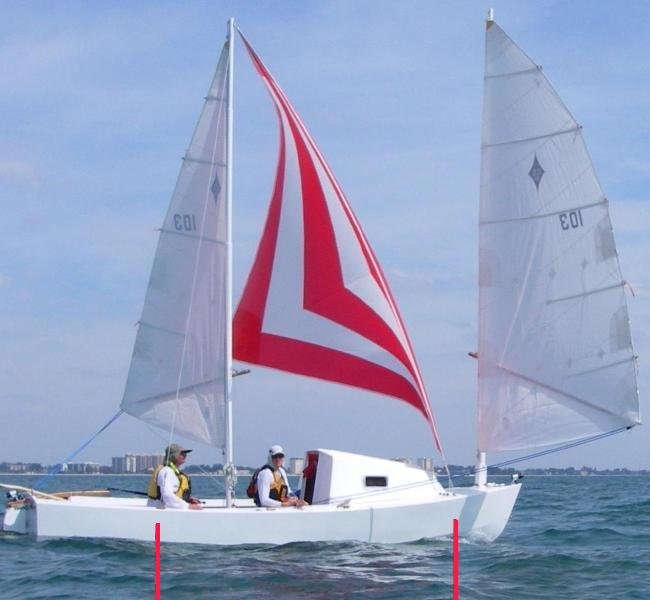
Wes, For whatever it's worth... Halyard/Backstay: You can see our stays'l halyard serving as a backstay by being tied to an oarlock socket on the windward rail. Tack: On the foredeck the red-white line has a center loop midship (the tack of the stays'l clips onto it) and from there the red-white line runs to each side to a block (each side) and then aft to a cleat (each side). Sheet: The sheet from the clew runs to an eye on the aft end of the mizzen spritboom and from there to someone's hand. (any comments appreciated) --Paul


-
Graham, great pic of Brent's "Active Imagination"! Marty, good one of Tom Lathrop --and the Lapwing! --Paul
-
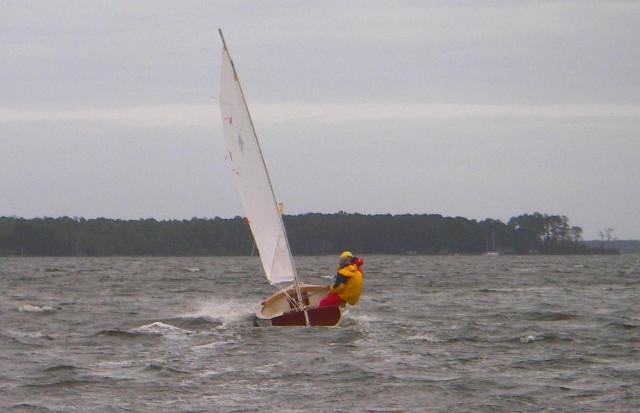
John, I wish I had spent more time looking at that BRS15! Anyway, it sure sailed gracefully. My apologies for thinking it was a CS15. Thanks for the correction. Label changed. Was that you in the BRS15 ? Your BRS15 ? I think I've got the faces matched to the boats, but I'm still working on remembering/learning many names correctly. So little time, so many wonderful sailors and boats. We just gotta have another B&B mess-about! --Paul
-
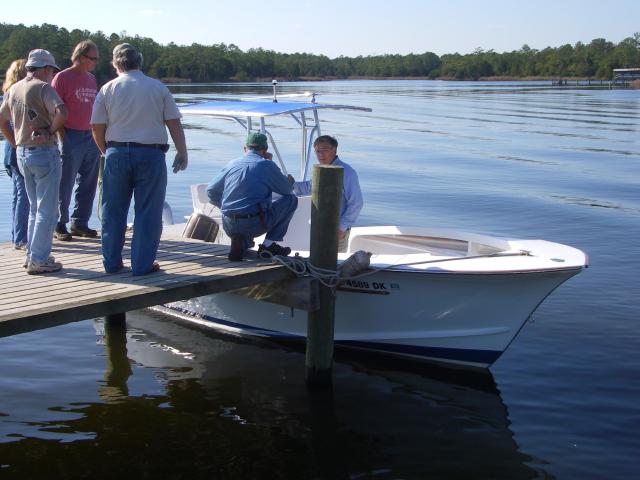
Dozens more photos of the B&B Messabout can be viewed here....... http://picasaweb.google.com/danceswithsandybottom
-
Photos...


-
Photos...


-
Photos...


-
Selected photos...


-
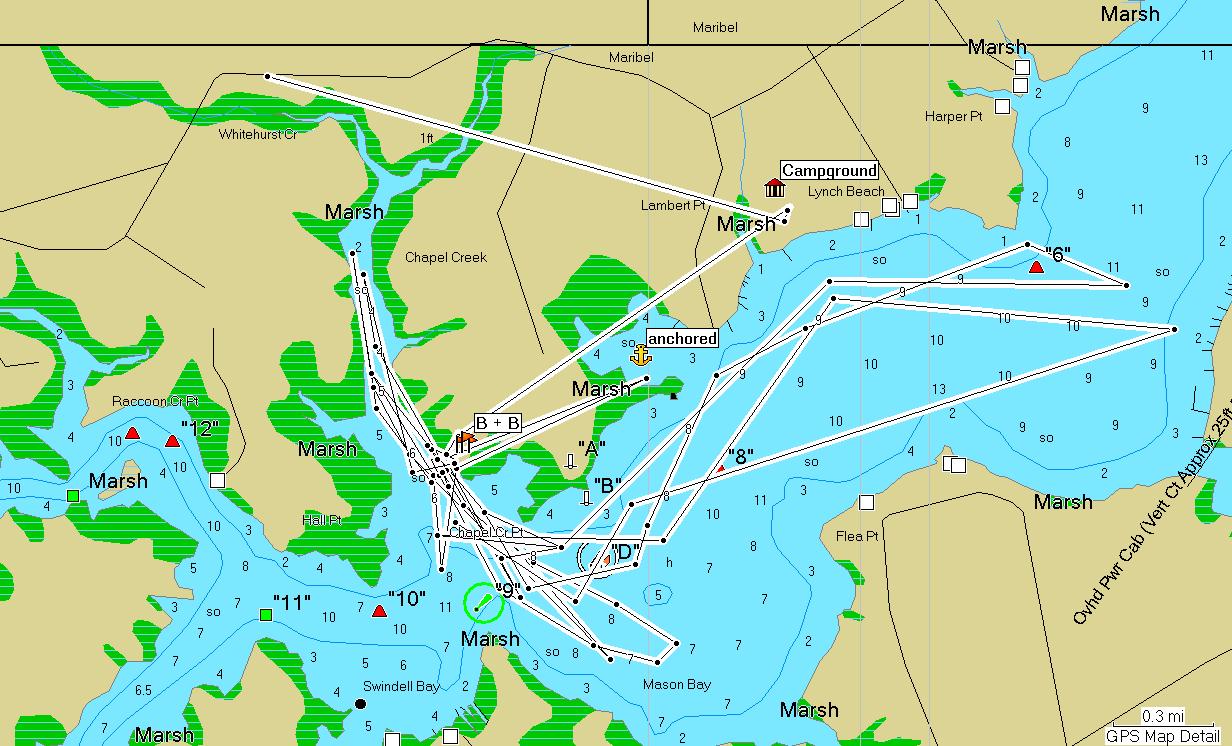
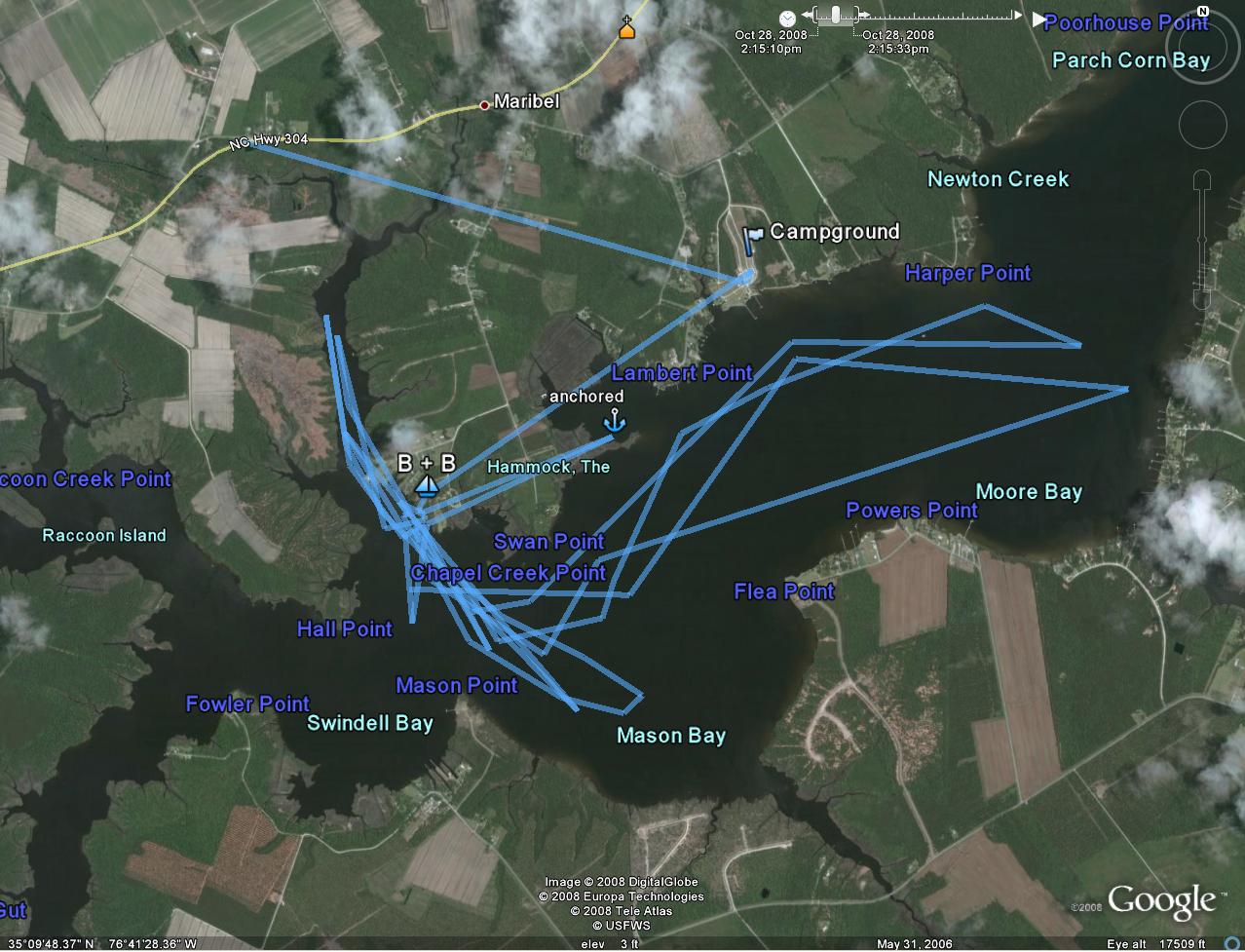
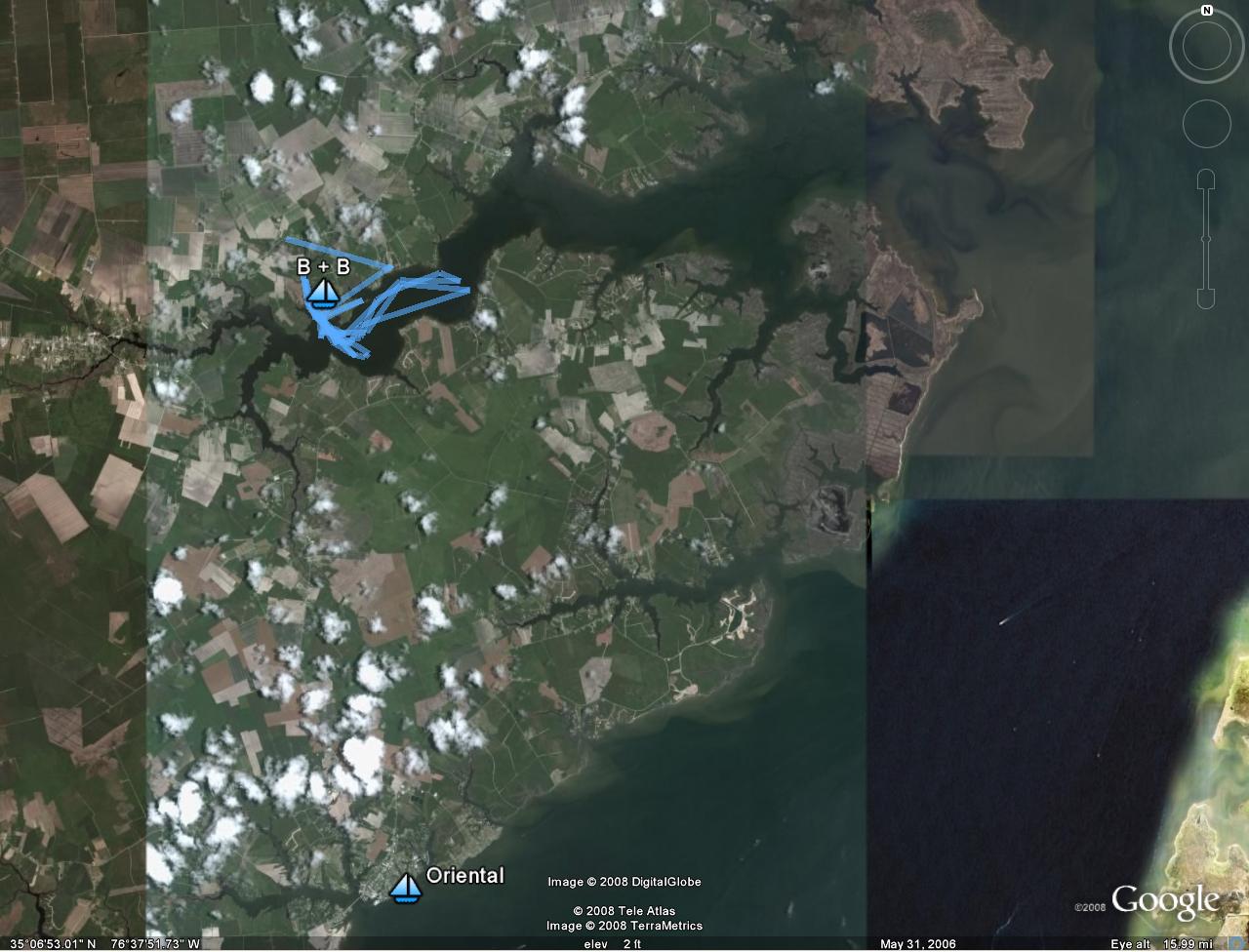
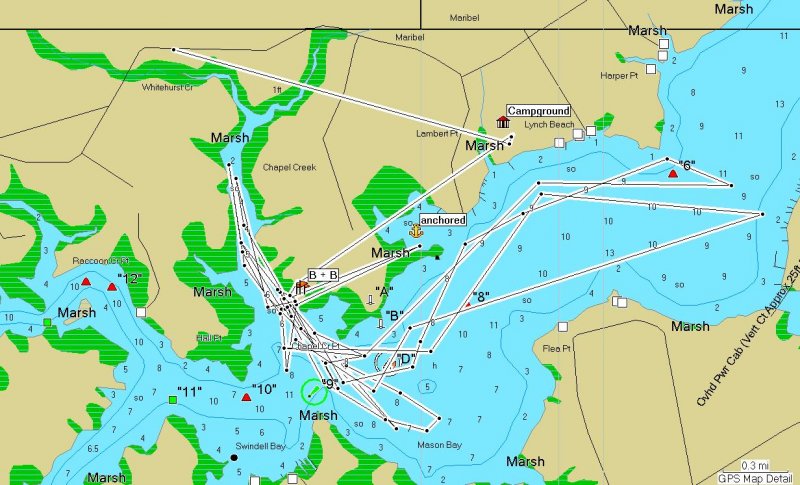
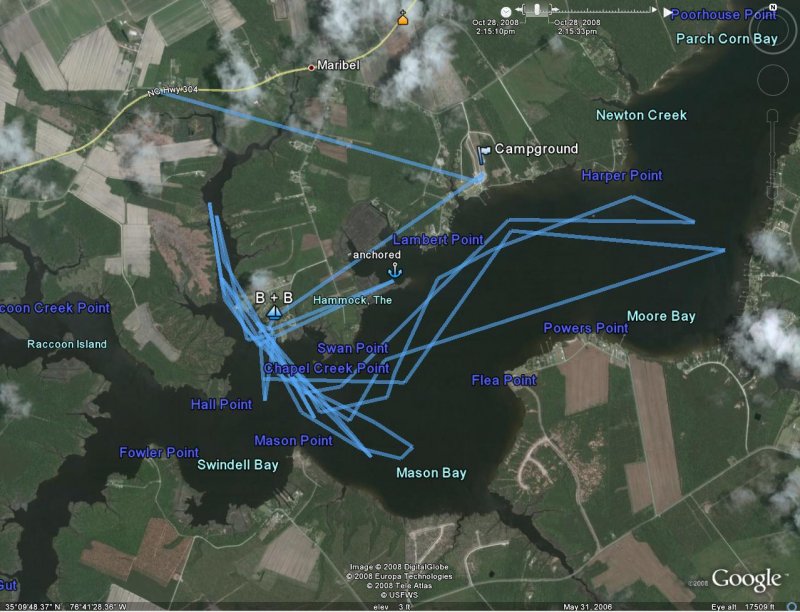
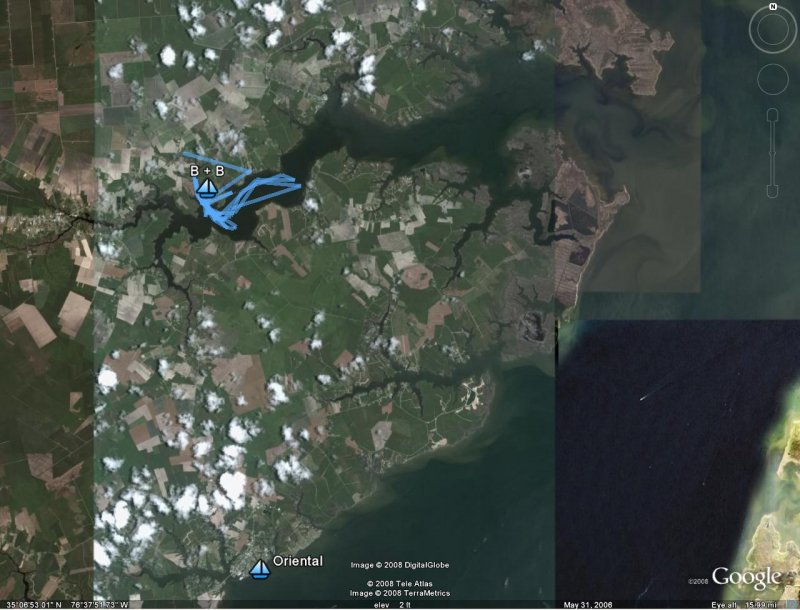
Dawn and I would like to add our thanks for a wonderful weekend with you all on Chapel Creek. Thank you Graham, Carla and Beth for hosting the 1st Annual B&B Messabout! Thank you Randy and Bobbie for co-hosting and sharing your gazzebo! Thanks to everyone for sharing and making it happen. It was a such a treat to meet new sailing friends and shake hands with so many legendary boat builders and sailors. What does mess-about sailing look like? Well we had a SPOT gps running some of the time (Tues to Sun) so here is a different point of view on the event.... ... now that's messing about.
-
Dawn and I will be there --for the weekend plus sailing in the area the preceeding four days. --Paul
-
"Sunset and evening star, And one clear call for me! And may there be no moaning of the bar, When I put out to sea, But such a tide as moving seems asleep, Too full for sound and foam, When that which drew from out the boundless deep Turns again home. Twilight and evening bell, And after that the dark! And may there be no sadness of farewell, When I embark; For though from out our bourne of Time and Place The flood may bear me far, I hope to see my Pilot face to face When I have crossed the bar." -- Tennyson
-
Roger that Blue Tent Leader. Affirmative on the excess netting buy-out. Mosquito Bait signing off.
-
Ken, Well done! Dawn and I are very impressed and want to take the complete tour whenever you have open house tent. --Paul
-
Scott, What!? No catering? No plundering? No burning villiages? Darn. Still, it does sound like a lot of fun. --Paul
-
Craig, I was wondering about the origins of the term "raid". Is that what you're asking? I found the following explanation at www.smallboatforum.com/PDFfiles/RaidBoats.pdf "So what is a Raid Event anyway? About a 1000 years ago a raid involved the Norse people or Northmen http___www.smallboatforum.bmp
-
Ah-ha! You're gonna have to admit it, Wes. We've figured it out. Joe was taking the photos. --Paul
-
Ray, Oh yeah, McLube spray on track lubricant, that jogs my memory: I think that's what Alan and his cat sailor friends use. Teflon spray, well of course; and you could fry an egg on it. Tom Lathrop's beeswax method seems like such a 'green' and maybe traditional way to go that I may try his method first. You dodged a hurricane lately? --Paul
-
Happy for you, Wes. Well done! Must be a smooth ride; your canine colleague looks totally relaxed. Filing (rounding and polishing) the tracks was sufficient for raising and lowering our sails, but some beeswax will probably improve on that when I get around to it. Tom Lathrop wrote...
-

Garmin 440 Chartplotter: use, battery requirements, solar panel
paul_stewart replied to paul_stewart's topic in Main Forum
Wes, Your advice is well-taken that we should all take care when web browsing. My understanding is that --the WaterTribe website was attacked several weeks ago --Chief returned the website to normal as of Sept 21st --he also updated the forum software --the Google diagnostics warning needs to be brought up to date. I routinely follow the same advice you mentioned when in doubt. For example, during the time the WaterTribe website was compromised I found that visiting it did not harm my computer; no problems noted and no malware detected by the various anti-adware/anti-spyware/anti-virus software monitoring my computer. I plan to visit the WaterTribe website frequently. -
There is an interesting string of postings on the WaterTribe forum http://www.watertribe.com/Default.aspx?ucPtr=Discussion/DiscReadMsg.ascx&strThread=4754 that you might like to read. SavannaDan is giving the Garmin 440 Chartplotter a try and has described his planned usage. Roo(Designer) has added comments on his use of the 440 during the Texas200 on the SouthernSkimmer: performance, battery requirements, use of solar panel. Lugnut and RidgeRunner added comments about battery requirements. RidgeRunner described how he and Greybeard used a Garmin 276c with a home-made 12V battery pack in the EC'08. A depthsounder transducer can be connected to the 440 --either purchased with the 440 or purchased separately. Garmin is selling the 440 with all the coastal BlueChart maps for the entire US included. (nice!) The 440 package sells for ~$490 (amazon.com: with all maps loaded, transducer not included), or for ~$430 (amazon.com: no maps, but with dual-freq transducer), or ... etc.
-
Ken, Good points. I too would like to know more.... As most of us on the B&B forum have built or will be building masts from aluminum tube stock, gathering some facts here in one thread on the forum seems worthwhile. Not all aluminum tube stock is anodized; or perhaps it is? The masts on our CS20 are made from tubes with 0.090" walls. Came from Graham who found a source for it in Canada and was glad to stock some of it. I don't know off-hand if the alloy = 6061-T6. As I recall (all the way back to February'08), we painted our masts (white) primarily because we thought they would look better that way. So whether painting adds longevity to the masts is/was not an important consideration in our case. I like the white masts. We might have avoided some peeling if we had known about the advantages of starting with a zinc chromate primer. I would guess that an anodized surface is "better" than a Vinyl-Lux+Primer+Painted surface, but the process of joining the three segments of the mast with epoxy required some sanding which would have removed the anodizing in some spots --if the tubes actually were anodized to start with. Also, the original tube stock was not perfectly clean when we obtained it and probably had a few invisible scratches, etc. So there can be several reasons for deciding to dress up the masts with some sort of coating(s) --clear or colorful. --Paul
-
Ward, The preparatory "acid wash" you mentioned means ......... what? A special acid wash? The Valvoline Tectyl 151 seems to be a little hard to find around here; I found a website that will provide a quote for a similar Tectyl 155 --how many truck-loads would we like? To summarize: After cleaning the aluminum the chemical-grip methods discussed have two steps... --anodize and then dye and/or sealant --Brad's chromate conversion coatings ("chem-film") and then some kind of paint --Brad's self-etching zinc chromate primer film Vinyl-Lux and then Yacht Primer+Topcoat Paint --Charlie's zinc chromate primer (Vinyl-Lux?) and then some paint --Ward's acid wash and then Valvoline Tectyl coatings The mechanical grip methods... --sand + epoxy coat and then Yacht Primer + Topcoat Paint --sand + cross fingers and then Yacht Primer + Topcoat Paint --Paul
-
-
Brad, Charlie and Drake, Thanks for the very helpful input! Painting our aluminum-tube masts seems to be the best option for protecting them from cumulative corrosion; anodizing would not be feasible for almost all of us builders of home-built boats. As you explained, Charlie, unprotected aluminum will evenually "go away" because weathering both creates a protective layer of aluminum oxide (called "alumina") and takes it away: "In dry air, the natural film will consist only of the barrier layer and will form rapidly to the limiting thickness. On the other hand, if the destructive forces are too strong, the oxide will be hydrated faster than it is formed, and little barrier will remain." ---from http://www.key-to-metals.com/Article14.htm Aluminum is strange and wonderful stuff. From wikipedia.... "Aluminium oxide is responsible for metallic aluminium's resistance to weathering. Metallic aluminium is very reactive with atmospheric oxygen, and a thin passivation layer of alumina quickly forms on any exposed aluminium surface. This layer protects the metal from further oxidation. The thickness and properties of this oxide layer can be enhanced using a process called anodising. .... Anodized aluminium surfaces are harder than aluminium but have low to moderate wear resistance that can be improved with increasing thickness or by applying suitable sealing substances. Anodic films are generally much stronger and more adherent than most types of paint and metal plating. .... Anodization changes the microscopic texture of the surface and can change the crystal structure of the metal near the surface. Coatings are often porous, even when thick, so a sealing process is often needed to achieve corrosion resistance. The process is called 'anodizing' because the part to be treated forms the anode electrode of an electrical circuit. .... Corundum is the most common naturally-occurring crystalline form of aluminium oxide. The gem-quality forms of corundum are rubies and sapphires. Aluminium oxide is an electrical insulator but has a relatively high thermal conductivity." --- http://en.wikipedia.org/wiki/Aluminium_oxide'>http://en.wikipedia.org/wiki/Aluminium_oxide --- http://en.wikipedia.org/wiki/Anodized_aluminum --- http://en.wikipedia.org/wiki/Aluminium By the way, alumina is an electrical insulator so the surfaces of an anodized mast must not be a very good conductor of lightning. What are the implications of that? Also from wikipedia, the carabiners pictured below are anodized and dyed.

-
Brad, Thanks for your helpful insights. Areas on my masts that rub other parts (e.g. sprit booms) have peeled. I still have some System3 Yacht Primer and System3 Topcoat Paint left over from painting our aluminum masts back in February 2007. Would be best to "get it right" before spending a lot of time "getting it wrong" again. The System3 Yacht Primer and the 2-part System3 Topcoat Paint have peeled off together, so that means the primer lost its grip on the aluminum. The area could be prepared (sanded, etc.) and a "self etching" primer, say Interlux's zinc chromate Vinyl-Lux primer, could be applied as you suggested. My question is, "what next?": should the System3 Yacht Primer be applied over the Vinyl-Lux? Or, alternatively should System3 Topcoat Paint go directly on top of the Vinyl-Lux. It may or may not be feasible to get an answer to this question from the experts at System3 and Interlux. You suggested putting System3 Yacht Primer on top of the Vinyl-Lux primer. Any particular reason for that suggestion? An alternative would be to strip the aluminum mast of all coatings and start over with Vinyl-Lux followed by whatever Interlux recommends as a top coat paint. Any further thoughts or suggestions? --Paul