Peter HK
-
Posts
619 -
Joined
-
Last visited
-
Days Won
29
Content Type
Profiles
Forums
Events
Everything posted by Peter HK
-
Norm I'm a little confused about your post. Just to clarify the nomenclature- I understand the term sprit without any addition to mean a sprit from mast to the top corner (peak) of a quadrilateral sail.. a spritsail. I've not seen a wishbone sprit. A sprit boom goes from mid mast to clew and is not uncommonly a wishbone sprit boom. I take it you are using sprit in the sense of a sprit boom, and presumably then boom in the sense of a standard boom along the foot of the sail. Is that right? Peter HK
-
Hello Garry In the early 90's I had a 10 meter trimaran with a wishbone boom- I've dug out an old photo As you suspect the lazy jacks suspended under the boom were brilliant at controlling the sail when dropping/reefing. We never botthered to tie in the reefs as the sail was so secure in the lazy jacks- see There were a few difficulties with reefing- running lines along the curved boom to winches- but not anything major. We did bend the wishbone in a savage jibe once (at 1 am off Fraser island in the 93 Brisbane to Gladstone when it was blowing a steady 45 knots). You do need to build them quite strong. Peter HK
-
Hey Jan It's nice to know you feel for us as we celebrate the Summer Solstice (usually by the pool sipping champagne) ;D Cheers Peter HK
-
Hi I sail a schooner and the mainsail (the aft sail) is often reefed. The general technique is to fore reach at about 60 degrees from dead to windward with the foresail a bit eased and with the helm set to leeward- barely maintaining forward motion. The mainsail flogs but is easy to reef. If single handed then a line to hold the tiller to leeward is necessary- It can't tack as the centre of effort is so far forward- it's like heaving to. Peter HK
-
Garry There is one cosmetic issue with sheathed (wooden) strip construction. Due to the tendency of wood to swell and contract the strips show through the glass layer. This can happen quite quickly- within weeks. I had a Farrier F31 tri (actually F9A as it was the home built strip planked version) and after a few years it was very noticeable. Farrier now recommends vertical strip foam which he says is easier and obviously doesn't have the cosmetic issue. Epoxy is fine with foam too. I agree wood is nice to work with and I never saw a piece of foam with a good grain ;D Peter HK
-
Jeff A variation on your original thought of a hole in the rudder blade is a horizontal shelf on one or both sides a bit like a cavitation plate on an outboard. You could even tell people that's what it's for (to prevent cavitation) and that it's the latest go-fast concept Ian Farrier suggested this for transom hung rudders on the F series trimarans where cavitation/ventilation is sometimes a problem especially as the main hull starts to lift. If it were nicely faired in then I suppose it wouldn't disturb the flow much- but the nonskid on the upper surface wouldn't help. Bit of a problem when the rudder isn't fully down though. Also, might put too much strain on the rudder/box assembly. Peter HK
-
Ken said I know of two incidents where the whole boat came off the trailer. One was a small plywood dinghy that I had sold to a friend when he had kids of an appropriate age to learn to sail. While travelling at 100kph on the highway it came loose and ended up as matchwood. I'm not sure how he had tied it on. The second was my brother in law's brother in law's boat- a 16 ft ballasted open boat called a scruffie 16. It was only secured with the trailer winch which failed....fell off the back causing major hull damage and shattering the spars. It's repaired and sailing again. Makes the loss of a mast a bit of a non-event ;D Peter HK
-
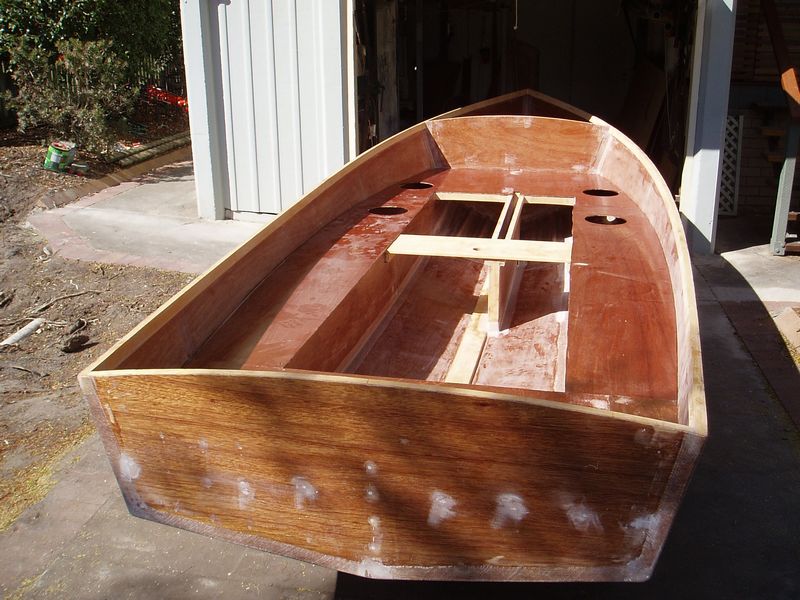
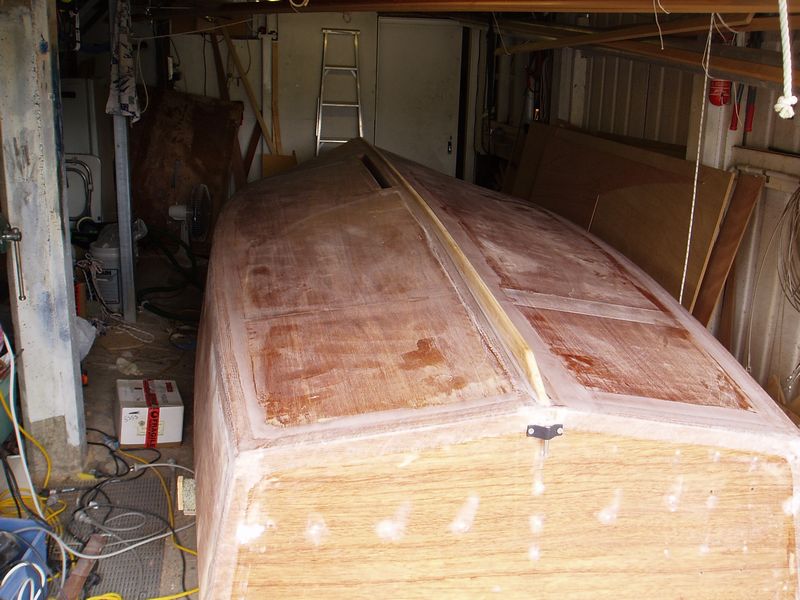
Mark I forgot to mention that if you order 6106 T83 tube from Capral you have to buy a 6 metre length- makes it a bit expensive. It may have been Joel Berg's uncle not brother I spoke to. Current photos of my Cs17below- at this rate I hope to launch about March next year. Peter HK
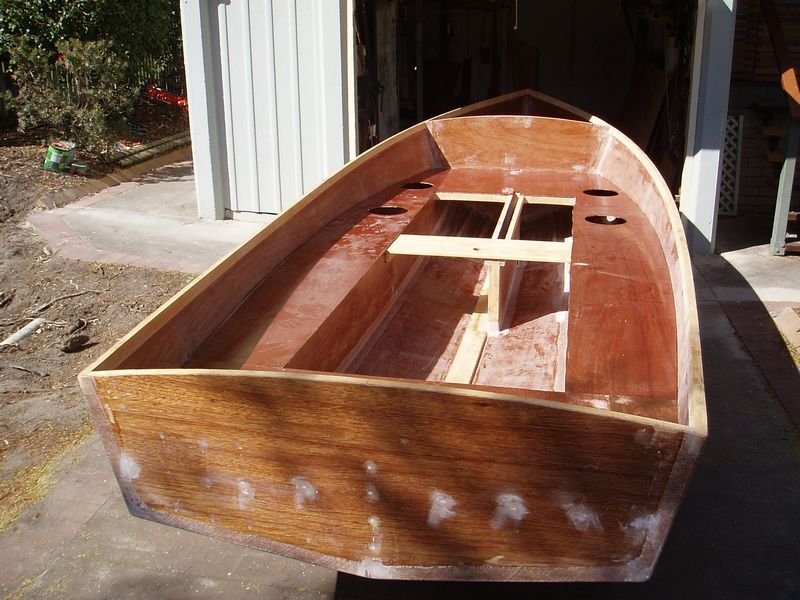
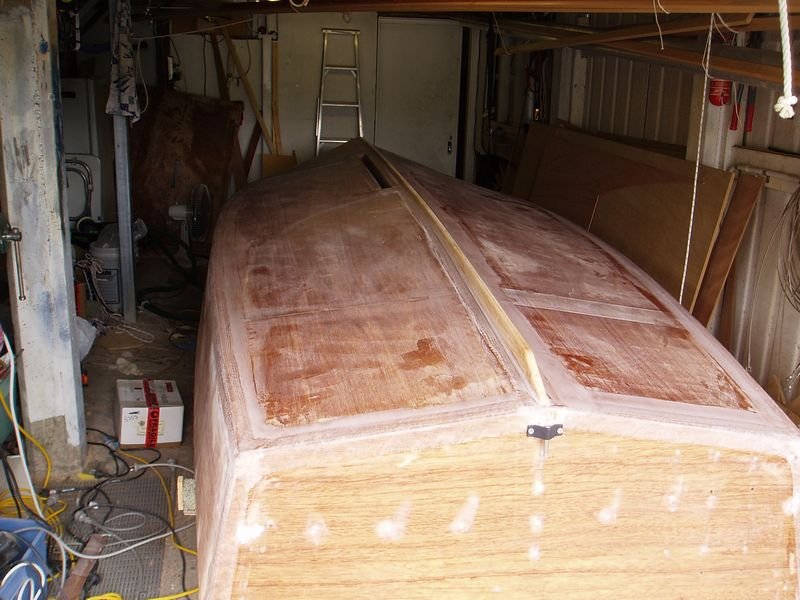
-
I had the same propblem with a Welsford dinghy- used the standard aluminium and bent it in the same place. I then researched the subject especially with respect to my Cs17. Standard alloy here in Oz is 6060 and even in T5 temper has an ultimate tensile strength of about 150 MPa. 6061 T6 has a UTS of 260 MPa. You have 3 choices. One, you might find 6106 T83 drawn tube (a mandrel is pulled through the tube- suposedly densifies the alloy) in the right size and its UTS is 275 MPa. Two, you can ring All Yacht spars in Brisbane and ask for Joel Berg's brother (can't remember his name) who imports a lot of 6061 T6 spars for dinghies. Three, you could try http://www.onlinemetals.com. I ordered my sections from them, came in about 3 days and postage was as expensive as the aluminium. Peter HK (here in Brisbane)
-
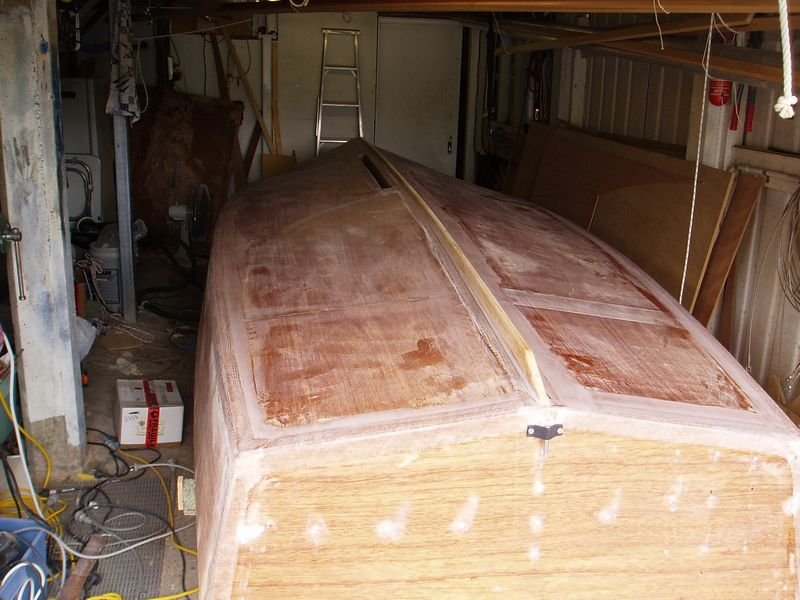
Doug As I understand it, rowing short distances is accomplished by sitting on the thwart with a leg either side of the mizzen. I've been advised that the ability to shift the mizzen mast to the reefing position makes a long row more comfortable. I'm sure that another thwart is possible but the rowlock positions would need to be altered. If you intend rowing with 2 people it might be possible to fit another set of rowlock positions forward. I've just closed the tanks on mine - Cs17 #165- but had already finished centreboard/rudder/masts etc. I've got it turned over and have just glassed the centreboard case in and hope to glass the hull in the next week. All good fun. Peter HK
-

Glassing inside and omitting bottom stringers?
Peter HK replied to Rune Forsberg's topic in B & B Yachts Forum
Ray said If it helps Ray, I did some measurements when I made my mast track spacers out of 12 oz biaxial tape. 6 layers resulted in a thickness of about 3.5 mm. Thus 12 oz by itself would be about 0.6mm thick and 18 oz about one mm. Peter HK -
Glassing inside and omitting bottom stringers?
Peter HK replied to Rune Forsberg's topic in B & B Yachts Forum
Rune I also had a concern with water entrapment so finished the stringers an inch or two from the bulkheads (and each other in the forward compartment). Technically the stringers need to mate with the bulkhead and each other to prevent failure of the epoxy due to peel stress. I simply glassed over them- it really only needs to be done at either end. Peter HK -
Glassing inside and omitting bottom stringers?
Peter HK replied to Rune Forsberg's topic in B & B Yachts Forum
Hi Rune Great choice of boat- I'm also building a CS17. Regarding the bottom stringers- I don't think that glassing is a substitute. My brother is an engineer in failure analysis and he tells me that glassing only increases the stiffness of a panel of ply (approximately) by the increase in the thickness of the panel from the layer of glass. Thus there would still be a fair amount of flex in those panels. I've put stringers in mine and it wasn't a lot of work- the panels became much stiffer. Remember that an I beam increases its stiffness dramatically with the width of the section. Perhaps Graham will comment. Peter HK -
Charlie Jones said This is a fortuitously timed thread as I am in the process of gluing the seat tops down. I was going to tape the seat to side join as well as the rounded inner edge but I had not thought I would glass the seat tops. So Charlie, do you do this simply for abrasion resistance or is there some other reason? Peter HK
-
Tom said about epoxy coating Well said. I've heard this so many times yet it clearly is irrational. Epoxy is less permeable to water than the alternatives but the concept that the minute holes in epoxy that let water through some how have a valve effect and won't let the water back out again is ridiculous. Clearly water in wood is bad and minimising its entry is a good thing to do. Epoxy does this pretty well though not perfectly. Let me know when something better comes along Peter HK
-
Ken said Maybe you do now Peter HK
-
Rob I see two possible problems. Firstly, you will have to get onto the foredeck to zip/unzip the luff sock- this may be difficult/risky in rough conditions and also provide more windage up forward so that the bow might tend to fall off. Possibly a problem single handed. Secondly, reconnecting the zipper in a breeze with everything flogging may not be easy. There is no reason you can't roll the sail on the mast with tracks- especially with no battens. Peter HK
-
Joe I intend to use topping lifts. Fixed is fine if all you want to do is keep the sprit boom from falling onto the boat when reefing or dropping sails. Adjustable is good if want to set boomtents etc or just have plenty of headroom when anchored as it gets the boom and the sail out of the way. On my folding schooner we use lazy jacks to do the job which are simply light line with a bowline in the end- they are attached to the boom on horn cleats by the Herreshof method and simply shifted and cleated as usual when we want to lift the booms. You can just see them here Peter HK

-
Materials and methods for attaching tracks to masts?
Peter HK replied to Joe Nelson CS#35's topic in B & B Yachts Forum
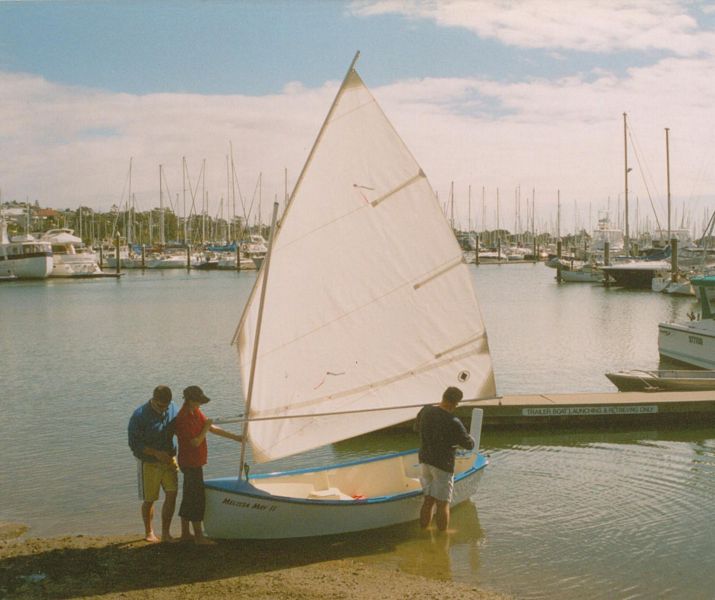
I have a Welsford Golden Bay dinghy with standing lug and sprit boom. The mast is freely rotating and it doesn't seem to be a problem, though I have the snotter and halyard cleated on the mast. Here's a photo of Melissa May 2- named after my daughter. Peter HK
-
I actually tried this with my 30 ft schooner a couple of months ago. It was high and dry- maybe 15 metres (50 ft) from the water. She weighs about 300kg (660lbs). A friend offered his large fender which he uses all the time for this purpose- it's about 4-5ft long and maybe 18 inches in diameter. We quite easily rolled her into the water, just with 2 people, and moving the fender when it rolled out the back. May not work with smaller fenders, but worth a try. A couple might work better. Storage may be an issue. Peter HK
-
Materials and methods for attaching tracks to masts?
Peter HK replied to Joe Nelson CS#35's topic in B & B Yachts Forum
Joe I made the spacers about a foot long and started with a piece at 2 inches then 4 etc up to 12 inches. May vary depending on the weight of your glass tape- I'm using 12 oz biaxial tape. Remember to put it with the longer piece upwards so it's nice and smooth. Peter HK -
Materials and methods for attaching tracks to masts?
Peter HK replied to Joe Nelson CS#35's topic in B & B Yachts Forum
Re track spacers- I made mine in glass by moulding wetted tapes of staggered lengths over the mast section until thick enough. I'll cut them down to fit behind the track. Here's a pic. Peter HK
-
Rob I think battens help enormously but are not essential. What I have done is have a full length batten at the top- which makes a big difference on a roached sail- and leech battens further down. To be able to roll the sail you need to have the easy-to-remove velcro batten pockets- which I have on my sails (though they are still to be set). If you mark the halyard for the reefed position it only drops a metre so there is not too much loose sail to deal with. I'd try without battens first especially on your sails with no roach. A topping lift may be helpful. If you fit a reefing line at the clew which goes the first reef clew position and back down to the sprit (tied with a bowline) it is self adjusting. I use a captive pin shackle on this line to attach to the reef point so I can move it up to the second reef point if necessary. Re sandfies- they can be unbelievably unpleasant. I've found that high doses of Thiamine can reduce your appeal to them but only if you are taking enough that your sweat stinks Re water ballast- I've also considered this. I think a few fresh water jerry cans tied around the centrecase might be helpful but I am considering a purpose built tank. Remember it works best as a layer close to the bottom and must be full or the sloshing effect is too destabilizing. Peter HK
-
Rob You can't reef from the cockpit with a luff sock With tracks (and slugs, not a luff rope) the snotter simply stays where it is- though needs to be eased when reefing and needs to be run aft to a cleat. Hope the sandfies aren't too bad in December. I've nearly been eaten alive at Gary's anchorage in September and Yankee Jack Creek in April but have never had a problem at Wathumba Creek. Peter HK
-
Should have added that, if you want to run with the breeze in a storm, then towing a warp, sometimes with something attached like an anchor, can slow the boat and improve directional control. Peter HK