Peter HK
-
Posts
619 -
Joined
-
Last visited
-
Days Won
29
Content Type
Profiles
Forums
Events
Everything posted by Peter HK
-
The first coat of epoxy always lifts up some wood fibres from the veneer- think of painting one side of a sheet of ply; it will result in a warped piece. The same applies to the small fibres in the surface veneer- affected by surface tension effects/shrinking of epoxy on the face/ etc they tend to lift at the ends and cause little spikes. Opinions about what to do about it vary- some say keep coating and it buries in the epoxy, others sand the first coat until smooth and then coat with little problem. I'm not using west system so I'm not sure if there is any problem related to its usage. The epoxy system I use has a viscosity lowering agent to add to the first coat to increase penetration- it really lifts the surface fibres but after sanding this layer it's perfectly fine. The plywood quality has something to do with it. Peter HK
-
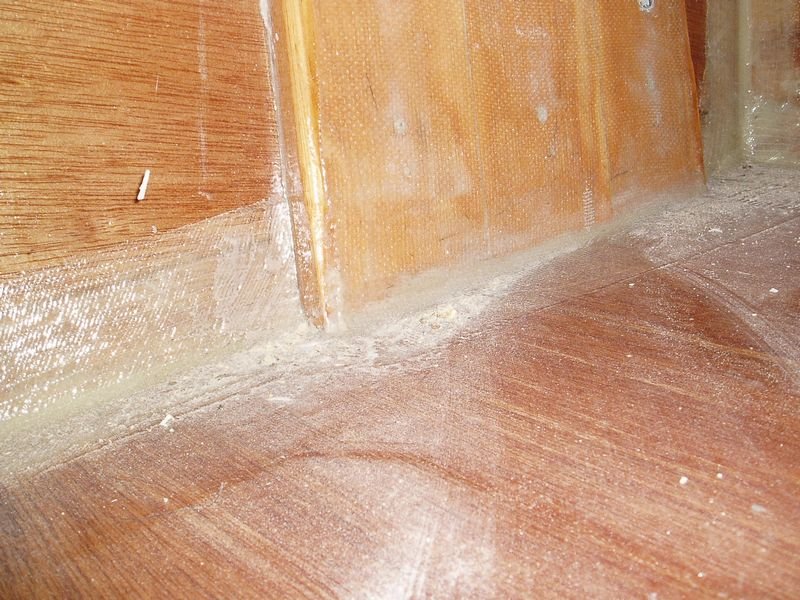
I used 3/4 inch douglas fir on the inside joining the top transom stiffener to the bottom- about 10 inches wide- and glassed it in. See


-
Aluminium oxidizes extremely rapidly on exposure to air. One recommendation is to coat the aluminium with epoxy and then sand it so the new metal is not exposed to oxygen. You end up with a bit of grit in the epoxy, which you are going to put glue on anyway, and a ruined piece of sandpaper. The bits I've done haven't failed so far. Peter HK
-
There was an interesting article about plywoods, written by a local importer, in the recent Australian Amateur Boatbuilder magazine. Apparently BS1088 (British Standard) is only enforceable in the UK and a number of Asian manufacturers stamp their inferior ply with BS1088 when it does not meet the standard, knowing there is no legal redress. The implication was to be sure of the supplier. Peter HK
-
Oops Here is the faired tape photo I meant to show inthe previous post Peter HK

-
The question is how polished. The tapes need to be faired in first with epoxy/sanding filler- see here

-
Garry On my Bolger folding schooner I have zippers on the luff socks. The socks are large- based on Wharram's Tiki design- so that the sails can be dropped and the sailcloth just folds without having to undo the zipper. These zippers work very well. Here's a link to some photos http://sports.webshots.com/album/548246269VtgyuF Peter HK
-
You took your wife on a powerboat ? Another one defects to the Dark Side. Peter HK Ps I made that mistake too
-
I used ply and taped it where I thought the seats could use it- light, stiff & strong. Peter HK [attachment=1]
-
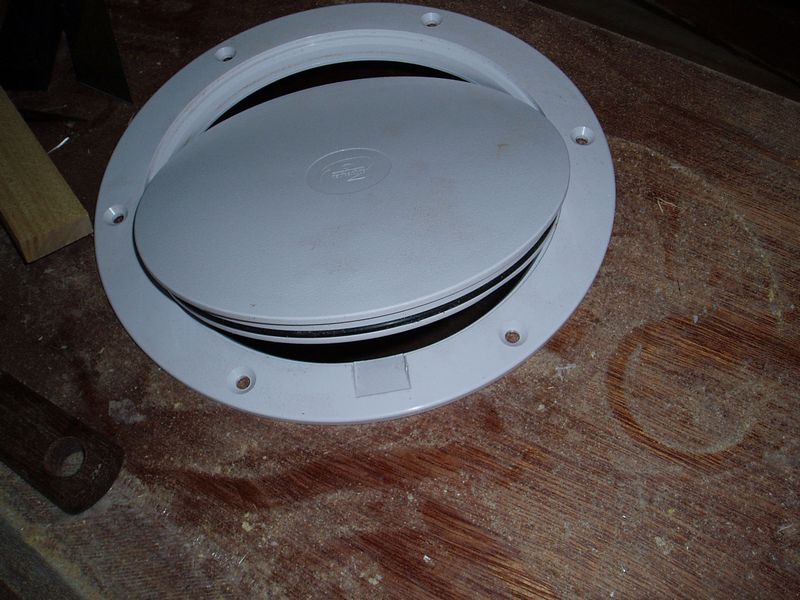
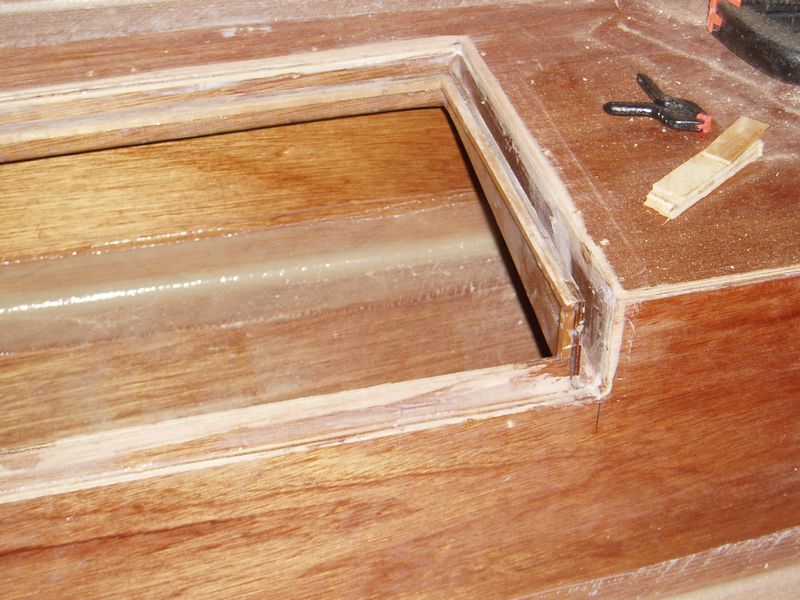
I've always bolted through if possible (and I think it is by far the better way), though a long screw into a lot of wood might work in some cases. Remember that if the fitting is only putting shear stresses on screws, or if the stresses involved are very small, they will work OK. I usually just drill the holes a little bigger than the bolt and seal them with epoxy- pipe cleaners are a good tool for this- rather than making a formal epoxy and filler bushing. I've used sikaflex mostly for bedding. I understand 3M 5200 is hard to remove if you ever want to in the future. In theory plastic (say, screw-in inspection ports) is best bedded with glazing silicone as it doesn't react and cause cracking of the plastic in time. I'm about to start decking too- Cs17 #165. Peter HK [attachment=1] [attachment=2]
-
It's just for abrasion resistance, not structural. I used 6oz. Peter HK
-
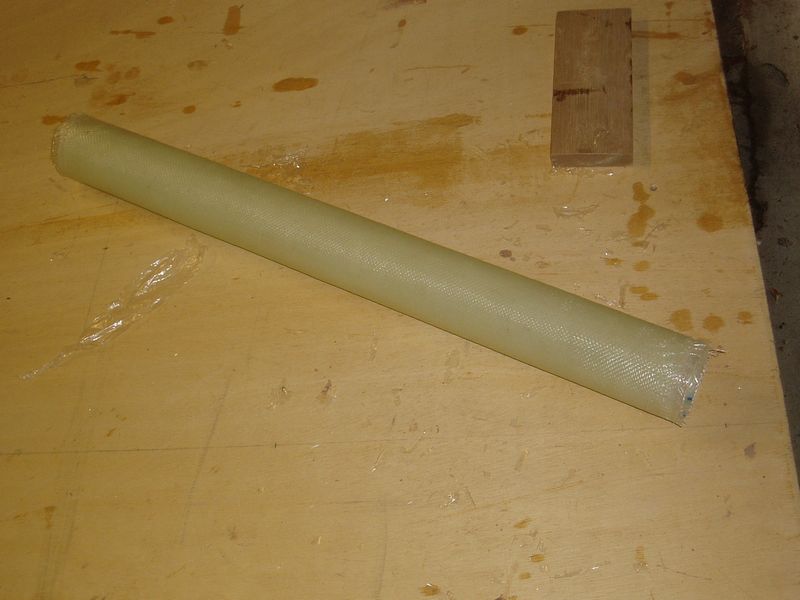
Wes said I'll attach a photo of the relevant instruction in my cs17 plans. Mine ended up a little thin-walled so I just wrapped some more glass around later on- very easy to do. I estimate I used about 2 metres (6.6ft) of 330 gsm (10 oz) cloth. Like Charlie my tube was a bit thicker than the 3/32 of an inch in the plans. Mine came out at 4mm (3/16 is about 4.7mm). HTH Peter HK

-
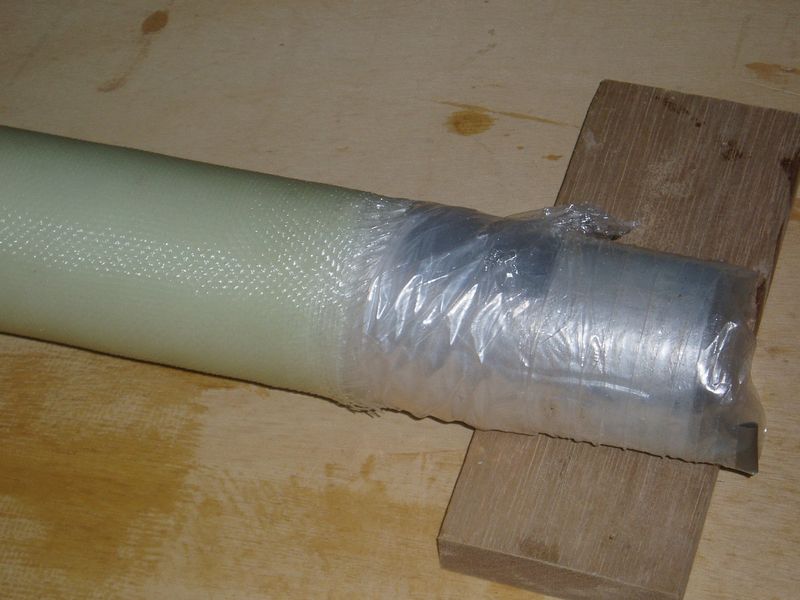
Wes The mast sleeve is made from fibreglass cloth- wetted out and wrapped around the mast section (which has been wrapped in a few layers of plastic so that the tube when set can slide off. Actually it's a bit harder than "sliding off". I think Tom Lathrop, in another thread, mentioned a new technique of longitudinal strips of plastic under the wrapped plastic which could be pulled out to allow more room for the plastic to slide. Here are photos of my mast tube. Peter HK


-
Even better than the screw in plastic hatches are the ones that have an O ring seal. They don't depend on being screwed in tightly enough. See


-
The standard technique for a loooong time before laser levels were available. It's amazing that gravity works so reliably ;D Peter HK
-
You have 2 options- Just paint over the glass and any other imperfection and go sailing- it'll still float. Or Learn about fairing compounds/sanding/ longboarding/ hi build undercoat and how to spray topcoat and end up with a floating work of art. Most of us end up somewhere in between. By the way - you don't sand the glass tape itself as that's what is holding the whole thing together Peter HK
-
David My 2 c worth is this: The thickening of the epoxy varies depending on the job. If gluing large, flat, well mated surfaces eg a butt join then slightly thickened epoxy that flows nicely and won't get too dry from epoxy soaking into the surfaces is the go. If making fillets especially on vertical surfaces or filling large gaps then it needs to be fairly thick so it doesn't run (better to coat with straight epoxy beforehand and let it go tacky). Standard gluing eg inwales is in between. Descriptions like ketchup/mayonnaise/ soft putty are sometimes used to describe the gradient in consistency. A little practice and you'll be right. For filling the weave and wetting out tape use unthickened epoxy. I agree with Scott that wetting out tapes on a bench is the easiest. I have a piece of ply about a metre by 30 cm that is affixed to one wall of the garage - I no longer use plastic on it- just smooth off the epoxy with the spreader used for wetting the tapes at the end and let it dry. When the epoxy gets too thick/uneven on the ply, I hit it with the belt sander. Peter HK
-
Hi Scott, I'll add a link to a previous post in case you missed it http://www.messing-about.com/forums/index.php?topic=5902.0 As I said in that thread I think the wishbone probably needs to be quite strong, so I would build it so each arm was nearly as strong as the designed sprit (perhaps same outer dimensions but hollowed out). Laminated timber seems a good option. If I asked my brother who is an engineer and expert in failure analysis I'd likely get a more accurate answer, but you'll have to treat my opinion with a grain of salt. I also have to say that I've sailed a lot of boats and against a lot of boats with sprit booms and the gain in performance from a wishbone doesn't seem a lot. Cheers Peter HK
-
Garry Here in Australia Ronstan still makes C track which is I think what you want- see http://www.ronstan.com/marine/range.asp?RnID=058#related. According to their website they have distributors in the US. Aluminium extrusions are also available- usually called sail track here. They are designed for a bolt rope but there are plastic slides available. Peter HK
-
Garry In the link you provided http://www.yachtminder.com/Listings/Active/sail/36Nonsuch/Specifications.htm the wishbone appears to have been bent/twisted a little. That is how mine looked (a bit worse) when I bent it. The twisting forces can be significant. Easy to build a strong enough wishbone in the size range you need though. Peter HK
-
Graham said Thanks for the description and photos- this is how I had planned to set up my CS17 and it's good to know that it works. One question- I had planned on a masthead topping lift, with adjustment along the boom, but I see in the photos that the topping lift appears to be from the mizzen mast and thus temporary(must be removed for sailing). Does this have an advantage? What about the mizzen? Peter HK
-
Garry said I'd agree with that. Is the Princess 28 intended to be trailerable? If so then keeping everything very simple is the way I would go. If you are going to moor the boat then the added benefits of all the extra lines etc might be worth it. Peter HK
-
Charlie said What is this snow stuff that everyone keeps mentioning? ;D ;D ;D Peter HK
-
Norm said Norm I've just read my post regarding terminology again and it sounded a little rude- I didn't mean any criticism or to be didactic, just trying to clarify the situation. I find that everywhere the use of terms is a little different. Hope there was no offence. Peter HK
-
Garry In answer to your questions, firstly the mast was originally rotating as the designer intended but when I bought the boat the rotation had been abandoned. Interestingly all of the sisterships also had eliminated rotation by then. I was told that rig tension was an issue and forestay sag from the slacker rig required for rotation was greater, harming windward performance. The wishbone couldn't hit a stay as a traveller line prevented it going too far so it didn't bend by hitting anything. I think it was the twisting forces (the wishbone never sat horizontal in any breeze) against the mast that did it. Conditions were quite strong and usually in a gybe the wishbone would twist from one angle to the other quite quickly. The wishbone was shackled to a stainless bale on the mast to allow it to slide side to side to some extent. There was no adjustment at the mast. Reefing lines were led from turning blocks at the aft end to winches on the boom itself- a bit awkward to use as the wishbone was usually canted. As this was a fully battened roachy mainsail the reefs were still near the end of the boom- with a more triangular sail there might be some problems with the position of the boom when the clew is a long way from it...you might need a strong topping lift. Peter HK