Peter HK
-
Posts
619 -
Joined
-
Last visited
-
Days Won
29
Content Type
Profiles
Forums
Events
Everything posted by Peter HK
-
Hi Edward I think the last 2 replies missed the point that you have already made a mold and built a gutter frame and was questioning how thick a layup is needed. I can't help you other than a wild guess ( I built wood ones) but maybe others who have built a glass frame will chime in on how many layers/what weight of glass they used. Cheers Peter HK
-
I'm sure all of these brackets are strong enough for the little motors we are fitting, 2 or 4 stroke notwithstanding. If in doubt I'd phone the manufacturer/seller to get the best one for such a small outboard. Cheers Peter HK
-
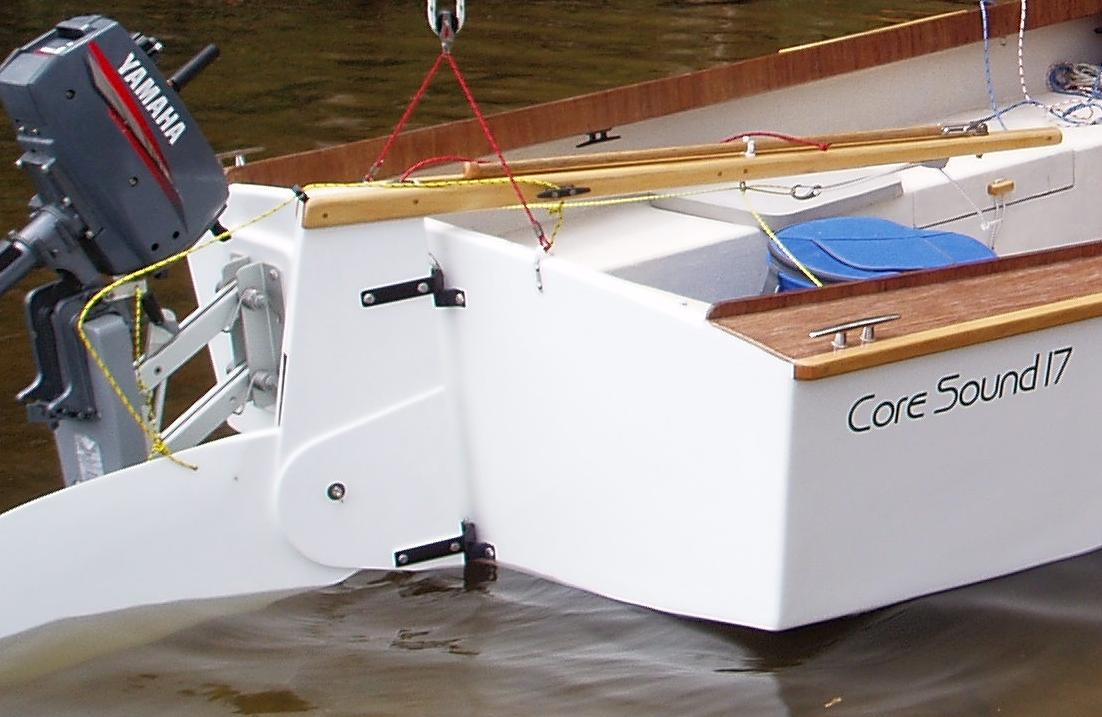
One other thing to add to my previous post and the only slightly irritating thing is that my bracket is designed for an outboard up to 15 hp and 35 kgs. As my 2hp yamaha only weighs 10 kgs I find I have to push it down quite firmly when I want to put it all the way down as the springs are designed for a heavier motor. A bracket designed for a lighter motor would work a little more smoothly...so try to match any bracket with the size/weight of your motor. Cheers Peter HK
-
I used a similar bracket on mine (an Italian brand available here in Australia) that is quite like the garelick one labelled for 2 stroke 20 hp motors. It's cheaper and more than adequate for the job. The multiple adjustments means that you can motor in rough conditions without ventilation, you can motor in very shallow water and you can get the motor well out of the water when you want. Another advantage is that you can have the motor tilted and far enough behind the transom that the mizzen sheets don't catch on it in a jibe. Given the choice I would do it the same way again, as it does work very well. Cheers Peter HK

-
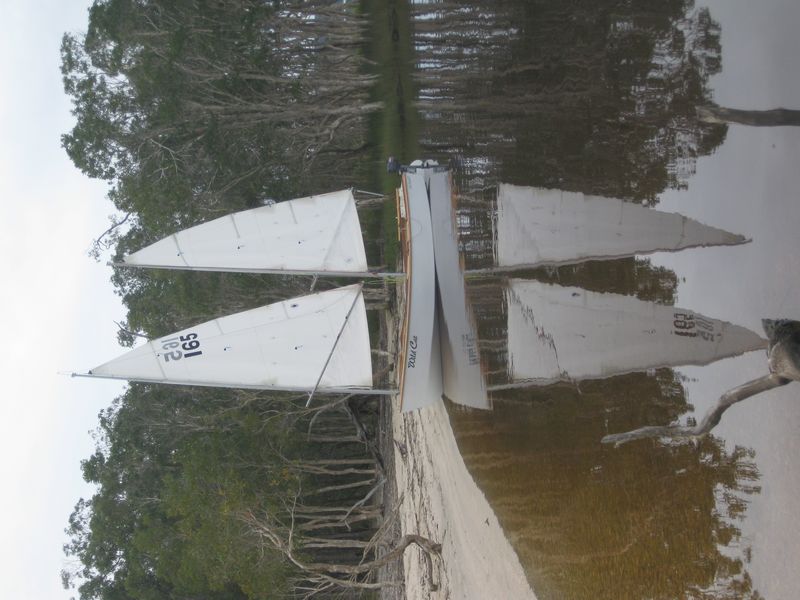
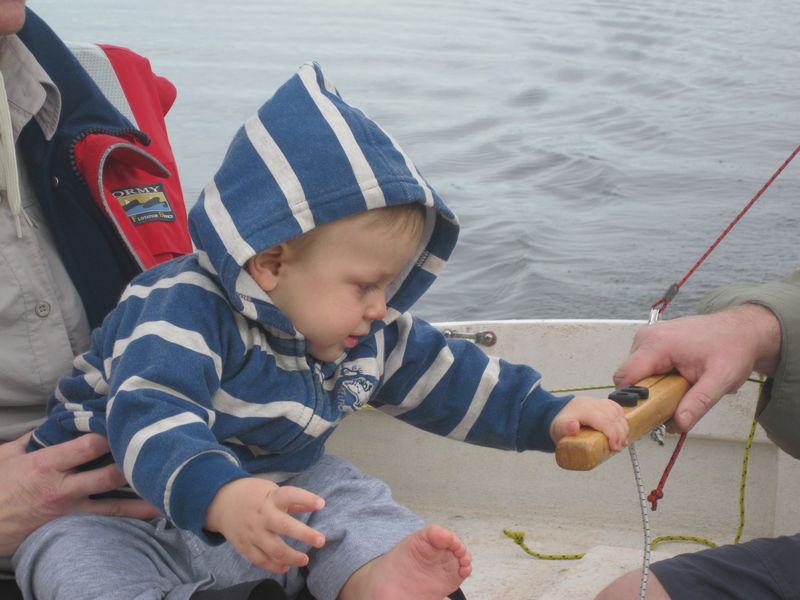
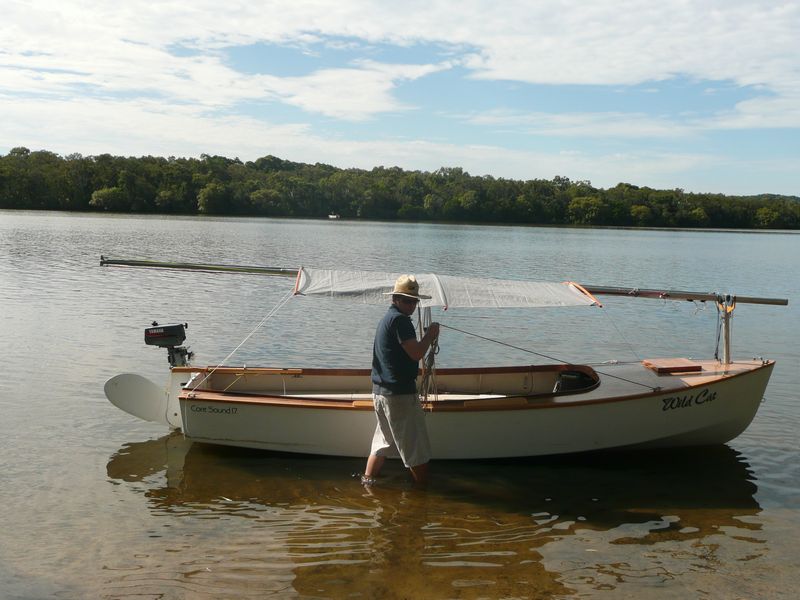
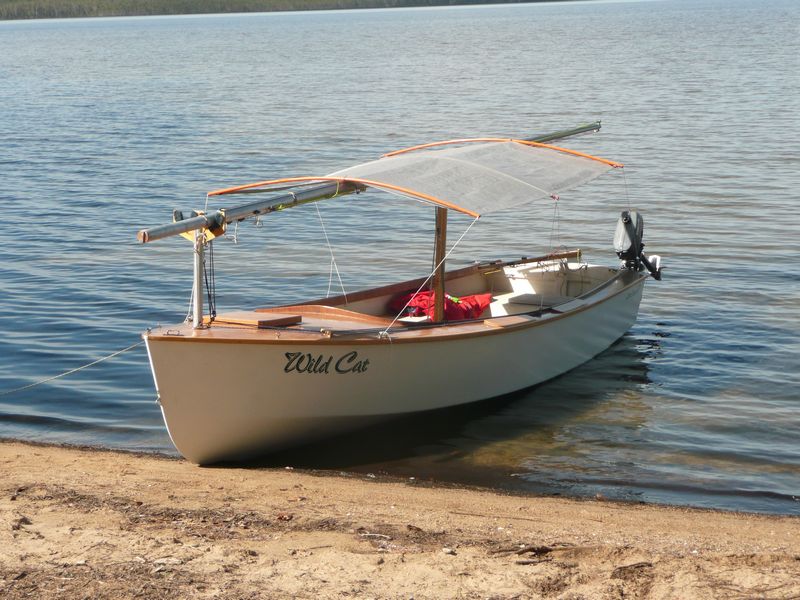
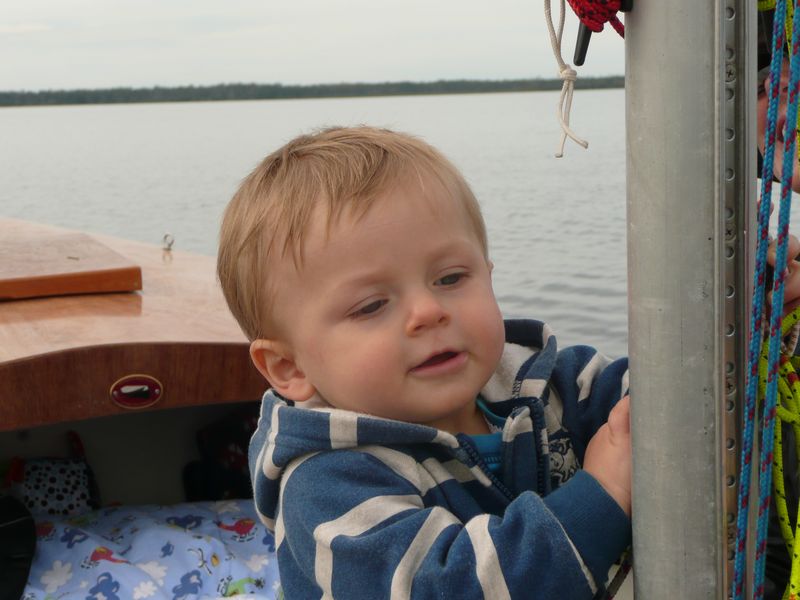
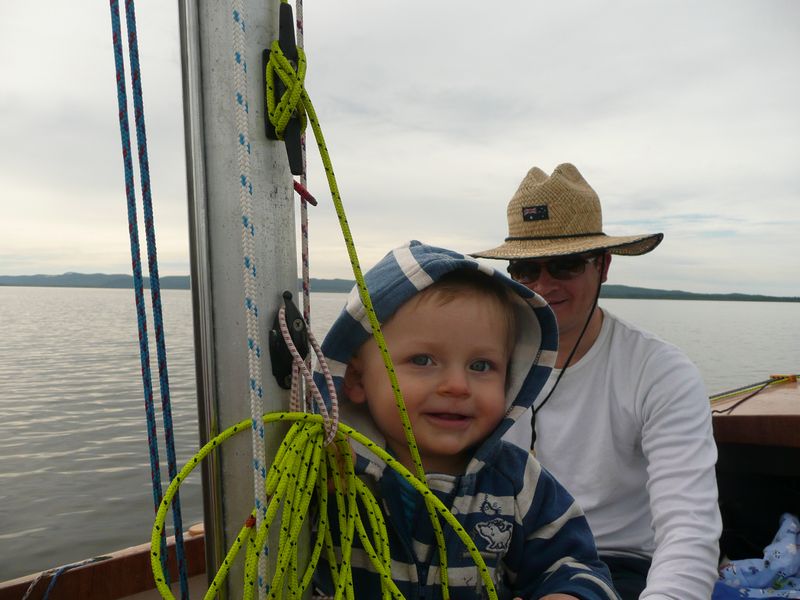
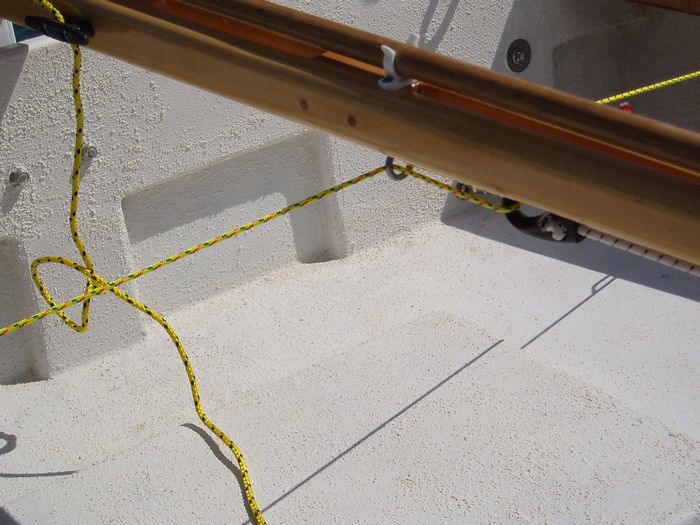
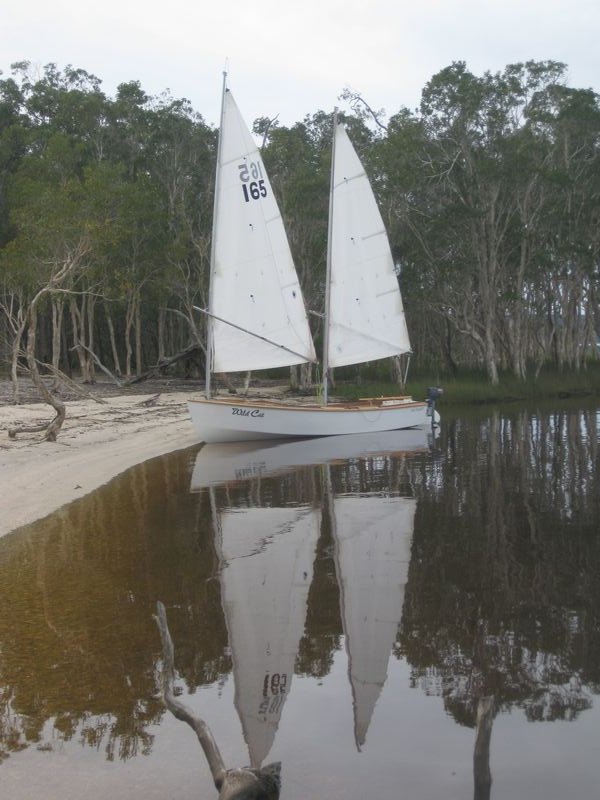
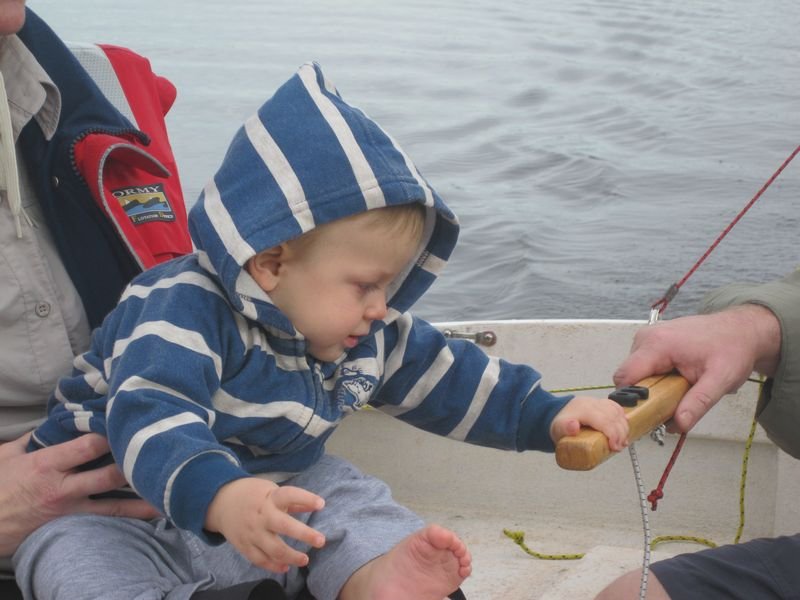
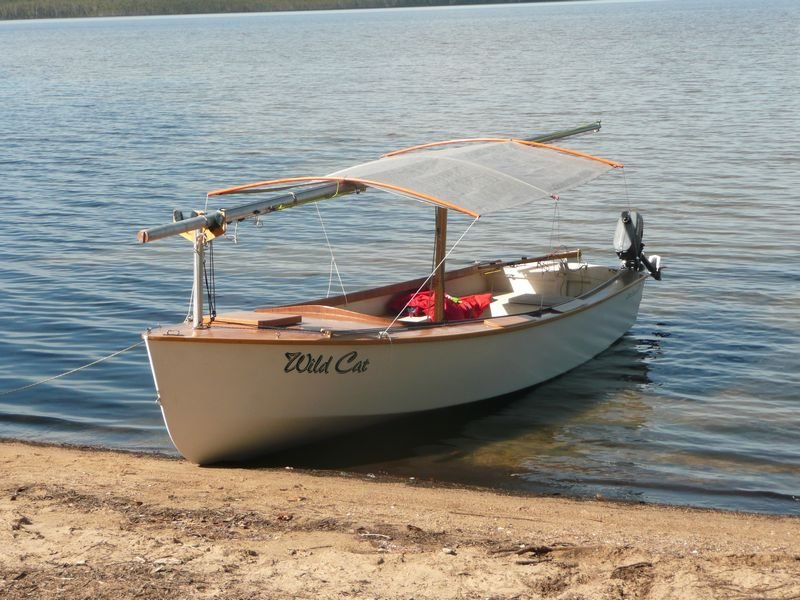
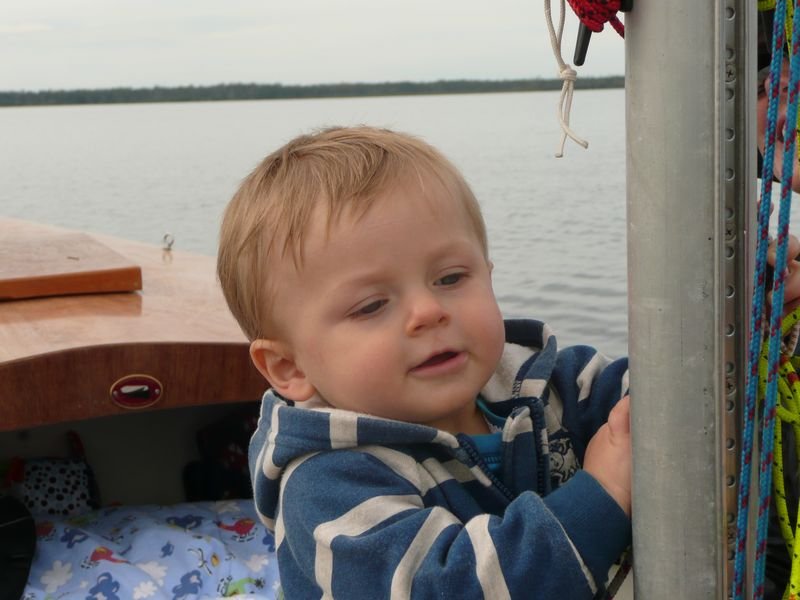
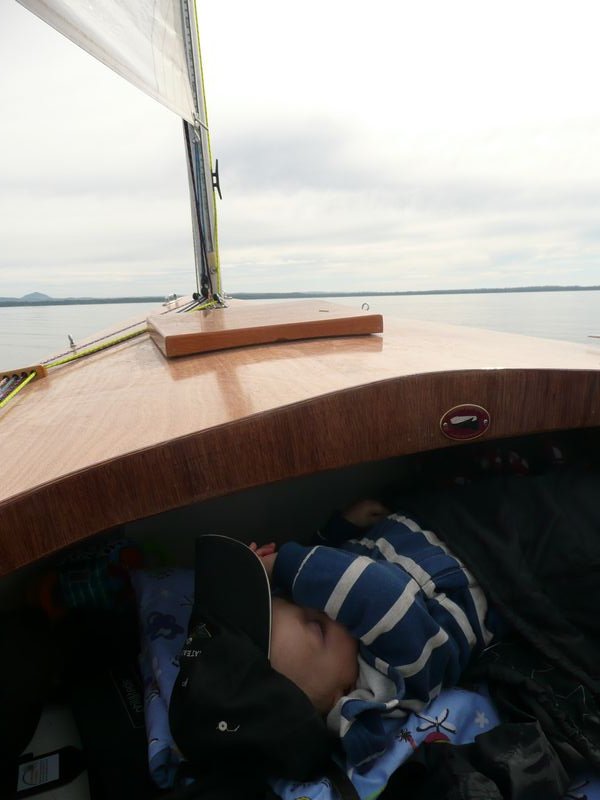
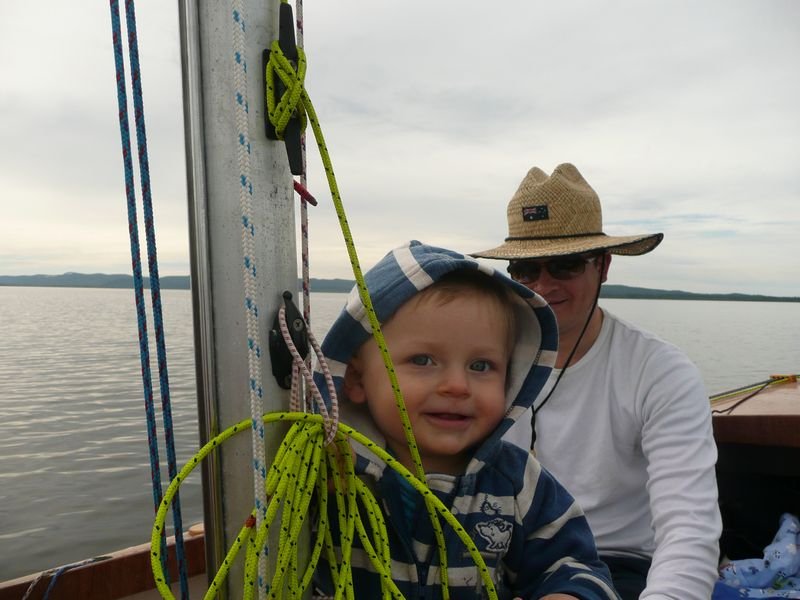
Recently, I managed to take my grandson, Oliver, out on his first sail; he’s 10 months old. This was on Lake Cootharaba, a lake about 3 by 5 miles and a uniform depth of about 4-5 ft except close to shore which makes it a great sailing spot if your centerboard is just short enough. The conditions were very light, starting at about 3 knots and fading to nothing by the time we stopped for a picnic lunch. It was a good thing it was a very light day on a calm lake because after a while Oliver started strongly objecting to his lifejacket, even though he’d had some practice at home…have to keep working on that. He enjoyed playing with the lines on the mizzen mast and casting a careful eye over everything. He even had a go on the helm, with a bit of a zigzag course. When it became too much for him he slept under the foredeck quite happily. They’d had an open air art show around the lake that week, including one exhibit in the lake. The next day there was still no breeze, so we decided to rig her as a motor launch, a la the African Queen, to visit another lake which is too shallow for sailing and accessed via a creek with low bridges. I used the mizzen mast as a ridge pole with a couple of struts to set it at a reasonable height, and used a cheap tarp. The lake’s quite pretty, and we found a nice spot to stop, but the supposedly excellent birdlife didn’t live up to expectations that day. They must have migrated north for the winter. It was very comfortable under the awning however, as winter here is very sunny with temperatures about 23 degrees C. We did get in a bit of decent sailing a few days later but without Oliver on board. In the best of it we (two up) were both hiking hard with the full rig up and tacking up a narrow channel in the river, against a knot of current and making ground easily with short tacks while never touching a sheet. Cat ketches are great like that. Now Oliver… about that life jacket. Cheers Peter HK



-
I'll be taking my CS17 to the Bribie Island Classic Boat regatta this weekend. For details use this link and click on Classic Boats. Bribie In the past a few have asked if anyone was going to this regatta with a Core Sound, so if you are in SE Queeensland, Australia come and have a look. There are usually some fantastic boats ...like works of art ...there as well. Cheers Peter HK
-
I think Ken had luff sleeves. You can leave the masts fully rotating so the track would be forward facing. My masts are fixed, so I use the method described in my first post- the boat is facing into the breeze enough so the slides drop easily (especially as the flow from the main tends to shift the apparent breeze for the mizzen more from ahead). Cheers Peter HK
-
Hey Ken You'll have to change the location on your profile Cheers Peter HK
-
One other thing that might be of interest is- how to rig the boat if conditions look like they may be a bit too much, or if it may be gusty... not enough to reef both sails, or overpowered in the gusts but needing a bit more area in the lulls. I intentionally built my centrecase cap so that the centreboard goes as far down as possible. This means I have to adjust the centreboard so that it is not fully down for correct balance with the full rig. The good news is that with a reefed mizzen and with the board fully down the balance is just right- a touch of weather helm. The result is that, if it is gusty, I can go out with full main and reefed mizzen and have great control with the mainsheet, lots of power, and never be overpowered by the reefed mizzen. This may not work on all boats if the centreboard can't go down as far, or if the centre of effort is different ( I have roachy sails... it might not be the same with a battenless rig) My 2c worth Cheers Peter HK
-
I have one of these Silva ADC but I find I use it very little and more for curiosity than anything else. The only real use for me is convincing my wife, who is a very timid sailor, that we don't need to reef..."See Dear - it's only 10 knots" I agree that being able to judge the need to reef by looking at the seastate is a better option and easy to learn. Cheers Peter HK
-
Hi Ken You have to tell everyone where that photo was taken- it certainly wasn't Canberra. I think Bill Bryson crystalised the nature of Canberra in his book on travelling around Australia- "Canberra- why wait for death". When's the wedding or why haven't we seen photos if it's already happened? Cheers Peter HK
-
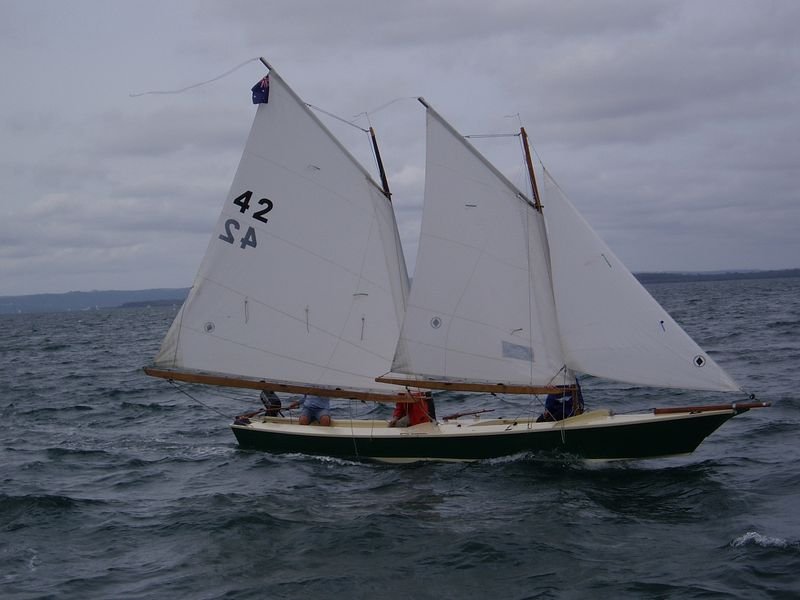
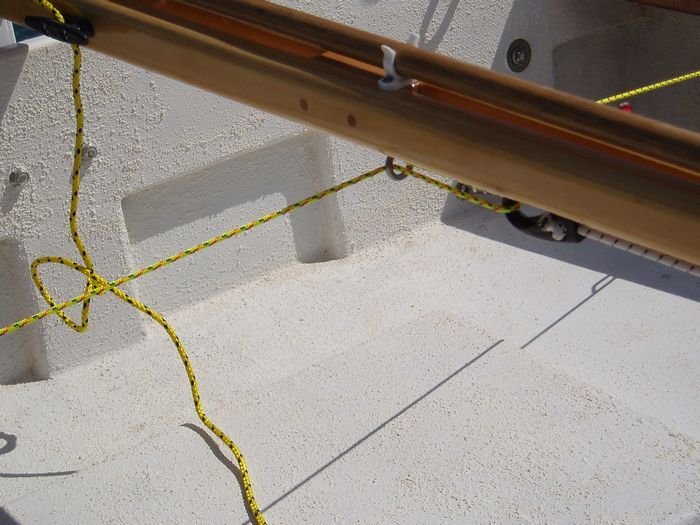
The technique that I use is 1 Reef the main 2 Ease off on the correct tack to reef the mizzen (depending on whether spritboom is port or starboard). 3 Set your course about 60 degrees off the breeze ( ie a close reach), ease mizzen completely, pull on mainsheet to just fill the main, put the helm a-lee (I have a tiller tamer rigged). This should have you just moving forward with the rudder trying to head the boat up but the main losing power when too close to the breeze causing the rudder to lose flow and the the bow to fall away again. It's a reasonably stable condition though needs a little supervision from time to time. 4 Reef the mizzen ( I have a reefing line permanently rigged so I just have to drop the halyard a bit and pull on the reefing line) 5 Go sailing I have used this technique on my CS 17 to about 20 knots but on my Bolger Folding Schooner we reefed the main (aft sail on a schooner and about 120 sq ft) many times like this in 30 knots and more. Cheers Peter HK
-

Forward rowing station in a nesting Spindrift.
Peter HK replied to BARRYFOY's topic in B & B Yachts Forum
My Two Paw (8 ft) plans show a forward rowing position right in the bow- there seems to be about 2 1/2 ft to the bulkhead from the aft edge of the thwart which should give enough legroom for most. I plan to build a buoyancy tank in the bow and sit on that- much like John Turpin did with his: Not having spindrift plans- can the spindrift 11N bow buoyancy tank be altered to make it an effective rowing seat? It is 11 ft long- half of that at 5 1/2 ft should allow a seat and reasonable legroom. Cheers Peter HK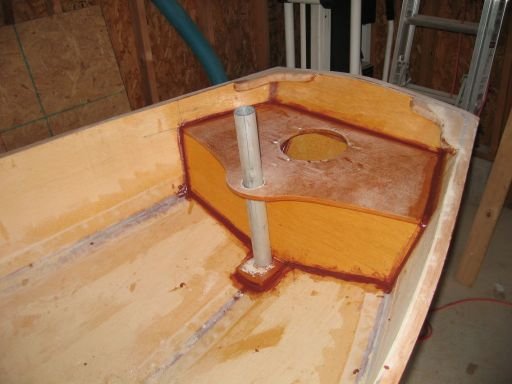
-
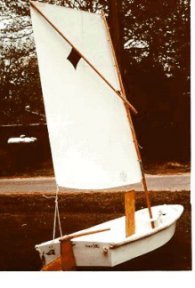
John In a earlier post he mentioned a CS15 ( link) so I believe he is talking about the spritboom of the CS rigs. Technically, "sprit" without any qualification would usually refer to a spritsail rig eg this catspaw from the B & B site. Cheers Peter HK
-
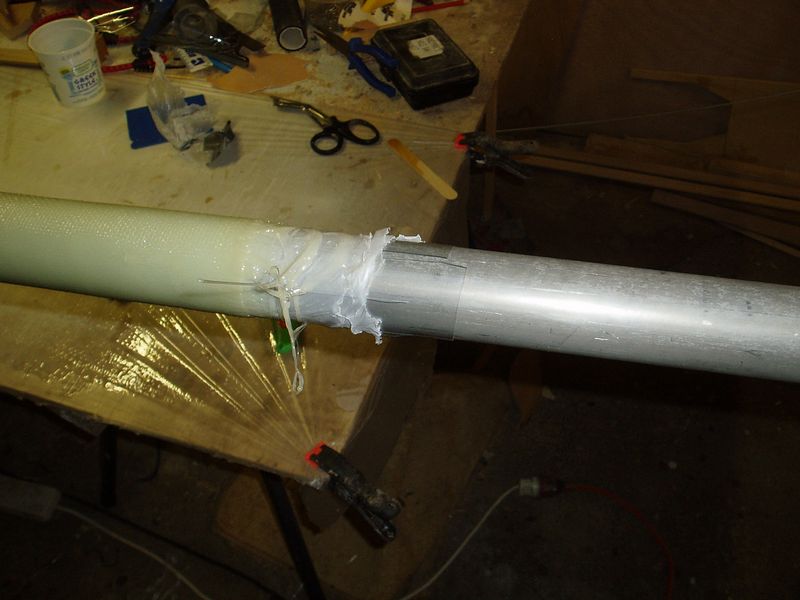
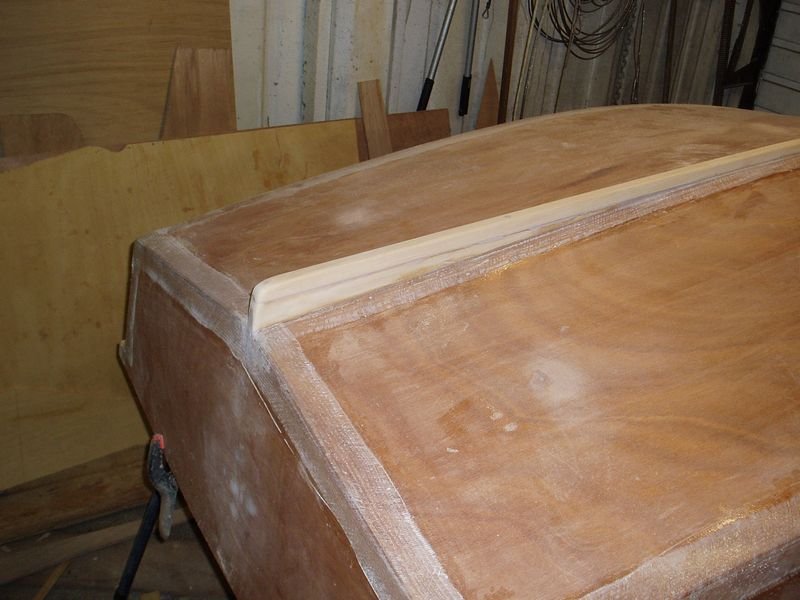
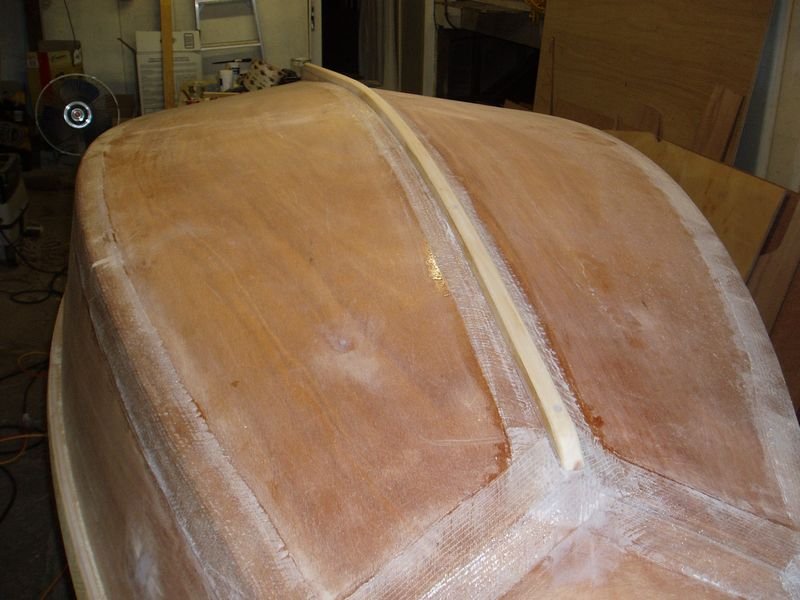
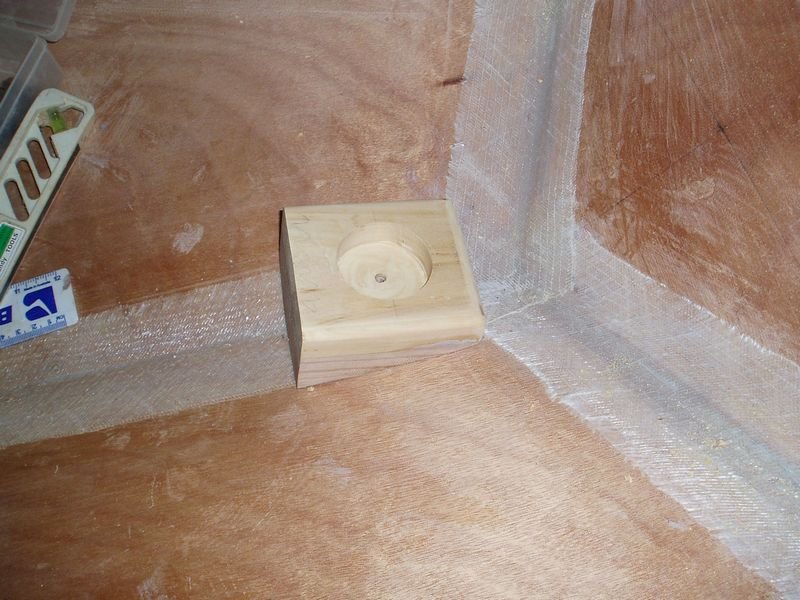
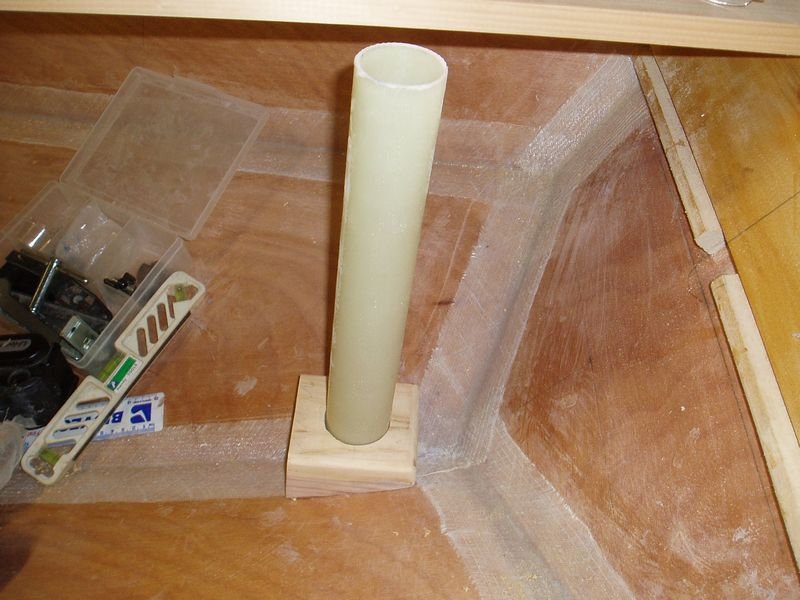
I thought I'd update with a few photos. The keel went on nicely. I've decided to encase the mast step in the forward seat/buoyancy chamber (like my CS17) so made a fibreglass tube to keep it watertight. I used the method with a split piece of 1/2 mm plastic under a thin sheet of other plastic. It worked well. You can see I had to pull a bit on the first one and stretched the plastic a little but the others just slipped out. Cheers Peter HK




-
I'm building a Two Paw which I have not yet cut, but I left a gap that was big enough for my standard saw in case I ended up using that rather than the Japanese pull saw as I'm not sure which will do the job better. I suspect it will be the pull saw but I wanted to have the option. I can't see a downside to a larger gap as we're only talking a couple of mm. Cheers Peter HK
-
Snotter Arrangement -- How Effective is It?
Peter HK replied to marshden's topic in B & B Yachts Forum
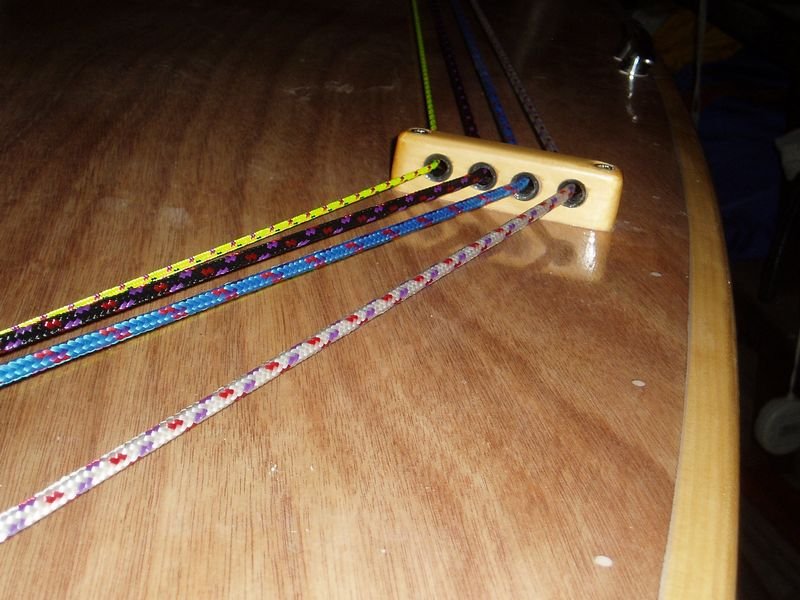
Not sure about "correct" but here's a photo where you can just see the 2 purchses of the snotter led down to the turning block at the mast base. It is then led back to the cockpit. The block on the mast has a becket to tie the line to. The snotter is led through the block on the sprit, back to the block on the mast and down. I have quick release spring loaded hooks to attach the blocks to mast and boom so it can all stayed rigged and I even use it as a tiedown for the mast in the crutch while trailering. Cheers Peter HK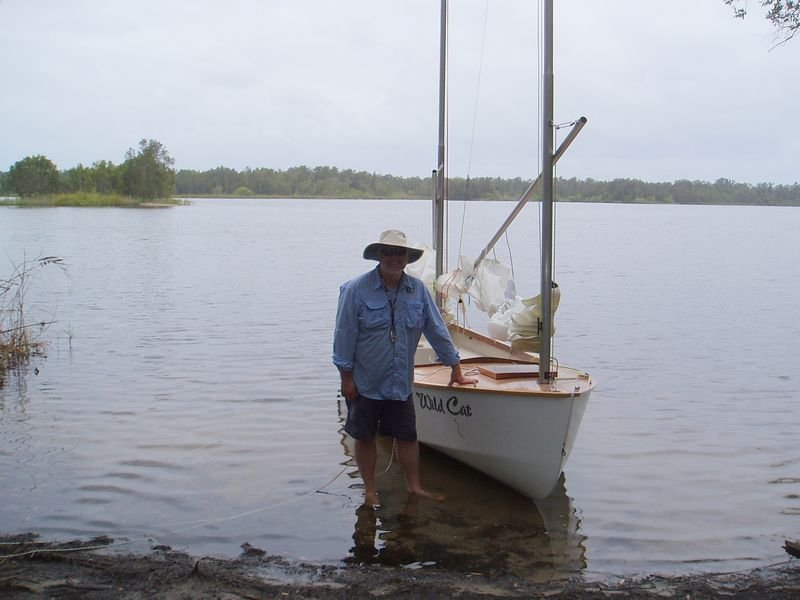
-
Did they have outboard motors 50 years ago? I think the reason for this is the advertised nature of the Coresounds in particular- as dinghy cruising boats with a good turn of speed. If sailing in a bay is what you want to do, perhaps with an occasional race, then get a Laser or something similar. The reason to build a Coresound is the potential to go further, camp overnight, cruise longer distances, spend a week or two, explore rivers, get to calm anchorages up the river that larger boats can't access. There are instructions about boom tents/canopies/bunks and some have posted their camping/cruising adventures. While for most this remains a dream, it is the potential that has its own rewards. Much of this activity requires, or at least is very much better, with a motor. An example from where I live is camping on the Noosa river. You can launch on Lake Cootharaba and have a nice sail to the river entrance, but thereafter to the first campsite is upstream (half to one knot adverse current) and at times so narrow, with overhanging branches, that rowing is impossible. A motor makes it an easy day. Paddling, rowing, wading would be a real pain. They're not just sailing boats- they're cruising boats. Cheers Peter HK


-
Yes it does that very effectively, especially if you put the mount down a little (it has 4 positions) as this moves the motor further aft while still keeping it clear of the water. Cheers Peter HK

-
I lift mine easily, single handed, with two handy billies (block and tackle systems) manufactured from bits left over from previous boats. One is 3 purchase, the other 4 purchase. I just attach both, lift one end, then the other and move the trailer out. Cheers Peter HK


-
Snotter Arrangement -- How Effective is It?
Peter HK replied to marshden's topic in B & B Yachts Forum
I had a Bolger Gypsy that was rigged like that...simple, quick to rig but no adjustment on the water. I've rigged my CS17 with blocks/leads etc to bring it back to the cockpit. You ask how effective the simple snotter is for controlling sail shape- not very effective in my view. Easing snotter tension off the breeze really makes a big difference but I can't see anyone regularly climbing onto the foredeck to adjust the simple snotter. I use snaphooks to attach the snotter to mast and boom so the line stays rigged through the blocks and it just involves clipping on to the boom and bale on the mast (which is probably quicker than feeding the snotter through the hole in the sprit boom). Cheers Peter HK -
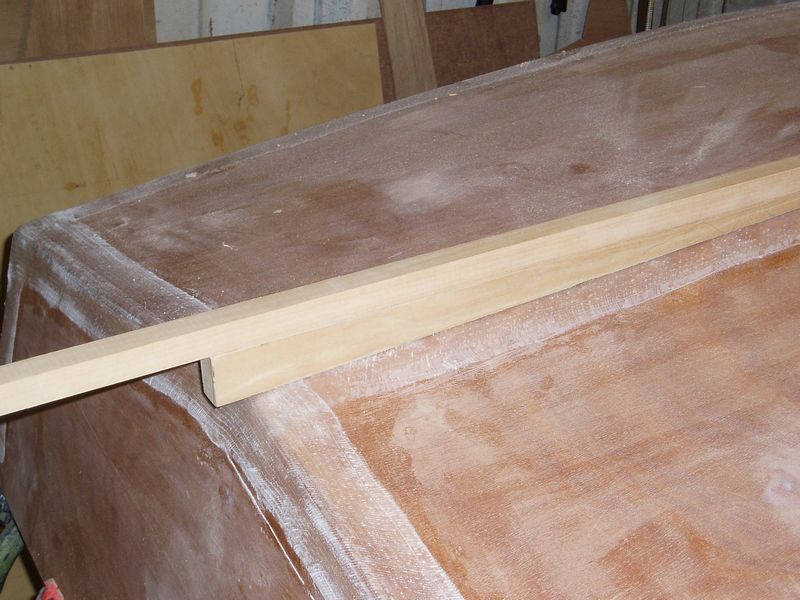
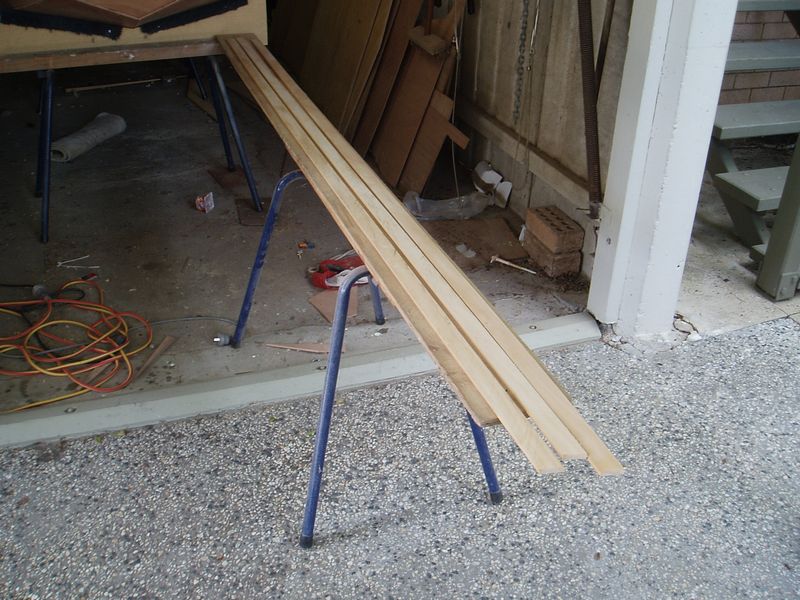
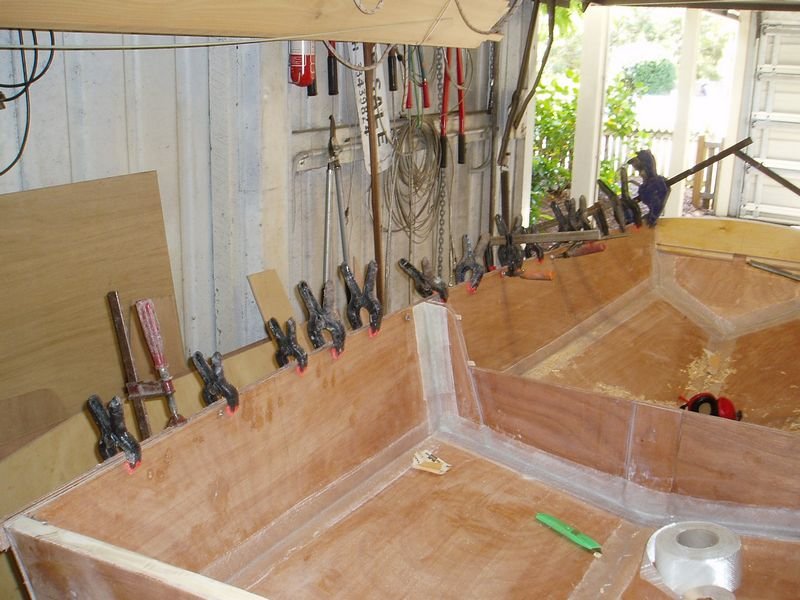
Hi Lawrence The short answer is that it is much better to laminate them as this helps to preserve the shape/curve of the gunwales when you cut the boat in half...they won't spring back the way a solid piece of timber will. I ripped the quarter inch strips from some pretty small stock which was doable but a bit fiddly and they ended up not totally neat, but that all disappeared in epoxy on the messy day when I glued them on. Here are a few photos of my Two Paw under construction. I made a temporary long, thin bench out of an old bit of 1/2 inch ply which worked well. It ended up with lots of epoxy on it but was easy to sand/scrape off. Cheers Peter HK

-
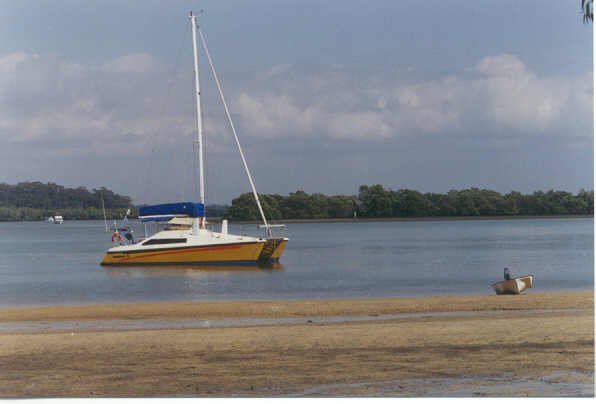
I'd very strongly suggest you plan to have heavier items centrally i.e. keep weight out of the ends, even if she trims slightly bow or stern down. Nothing stops a boat responding to waves optimally more than weight in the ends. As an example, a few years ago I owned a crusing catamaran. The first time I went on a longer cruise (> 1 month) I utilised some storage areas in the bow under the bunks for heavier stuff and had lockers in the centre of the boat filled with lighter stuff. In rough conditions to windward she'd hobby horse and ship waves over the bow. When I next went cruising for a 3 month trip and with the boat fully loaded I was very careful to position the heavier stuff centrally. On that trip I never had a wave come over the bow...and we had some rough times ( one day I didn't see less than 40 knots on the wind instruments with the gusts coming through at 55-60). Cheers Peter HK

-
I'm afraid you'll have to be more specific. I'm in Australia in the subtropics so in winter I need a lightweight waterproof jacket- breathable/goretex/etc is nice. I have a light polartec top and some quick drying shorts. In summer I have a long sleeve shirt for UV protection. When my brother lived in England and sailed small catamarans he had a drysuit to keep warm with several layers underneath. I think you'll have to let people know what your sailing/climate conditions are to get a helpful answer. Cheers Peter HK
-
I agree with Brent. I've been thinking of a longer trip, going whale watching in Hervey Bay here in Oz. There's a great place to anchor called Wathumba creek, about 25 miles across the bay. The plan would be to stay a week or so. I felt provisions well stowed centrally and especially fresh water in 10- 20 litre plastic jugs lashed around the centrecase would be all the ballast you'd want. If you use up most of the fresh water you can always fill up with salt to use as ballast on the way home if needed. Cheers Peter HK