Bcone1381
-
Posts
137 -
Joined
-
Last visited
-
Days Won
1
Content Type
Profiles
Forums
Events
Everything posted by Bcone1381
-
This is my first introduction to hood straps, ratchet ropes, and hatchback adapters. This knowledge helps a great deal. I have been bringing my ropes down under the bumper of the Honda when transporting A 15' AL canoe. Those hood straps are a great improvement.
-
I might be able to do a weekend trip at about 30 pounds. Fishing adds bulk and weight! I have little experience portaging with a canoe, but Most of my camping has been on rivers without a portage. I read and ask questions, and I'd like to know how a portage works out leaving the kayak packed. It is message boards like this where I see the issues that need resolving...it's not experience that I have. http://www.bwca.com/index.cfm?fuseaction=forum.thread&threadId=305107&forumID=12&confID=1
-
We are leaving them off then! Thanks Jeff.
-
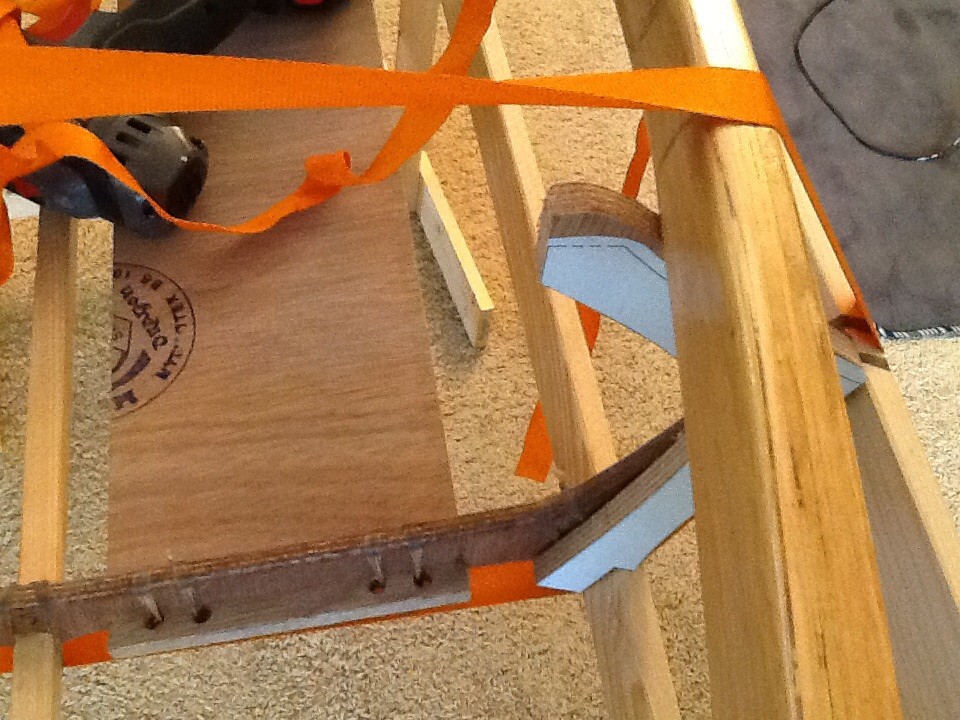
Jeff, these two frames were labeled something like "allow extra allowance along dotted line, and finish to size" I know I did not leave enough allowance, but I am going to remake these to support the coaming, unless I am on the wrong track. Is that the right idea? I believe they are sized correctly for the plywood coaming as the the plans call for. Maybe my oak coaming doesn't need the support? PS. If my wife thinks I need a bigger workshop, she doesn't complain! Harley says "Hi"


-
Finished the Ribs - 1.8 hours Purchased Stringers - $84.30 Frame Assembly - 6 hours Lashing of Frame - 14 hours Floor build and Lashed - 1.7 hours

-
I just edited my post to clarify, but did not see your post soon enough, so we are on the same track, Jeff. The higher profile...I mean a 10knot head wind is tough in a canoe. A 15 knot wind, and it's not worth the energy- just set it out and wait for the evening calm.
-
I go back to Jeff's point that a loose hatch is a hole in your boat. No one can disagree with that statement. In some cases it will kill. I kayak on small lakes so far, no big water so I don't have his perspective or concern over another hole in my boat. I attended the Quiet Waters Symposium two weeks ago, and see a great market for a camping platform for the Boundary Waters or Algonquin. Wenonah Canoe has experimented and come up with a pretty cool platform. I believe a size able market exists for an expedition Kayak. The main reason people don't use Kayaks in these areas is due to the extra time they demand to pack and unpack when performing a Portage. A canoe is just easier and quicker...grab the packs and go! On the water, and during the carry, everyone favors a Kayak. A canoe is like a ball and chain compared to Jeff's designs. I wonder about the Stonefly. Wind is an enemy of a Canoe though, so I go back to the Kayak. So I my interest is perked for a design like Wenona's Canyak. Can I modify my Cast-a-Way with three coamings? I wonder about its stability when loaded though. Maybe that will be next winters project. http://wenonah.com/Canoes.aspx?id=116
-
Dave, Can you work out some photos of your car top set up? I am intersted your custom brackets and if you transport more than one kayak on a car top. A science to tying down SOF exists that this forum could develop and teach its readers. As far as bow lines, I think of the stress that could be imposed on our kayaks if tied too tight, especially on a small car with brackets that are not very far apart. I could use some additional knowledge and ideas. I transport on a Honda Civic, with a narrow 'bracket width.' I am a beginner with transporting, and have not gone any distance yet nor at highway speed. So far last year it was just a mile down a dirt road to the lake. But I have visions of a long trip with my kayaks. Brooks
-
For what it's worth, I made my coaming out of oak. It seems too heavy (but very sturdy) and have thought about redoing it...maybe out of cedar. What lumber is conducive to bending around the front of the coaming mold? I knew oak was good. Now I see others have used cedar. I spent a lot of time handling the oak before it went onto the coaming mold. Buying, Re-sawing, soaking, steaming, pre-bending, then wrapping it up with glue, finally sanding down to final dimensions and finishing. I would have been ahead to by purchasing basket weaving material, wrapping it and glueing it solid around the mold. Better yet, http://www.itascawoodproducts.com/shop.php?product=ash&cart_id=139472570414074 Take your pick....ash, basswood, oak, white cedar.
-
http://www.qajaqusa.org/newsletter/Masik_Summer2003_07034.pdf#page3 In This newsletter is an article on how to make a Sea Sock. Sea Socks make a lot of sense when used in conjunction with Jeff's Floatation Bags.
-
I hope my opinion does not cause anyone pain. The big plastic hatch is not too appealing to me. We make our boats out of wood and skin them and seal them. I just got to believe that an inexpensive, appealing, lightweight hatch is achievable despite the obstacles. I see a nice oval inner hoop for the coaming and the outer hoop used as the lid, using some imbedded rare earth magnets and the knurled thumb screw to give the lid redundant closure mechanisms. If we don't experiment, we don't improve.
-
Matt, Thanks for mentioning names of the better speakers! As I was looking over the roster I focused on the topics, but wondered if their were any speakers I not miss.
-
The Quiet Water Symposium is an expo held at Michigan State University this weekend (Saturday March 1) that promotes non motorized outdoor recreation activities in the Great Lakes Area. Canoes and Kayaks dominate. I will be attending and hearing experts speak about a Rivers of Ontario, Canoeing Algonquin, and Fishing in the Boundry Water Canoe Area. Two years ago when I attended, I saw my first Skin on Frame Kayak. Strip built Kayaks and Stitch and Glue were also on display and well represented, but representatives in the SOF design were just some club members who built one and put it on display. The low cost light weight design was always on my mind after that. Anyway, this is a great place to come to forget about the snow, ice and sub zero temps, (right now my thermometer says -6F and I think will hit -14F later tonight) and build a knowledge base that could lead to adventures all summer long. I hope to see Jeff fight the elements and and put a Kudzu on display here in 2015. http://www.quietwatersymposium.org Click 'Current Year' to get better info on this years program.
-
Coaming width is 18" across at the widest point.
-
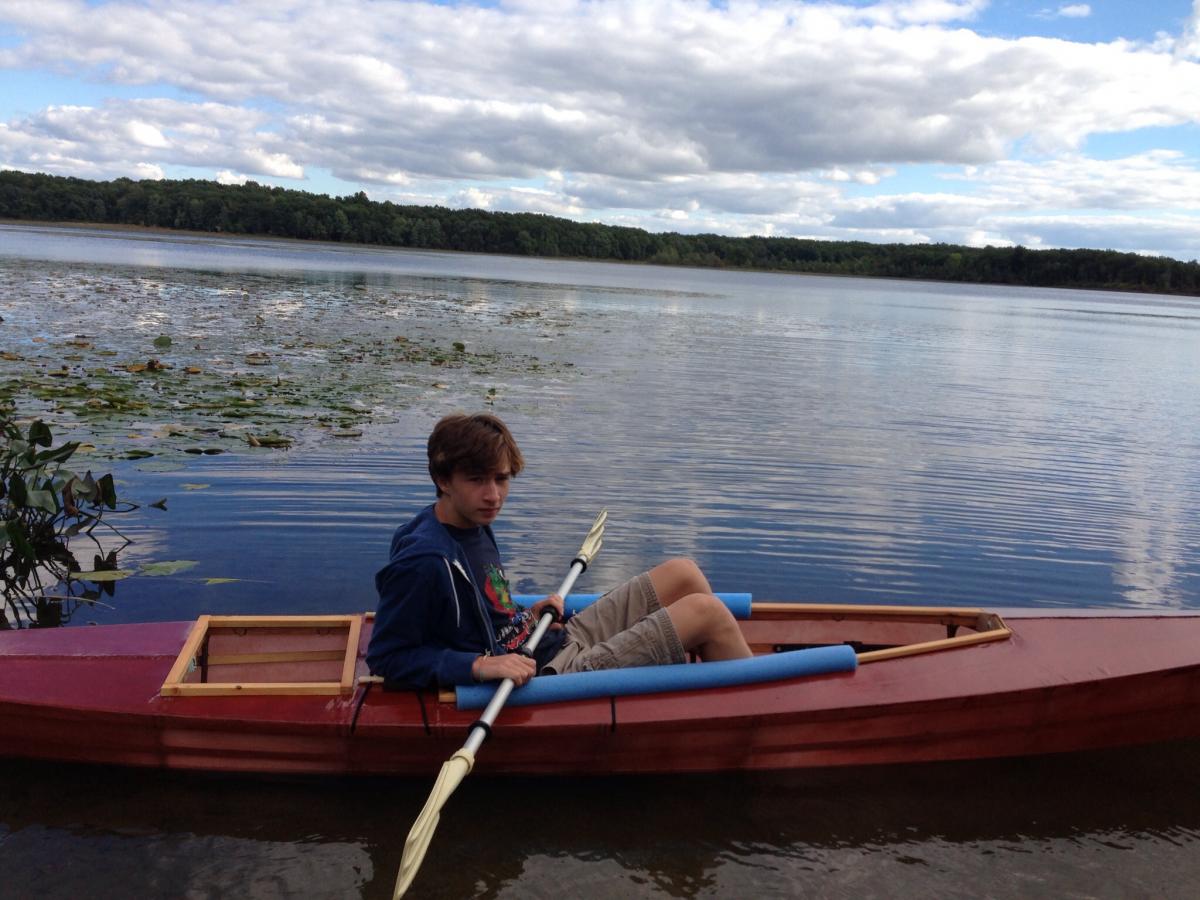
This is Jeff's Cast-a-way design. My son is about 5'10". It has enough stability to use for fishing, and it's speed is nothing to yawn at. It weighs in at 35 pounds.

-
Woodman, I have been cruising the tnttt website a bit since you responded to this thread? I kind of expected to see someone building one of these using the methods we utilize for our Kayaks. This Model A trailer is the closest I have seen, but it lacks the utilization of the more conventional tear drop design that you are using. I am curious of your thoughts on employing the fabric covered, lashed wood frame truss design in a teardropper, especially considering your wide craftsmanship background, and build experience with your plywood unit..
-
The satisfaction of completing a really nice lashing joint is hard to explain. It just feels pure and righteous.
-

What is the function of the Bifurcated bow?
Bcone1381 replied to Rich D's topic in Kudzu Craft Forum
Professor Irwin P. Cory also did wonderful research on the Turbo Encapulator. -
What year is your sea skiff?
-
Last summer I built a cast-a-way and sewed her up using 8oz. and the double corded stitch. I used Jeff's Artificial Sinew for the stitching and liked the heavier cord with this fabric. I would not want to stitch it with finer thread. You might reference the thread below and look at entry #3 and #10, as I talk about the stitching and methods and have some photos using one piece of thread and two needles. http://messing-about.com/forums/topic/8777-cast-a-way-fishing-kayak-build/?hl=bcone1381#entry76169
-
P Structurally I don't think there is any issue, but do you know that the gunwale stringers will not land in a cut out? Off hand, it looks like they will.Dave, I see your point. Anyone else have feedback?
-
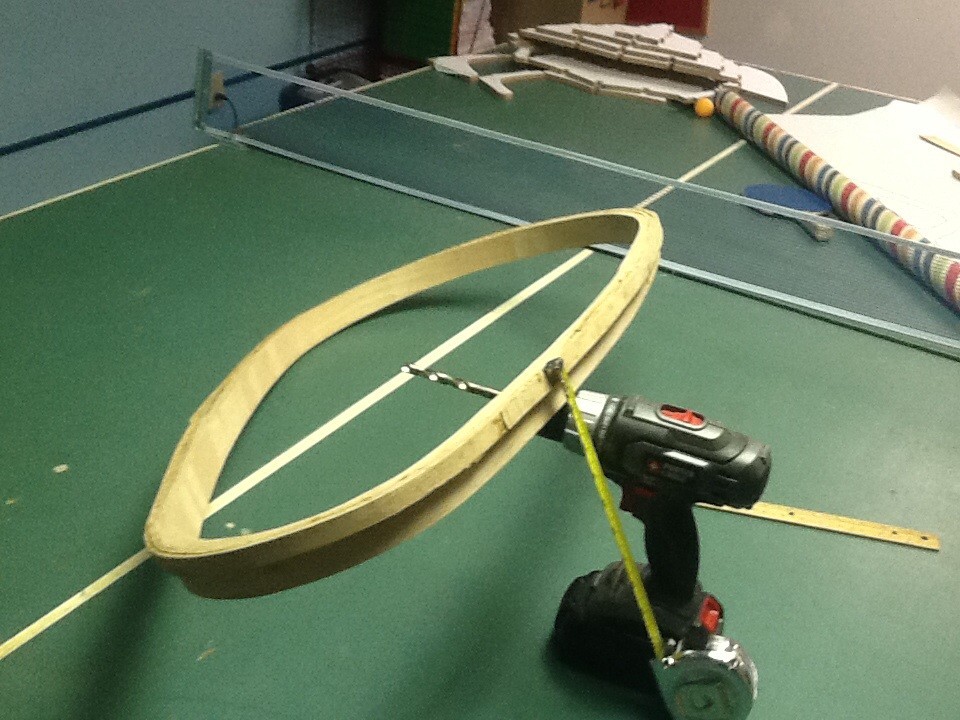
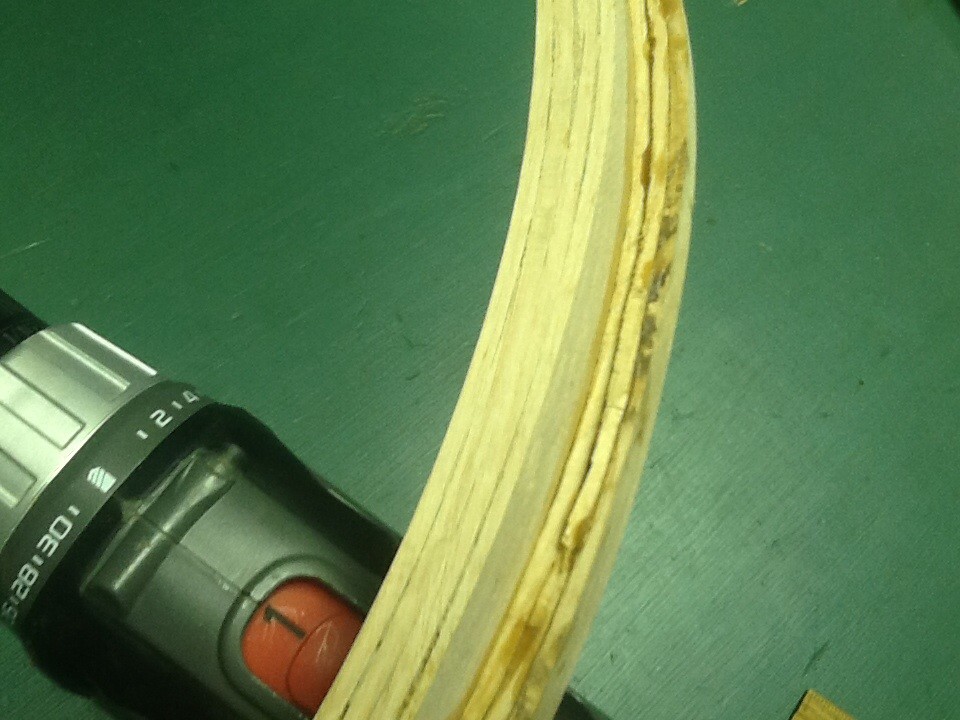
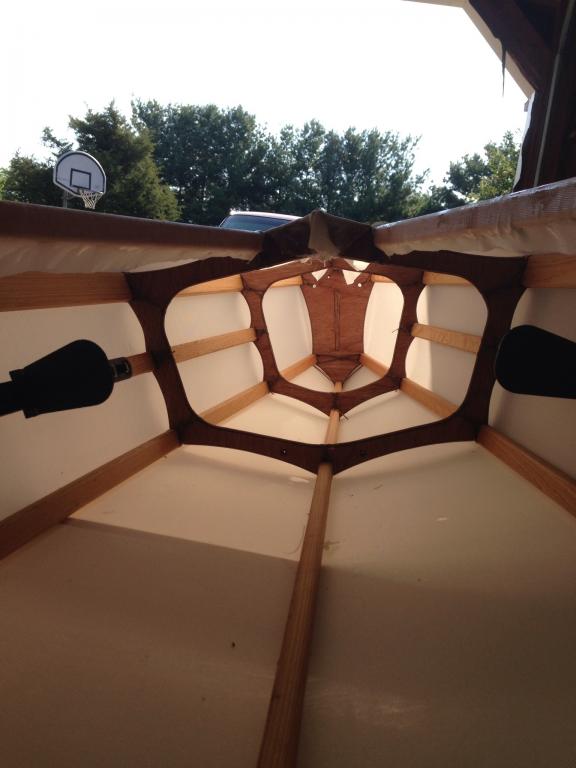
Here are some shots of my rough coaming. The lip is about 1/2 wide, and the main ring is about 1 1/2" wide. The main ring has four wraps of 1/8" oak and I gave the lip 3 wraps. As Uncle Ralph says, This coaming is a different design than the plans called for, but the method of building it is covered on page 66 of the assembly manual. I now see that Jeff says to build the lip about 3/8 wide. I have some sanding to do, mine might bet close to that. If you are going with the laminated coaming I really like building it first. It's ready to go when I need it. This will prevent a lot of perceived slowdown at the covering phase.


-
Progress continues... -I Cut the outside of the ribs with the bandsaw...2.1 hours. - The rough coaming is completed...this is a wild guess...ummmm...3.7 hours. (I am slow, trust me. You can do in 1.5 hours if you follow Jeff's video. I soaked my oak, then steamed it, the wrapped it around the jig to shape it, then unassembled it, and glued/assembled it one layer at a time. I think I can save some weight without sacrificing strength but I would like feedback before I commit to this idea.


-
Jeff, your videos show how experience develop skills. I recall watching these once upon a time. I get info from other places too, and I think I make it harder. I also think my coaming jig has a tighter bend at the front and wish I had made it with a wider radius. I practiced bending my oak strips with a heat gun and did not have success that had with your maple. I have one more strip to add to the lip, then I will be sanding and finishing her up. I will study these videos again before taking these next steps. The fist time I watch them I just come away thinking "I can do that." A month later After I try it I think "Now how did he do that?" Dave, the first boat I built was the Jeff's Cast-a-way. Its plywood needs were greater that the Ravenswood. For those of you thinking ahead, Dave is right on.
-
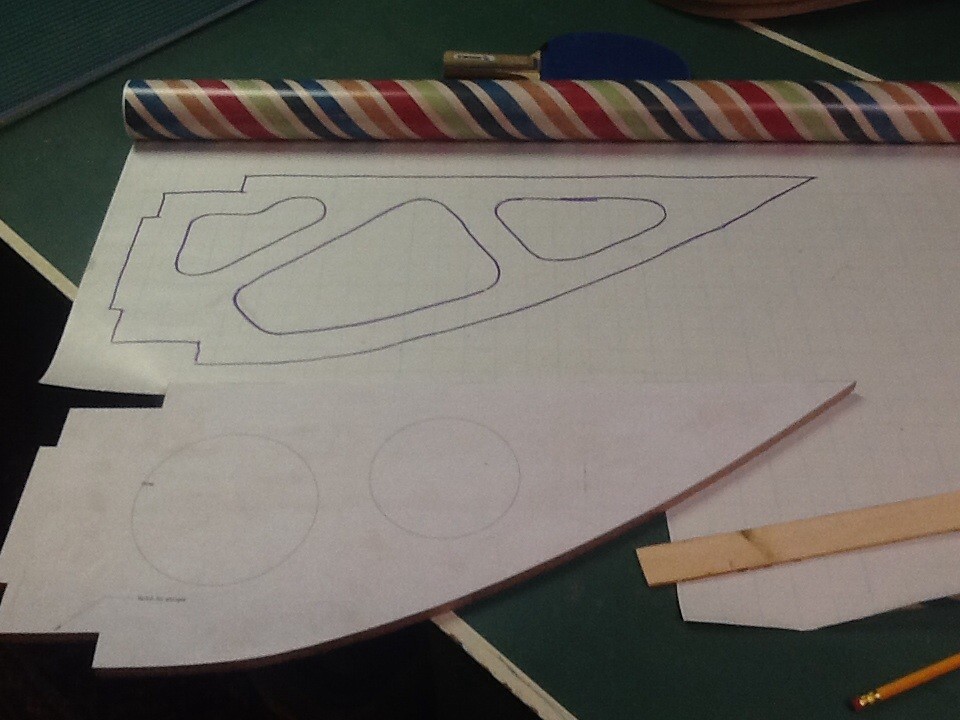
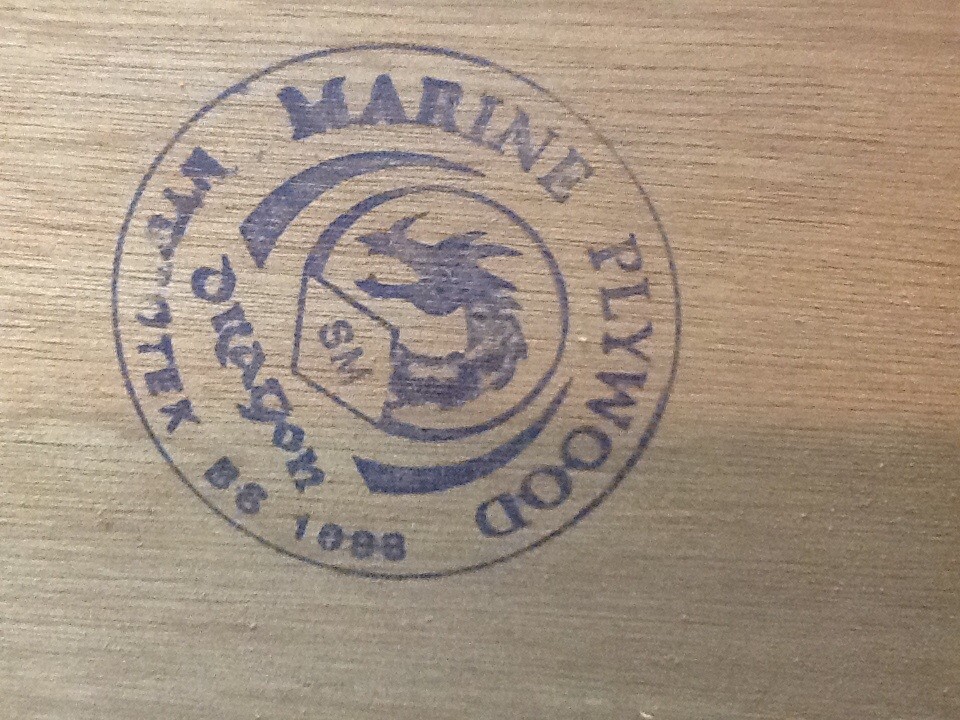
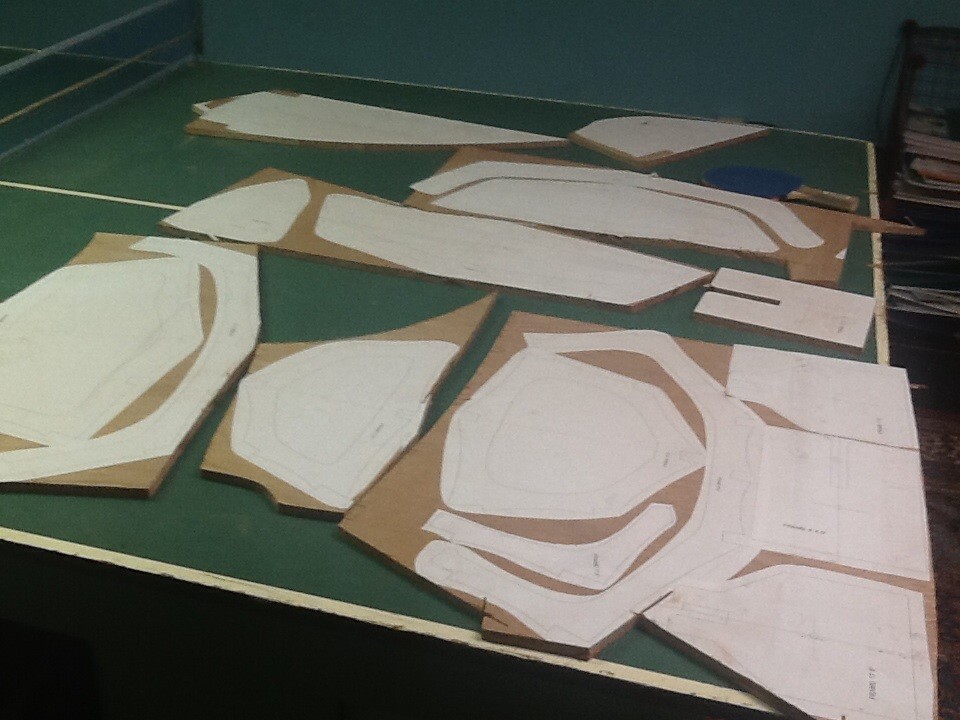
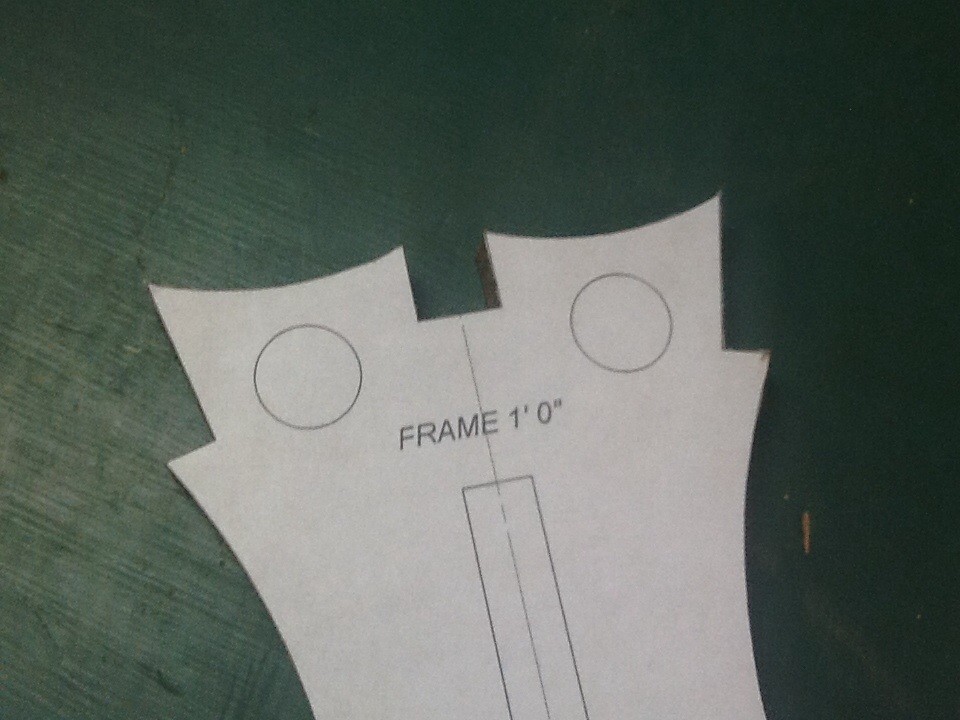
I am starting to cut out my ribs. This hydrotek marine plywood is manufactured for boat builders, and meets BS1088 standards which is a British manufacturing standard of some kind. One 4x8 sheet is making me two kayaks, and I think was $96 last summer. I first flatten the plans with a hot clothes iron, cut them out, apply the to the plywood using 3M spray adhesive following their instructions for temporary bonds. A drywall knife gets the paper totally flat and looks great. Now I am taking each Rib to the band saw for the final cut.