Tom Lathrop
-
Posts
1,351 -
Joined
-
Last visited
-
Days Won
24
Content Type
Profiles
Forums
Events
Everything posted by Tom Lathrop
-
Russell, Somehow I missed your post. You are welcome to visit anytime and I plan on being at the messabout so that would be a good time. Duane, I have developed some plans for a couple types of extensions or brackets that make boarding much easier and also add buoyancy. These are included with the plans if wanted. We had 4 Bluejackets of all lengths at Georgetown and Charleston last October and did not have any water entry problems through the scuppers even with the cockpit loaded with people. I have seen this issue though and have suggested that the cockpit sole be raised. There is only one negative to doing this. That is that the step down to the pilothouse will be greater and the headroom for entry will be reduced unless the pilothouse top is raised. I consider this a good thing. Henry plans to raise the cockpit sole when they get back home. One mistake that is often made about outboard brackets is that they offer more cockpit space. This is wrong because the boat is as long or as big as it is from stem to the end of the outboard. They do offer more space if the bracket is added to an existing hull but in a new build, making the boat as long as the end of the bracket will always give more cockpit space. Still, the boarding/swim platform advantage can be attractive with an easy entry door in the center of the transom. The plans show this version also. A further advantage to raising the sole is increased fuel capacity, which has also been an issue for Henry for one of the long legs of the trip that he has taken care of with an added temporary fuel tank. I recommend in the plans than a custom aluminum fuel tank be part of the building process. This offers a lot of additional fuel volume because the off-the-shelf tanks from Moeller don't make good use of the available space. When properly installed and protected, I consider aluminum tanks to be a good deal even at the added expense and they will have baffles that prevent fuel sloshing about.
-
Dave has the idea. The arc of the inside of the side deck (Coaming) does not necessarily match the topside sheer arc. The purpose of the arc in the pilothouse side as the inward tilt of 2" is put there to improve the visual aspect of the large surface. The inward tilt prevents the pilothouse from looking top heavy. The arc of the Pilothouse does not necessarily match the arc of the cockpit deck although that would be OK.
-
I don't know of a BJ28 in Western PA but Rick and Viviane Lapp in Muncy, PA ( west of Philly) have been cruising their Calin Fione for a couple years now.

-
Long ago and far away I painted the bottom of a racing sailboat with Sears epoxy paint. Everything looked great until I sat the boat on the lawn for a couple hours. On looking at my handiwork the bottom had picked up a 3D impression of every blade of grass. All had to be removed by scraping because it was too soft to sand. Major oops. I once attended a seminar by Tage Frid, one of the best and most respected woodworkers in the world. He spent part of the time showing us of how to fix errors small and large. None are immune to screwups except those who do nothing and maybe that is the greatest error of all.
-
In terms of the work necessary to make a correction, you are certainly now in the lead for the Darwin Award. I have made some that qualify for a spot on the stage as well. I rarely have problems with complicated issues because of the time and thought that goes into the process. Its the little A vs B stuff that causes my grief and wrong epoxy mixes fit in that category. Chuck's correct beam placement followed by a move to an incorrect one fits in a separate category. I once participated in the Sikaflex boatbuilding challenge and the team working next to Graham Byrnes and me made their boat with two port sides. Made for an unusual looking craft with a spiral twist to it. Of course, that was done in front of hundreds of spectators so there was o place to hide.
-
Just start a new thread or reply to this topic. The more reply options button is in the lower right corner and that will bring in the browse and upload options.. Even I can do it.
-
Chuck, I feel your pain. That beam may not be a 100% critical need but I wanted to have some insurance other than the cabintop for lateral stability in that area.
-
Mike, Don't need no stinkin' other web source to post photos here. Just click on the "other options" button, brouse and upload from your hard drive.
-
Mike, I had your platform in mind to bring up later but wanted to give an answer now. Some detailed photos would be great as I know your aversion to paperwork. Egbert, A door on the side could work also but satisfying the structural necessities would still be needed to make sure it does not result in an unfair sheer. Can't use a platform there of course so a ladder would be needed for boarding from swimming. We could all search for more possibilities. Handholds on both sides of any door are usually needed for many with low upper body strength.
-
This is a question from Steve Smith in Port Ludlow, WA that I am moving to the forum for everyone to see. Hello Tom, progress report on BJ 28 hull #11. The transom suddenly looks very big as seen from an approaching dinghy. Has anyone given any thought to providing an access door to lower the hurdle required to board the boat from a dinghy? I'm imagining a small door that would be above the level of one of the seats next to the engine box. I can't claim to the knowledge of engineering required to design something myself but if someone has already tried it and has some experimental information I'd be more comfortable. We're still having fun, but the cooler weather is making itself felt. I'm thinking of delaying the first turnover until next spring and prefabing some of the interior fittings. Steve ------------------------------------------------------------------------------------------------------------------------------------------------------------------------------------------- The main issue with having a door in the transom to make boarding easier is the stability that is left on the side. That results from tension developed by the tumblehome in the aft topsides that will have a side force that could allow the side to open up. Having said that, I think that there is room for a door from the deck level to seat level if it leaves some transom structure to hold the topside in place. If the door is , say, 12” wide that will leave about 8 to 9 inches for a supporting web for the topsides. The transom is ½” thick here and if well bonded to the topside, that should be adequate support to restrain the tumble home from moving any at all. Actually, I think that is conservative and the door width might be expanded a bit. Since anyone wanting a transom door may want to use the cutout as the door to preserve the curvature, the decision is not changeable. That assumes that there is no remaining springback which may not be true and a new door must be constructed. In that case, a builder could creep up on the best width to satisfy the conflicting demands for enough boarding room and enough web left for topside stability. I think it might be wiser to take the second option. Some sort of boarding platform, whether fixed or folding will be needed in any case. There are some stainless folding units made to fit such boarding platforms. Of course if a builder should decide to construct the boat with an extended motor bracket, the opening can be in the center and no chopping of the transom is required. Of course if a builder should decide to construct the boat with an extended motor bracket, the opening can be in the center and no chopping of the transom is required. Tom A photo of Steve's transom is attached.

-
Chick, I have either sailed or motored on many of the mountain lakes mentioned. Keowee in SC as well as Hartwell, Smith Mountain, Philpot, Kerr, Fontana, Santeela and maybe some I have forgotten about. Another that few know about is Lake Julian. Two great things about Julian. It is in your back yard and the lake is a cooling lake for a power plant. The last bit makes it very interesting in the winter as the water is warm and there are tropical fish in there. We used to hold a Mountaineer sailing regatta there for Windmills on the nearest weekend to October /November. If you capsize which we did when racing in Windmills and Lasers, the water is warm. The conditions often made for a low lying fog that obscured the boats and left the tops of sails and masts visible. Sailed in a snowfall there too. Weird but fun at the same time. Lake Julian is just south of Skyland, NC. Small but very nice for a late or early season sail.
-
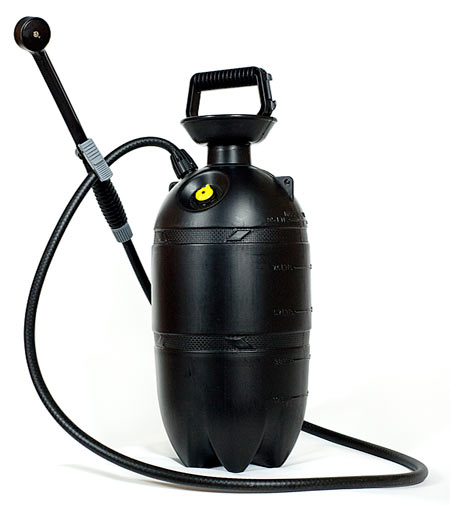
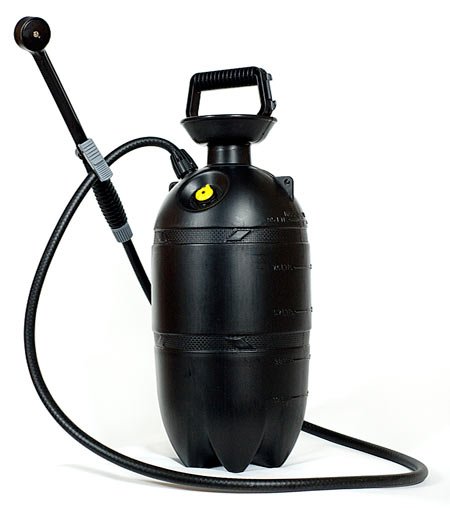
My best solution to hot water on a small boat without any large power source is this: http://www.duckworksbbs.com/gear/shower/index.htm People who use these say they work great and practically zero weight and complexity added to the boat. A quickie shower in the cockpit works for me. Simple is best except when complicated is really cool.
-
Chuck, I am currently strong on Rustoleum paints. I have used both Pettit Unipoxy and Brightsides and think they are not only inferior to Rustoleum in toughness but about three times the cost. Gloss is a bit less but that is not a problem for interior paints. I have found Rustoleum much less susceptible to mildue than Brightsides. Rustoleum makes a Marine version but I've not used it as yet. Higher cost, of course but still much less that the others. I find that I need to wash the Brightsides interior of LIZ a couple times a year to keep mildue at bay. I have painted adirondack chirs a few years ago with Rustoleum and they do now need another coat although the finish is broken in only few places but are outside in the weather all the time. Since I almost never walk on the foredeck, I don't miss not having a nonskid surface. I did use the Devoe 4508 industrial epoxy on the decks which has almost no gloss. This is really tough paint and as inexpensive a decent porch or house paint. It is used in industry for bridges and water tanks. About $65 for a two gallon kit. I do all mooring and anchoring from inside at the forehatch position. The design intended for that and it has worked really well so that no one has to walk around the side deck, especially in bad weather. I would never change that feature.
-
Chuck, Does the sun shine as strong on Oak Island as it does in Oriental? I keep LIZ in a boathouse over 90% of the time and still regret the small amount of exterior brightwork I put on her. You have to love maintenance of really large horizontal brightwork surfaces to be serious about doing this. OK, the only aesthetically sensible way to lay plywood on the foredeck would be with grain fore and aft. That means a joint in the middle which may not be easy to make disappear. If you really wanted to do this and had not already started, I would recommend using sapele, khaya or ribbon stripe lauan plywood for its natural beauty. Of course, you have already laid the top ply on and if its not laid fore and aft it may not look too great and there are those holes that may bother you later. It is very difficult to fill a hole in wood with plain epoxy and some thickener is required to prevent it from continuing to retract into the hole. In a small hole surface tension will cause plain epoxy, or other thin material, to retract from the edges of a hole and not even get down inside to fill it. Some body to the mix is needed which makes it harder to hide. A fiberglass sheath will provide a cover and get past this problem if done carefully. Cedar is too soft to consider for this application since people will be walking up there from time to time and a dock hand may land there in his jack boots. Even on a small boat I'd want a harder wood than cedar for decking. I used mahogany on my 16' Lapwing sailboat. Fiberglass is the only fabric I know that can be made to virtually disappear under top coats and a non skid surface like dynel, xynole or other coarse material seems to defeat the purpose of brightwork.. You might have gotten the impression that I am trying to discourage brightwork on the foredeck and that is certainly true. I think that the effort to install and maintain it outweighs the aesthetic benefits. You may recall that Phillip Smith did his BJ25.5 foredeck bright with an inlaid hellicopter in the middle. You might discuss this with him.
-
Yeah, Frank does this right. I don't know why other sites don't follow the same method. Some make it so difficult.
-
I agree with Peter and have opted for no aft deck on both my BRS and Lapwing. There is already a surplus of storage and flotation in the boat and access to the transom trumps having to climb over a deck for me. I also like free water drainage through the transom when storing or washing.
-
Thanks Jim. My emails to you bounced earlier. Posting photos on this forum is very simple. I haven't done it lately but you can post from your computer files without having to go through another host. Here are a couple photos. One from Brisbane Australia and the other from Washington State. Hope it all works. Just click on the "Other options" button and browse your computer. I usually reduce photos to less that 100kb.


-
Today we start a new forum for those who are building Bluejackets, have built Bluejackets, thinking about building a Bluejacket or are just interested in discovering what these boats and the people who build them are about. First, there are some active blogs set up by current builders: Bluejacket Builder’s blogs BJ25.5 Dave Hargett….11801 Kelly Dr….Lago Vista, TX 78645 (Winter) 1694 CanterburyCommon….Annapolis, MD 21401 (Summer) anndavecats@gmail.com http://www.flickr.com/photos/35374423@N08/ BJ27 Edward Fredholm…. 5705 Highland Hills Circle….Austin, TX 78731 engeaf@sbcglobal.net http://www.flickr.com/photos/ed_boat/ BJ271 Jim keenan….3 Field St….Taunton, MA 02780….508 801-5731 James.Keenan@comcast.net https://www.facebook.com/media/set/?set=a.10150284696947578.387232.325557887577&type=1 BJ28 Henry Hassell….17251 Ingram Ln…Amelia Courthouse, VA 23002 hhassell@tds.net www.flickr.com/photos/bluejacket28/ BJ28 Chuck Smith….308 NE 61st St….Oak Island, NC 28465 Chas231@gmailk.com http://www.flickr.com/photos/chas231/8632484536/in/photostream/ BJ25.5 Egbert Dees….105 Cove Lane….Heathsville, VA 22473….804 580 3531 ejdees@gmail.com http://www.flickr.com/photos/58798913@N03/ BJ25.5 Philip Smith….885 E. Maddox Rd…. Griffin, GA 30224….( 770) 227 5039…. vet885@aol.com http://www.flickr.com/photos/73563075@N02/sets/72157632362256704/ There is now one Bluejacket 28 making the Great Loop voyage around the waters of the eastern USA. Henry and Dianne's story of their cruise is here: https://www.facebook.com/vesseldede Of course, the Bluejacket website is : http://www.bluejacketboats.com/ Come along and we will see where this takes us.
-
Not sure why I've not ever seen this thread. Several good suggestions offered here. For me, I would prefer modern construction for reasons of lighter weight which translates to lower cost of materials as well as stingier on fuel, not to mention building effort and possibly skill. Bluejackets have a larger footprint than most boats and so are fairly tolerant of added weight. That is not so much an issue at displacement speed but does use more fuel at high speed. My BJ24 is pretty efficient at 7mph ( as long as the weight scantlings are followed) and easily handles most waters we are interested in, although I'd want to add some more depth to the keel for better tracking at this low speed in open water crosswind. Yes, Bluejackets can handle a small inboard well but that does not take advantage of what it is best at. That is running nicely at whatever speed you choose up to its maximum. PAR's boats will be easier in big water mainly because of higher displacement and a shape that works best for that regime but does not match the Bluejackets where they shine. The smaller B&B OB is good but it really needs about 40hp to do its best and an inboard might ruin it. With 25hp it runs pretty well lightly loaded and at displacement speed. I have tried a Rescue Minor and am not impressed except in the very shallow water regime it was designed for. I would not consider taking one through our local inlets that are no problem with many others. Carl's CMD boats are nice also, although I much prefer the V bottom to the flat ones. All in all, these boats are good but they are not alike. One or more will fit your needs best and its up to you to make that choice. Making a non emotional choice works best in the long run but boats don't lend themselves to a dispassionate view. For a story of one of my boats taking the Great Loop, look at: https://www.facebook.com/vesseldede
-
-
Good on you Pat. I've sailed through a bit of grass on the Georgia coast but you put an entirely new light on it. Thanks for the view.
-
I might as well add a bit of confusion to the pre-coating spiel. Precoating after the panels have been cut out avoids wasting lots of epoxy and sanding on areas that will not be part of the boat. After scarfing the four bottom and side panels and marking out areas along the chine, keel, stem and transom, precoat all the rest laying flat. Same for any bulkheads after they are cut and trial fitted. Most of the plywood is now in near finished form ready for fold up. Locations of bulkheads can be ground clear of epoxy after the boat is formed. If you are smart enough to find the locations of bulkheads, these areas can be left clear but that may not be as simple and you might think. On a kit boat all this is somewhat simpler since the areas that will be fileted and taped are at least partially marked by assembly tabs. Having built many boats and given all this advice, I admit that I have always formed up S&G boats before laying on the epoxy. Still, I see the advantage of coating first and admire the neatness of others.
-
I like raised deck designs, which I'm sure is no surprise to Graham. I think a slot cabin like Jim Michalak and Kilburn Adams use would make getting in and out as well as moving forward easy on such a design.
-
Price of cab o sil in small amounts is the most over priced item I know of. The old 10# bags at $50 or $60 lasted a long time. Once calculated the mark-up at WEST for a small amount at a couple thousand percent.
-
Chick, Wish you had pulled it out when I was there. I finished the trailer. De-rusted, painted and a sheet of 1/2" treated ply as a base for two Birder kayaks. New tires, wheels and bearings and its good for many years. Not really all that economic but I like reviving old stuff. Tom