Punta
-
Posts
3 -
Joined
-
Last visited
Content Type
Profiles
Forums
Events
Everything posted by Punta
-
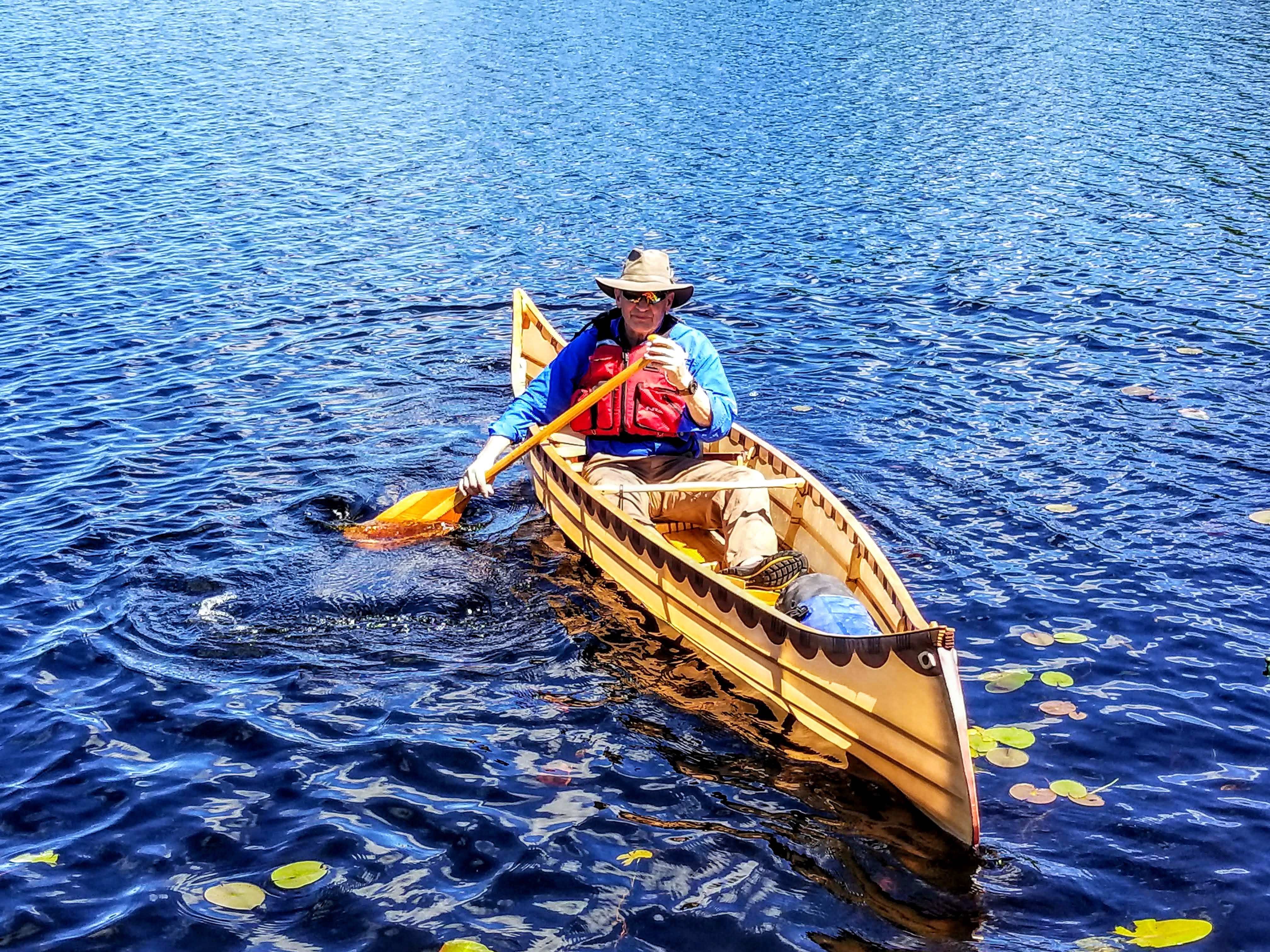
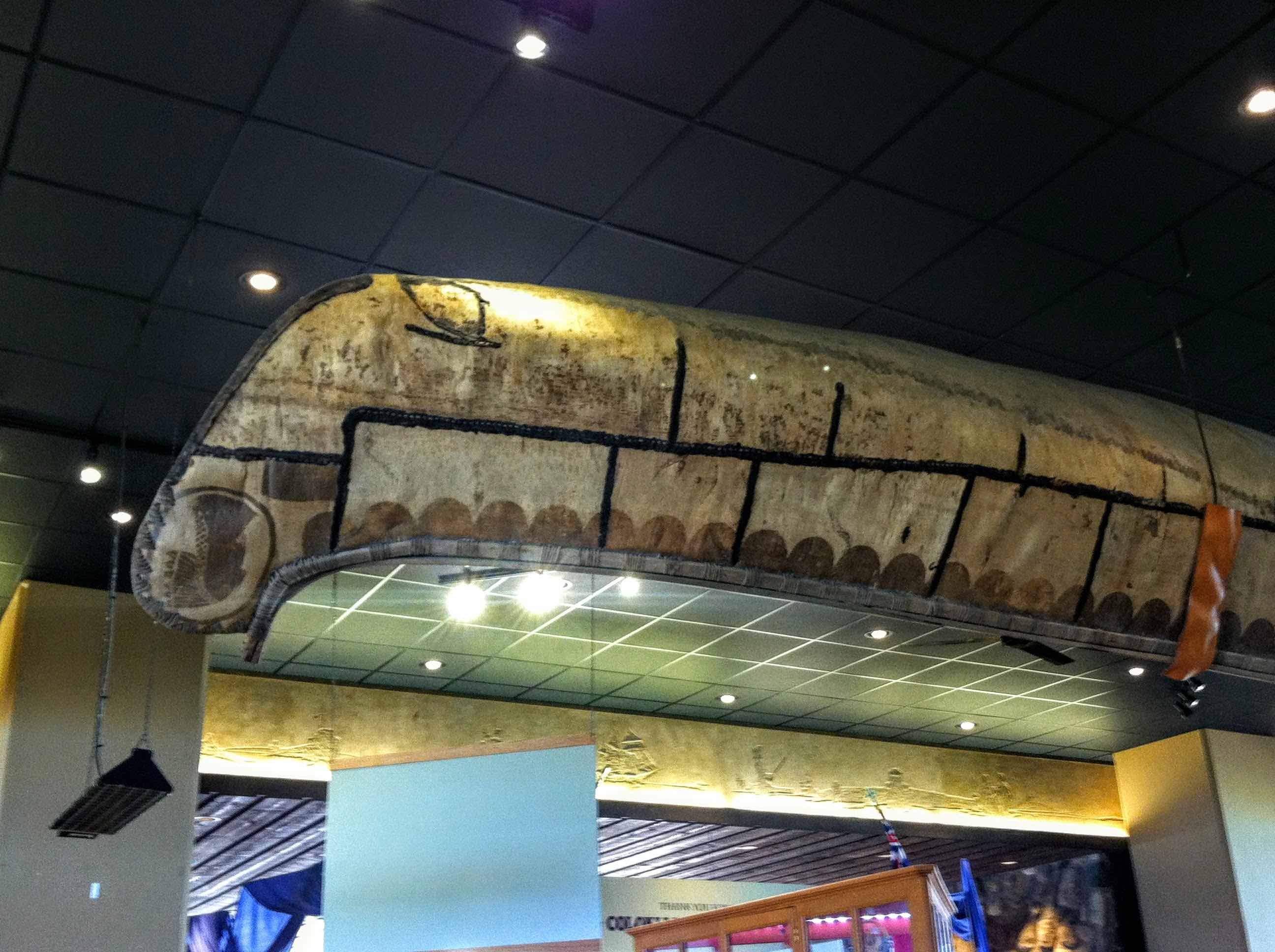
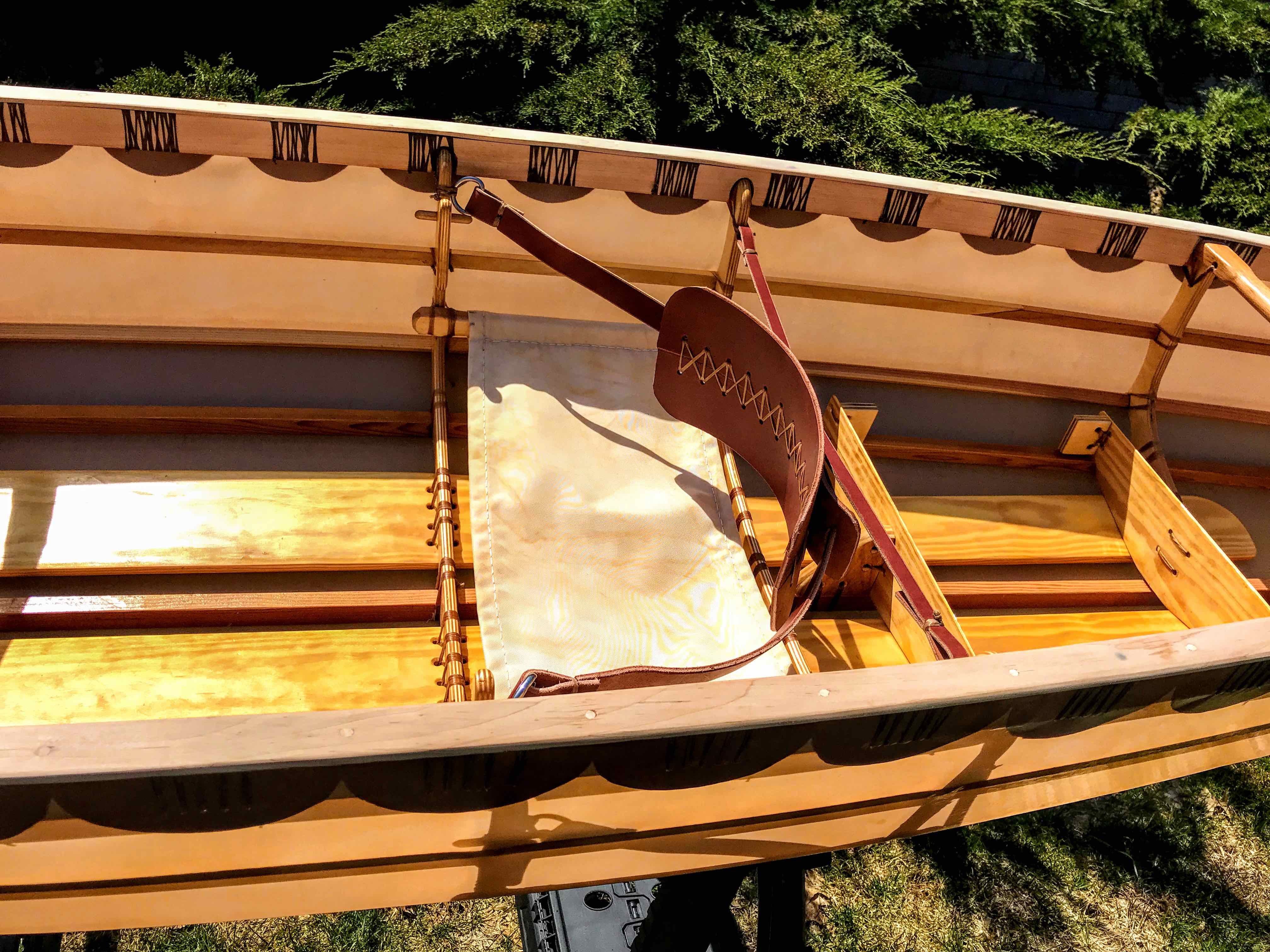
First off I would like to apologize for not responding sooner, lets just say I had difficulty with the password. I appreciate your interest in this. Bending the gunnels was a challenge and I was not successful on the fist attempt. I first tried using western red cedar for the gunnels which ended in disaster as seen below. I've tried bending wood and plywood in some of my other 7 builds for various parts. My first build was a Platt Monfort canoe with steamed ash ribs. I made an isocyanutate steam box about a foot sq in cross section and 7 feet long and had a flap on one end to put the green ash ribs into it. I used my coleman camp stove for a heat source and an empty empty 1 gallon white gas can with an 18" x 2" pvc pipe epoxied to the gas can up to the steam box. After filling the can with about 4" of water and boiling it to steam and allowing the ribs to cook for about 20-30 minutes they come out like a noodle - (wear heavy gloves). Also I have found soaking wood in glycerin/water solution (5-10%) for a couple of days really helps. I take the strips of wood and pull off a lengthy strip of saran wrap and place it on the wrap, paint the glycerin/water on and wrap it up and wait. A quicker way is to soak and heat gun the wood- (careful not to burn it!!) On my website (oldmankayaks.com) I have the story of Mackinaw Stonefly but no pictures yet. I saw "the real thing" at the visitor center under the Bridge. It was huge - over 20 feet long and had the gunnels horizontally split @ the bent portion and lashed which gave me the idea. So after the disaster, I tried spruce which worked much better. I split (about 1/4" strips), soaked, and steamed the ends after the flat portions of the gunnels were lashed to the stations, (using a 30" long piece of 6" pvc pipe with a plug in one end) for the steam box and a heat gun to soften up the wood. I also hung about 20 -30 lbs of weight on the bent portion as I carefully bent the gunnels up to a long screwdriver stuck thru the a hole in the top (not the big hole) of the bow/stern keel shown in the photo. Then I lashed the bent portions together while the weights still hung on the bent up gunnels. I left the weights on until everything was good and dry. To finish it off - just as in the real thing - at least for the top of the gunnels- I lashed a thin 1/4" strip of birch on the inside to hide the stainless steel staples and then another strip of birch on top with alternating angled wood dowels glued into place to hide all the lashing on the gunnels. Also I used two part polyurethane parking lot deck coating with a dye for color for the skin, which produces a very thin translucent lightweight coating. The brown scallops are polyurethane paint. IMG_5930.HEIC IMG_6061.HEIC IMG_6061.HEIC
-
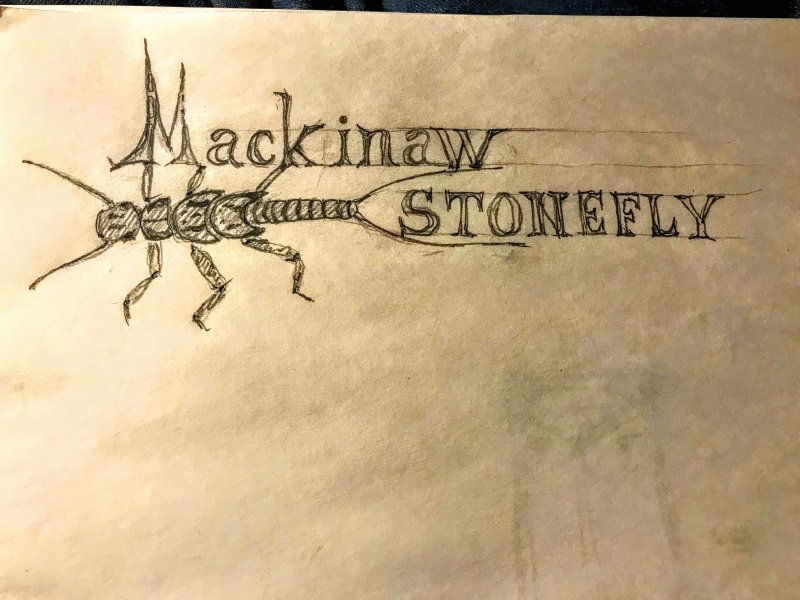
MACKINAW STONEFLY I received a brilliant and most compelling book for Christmas 2017 from my daughter entitled “MASTERS OF EMPIRE Great Lakes Indians and the Making of America ” by Michael A. McDonnell. Of interest to me was the use of canoes to navigate the water system of The Great Lakes and river systems including the St Lawrence. In 2014 while vacationing near Mackinaw City we visited the Mackinaw Visitor Center under “The Bridge”. In it hanging from the ceiling was a most fascinating Birch Bark Canoe. It was roughly twenty feet long by three foot beam. Such grace and elegance in its construction in spite of its age and made without the aid of modern tools. A number of pictures documented the visit, as it was really of such great beauty, I was not wanting to forget this remarkable Canoe. I had been intrigued by the Kudzu Craft “Stonefly Canoe”. Jeff Horton has earned my respect as a “premier skin-on-frame kayak and canoe designer”. After building his “firefly” which I renamed “Sacred Eagle”; I thought the Stonefly might be fun to build since he had in mind to use it as a “fishing canoe” which really appealed to me. I ordered the plans and thought it might be interesting to reflect in the build some of the “Mackinaw” influences of the canoe at the Visitor Center. After drawing some sketches and details based on “The Mackinaw”; I obviously wanted to keep the “skin-on-frame” skeleton and skin. I fabricated some fiberglassed ⅛” birch plywood removable shelves for water bottle, fishfinder, and fishing tackle items beside the polyester director style chair seat. Accommodations for the proverbial fish bucket, milkcrate for tackle storage, fishfinder battery, and some anchor rope cleats included at the stations next to the seat' make it very "user friendly”. Half inch Douglas Fir was used for the under station floor boards to give it a low center of gravity. I also added tie-down holes at bow and stern with Birch anchor hole trim and a light brown leather rub strip along the keel, up the bow and stern to finish off the upswept stems. Again, a backrest similar to the leather one used on Hawk Hunter fits in nicely. Probably the most significant and defining detail are the gunnells. The dacron polyester fabric (coated with two part urethane and rare earth pigments) is folded over the gunnels and stainless steel stapled on the back side. A thin birch strip was lashed over the staples and another ¼” thick Birch strip is doweled into place on top. This gives the gunnels a very thin and graceful appearance, rather than the wider “spacer block type gunnels” generally seen on most canoes. Two thinly shaped white oak thwarts finish off the top. The numerous painted scallops - reflecting waves - below the gunnels and the painted stern graphic signage reminiscent of “The Mackinaw Bridge” and “Stonefly” make this one of my most fulfilling builds.




-
I covered my Firefly with 11.7 oz polyester in my 40 -55 degree garage. I brought it inside to iron to shrink. Homebuilt "Airplane Sites" say the household iron should 250 degrees to start and then follow with 300 and 375 degrees. I've tried two different 1700 watt irons and I can't get hotter than about 270. The fabric is not completely tight after very slow passes on it several times. The Airplane Site says "DO NOT USE A HEAT GUN" I'm wondering if sewing the fabric on @ 40 -55 degrees was the problem.